Education Ministry Warns Online Learning Restrictions Will Deny Students Educational Rights
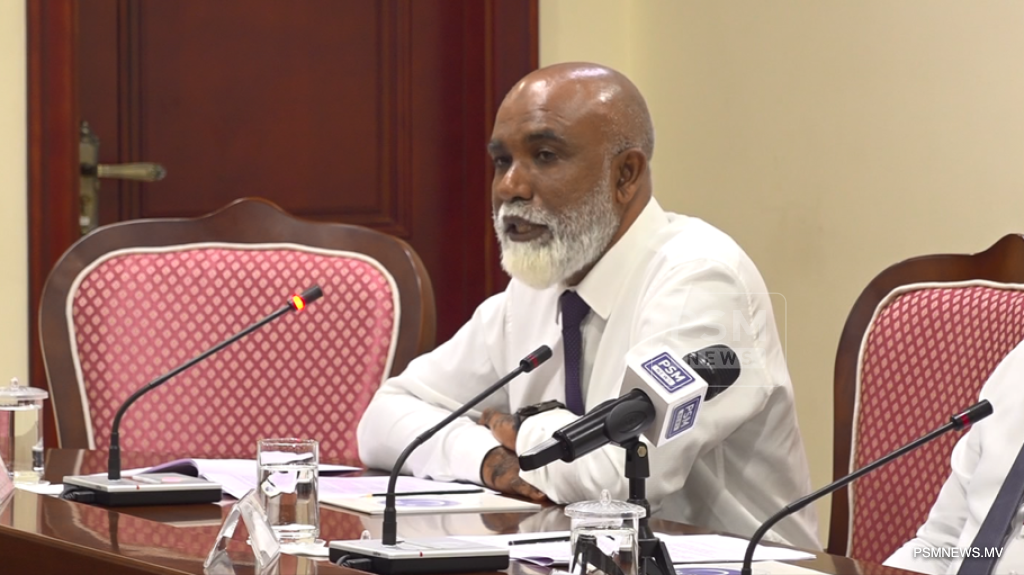
The State Minister for Education, Higher Education and Skills Development, Ahmed Shafeeu, has warned the Maldivian Parliament that restricting online learning would be counter-productive and deprive many citizens of their fundamental right to education.
Addressing the Parliamentary Secondary Legislation Committee, Minister Shafeeu argued that the national education system must evolve alongside global technological shifts. He emphasized that limiting learning to traditional physical formats would disproportionately impact students residing on the archipelago’s dispersed islands, where access to physical academic institutions is often scarce.
Shafeeu noted that as the Maldives integrates digital infrastructure into essential services—including banking and healthcare—the same systems should be leveraged for academic advancement. He asserted that expanding opportunities for citizens to earn diplomas and degrees through digital paths is a vital step toward modernization, countering critics who argue the current system does not meet contemporary needs.
Beyond accessibility, the State Minister highlighted the administrative efficiencies of virtual learning. He observed that monitoring student progress, tracking the delivery of instruction, and managing student-teacher interactions are more streamlined within a digital environment compared to traditional settings.
To address concerns regarding academic integrity, Shafeeu stressed that regardless of the delivery method, all graduates must meet rigorous competency benchmarks before receiving certification. He assured the committee that relevant authorities continuously review course quality to maintain established national and international standards.
The Ministry is currently revising guidelines for online and blended learning modalities. These updates aim to align Maldivian education with global best practices while remaining sensitive to the unique geographical and social realities of the islands.