Education's outdated knowledge model fails Maldivian youth
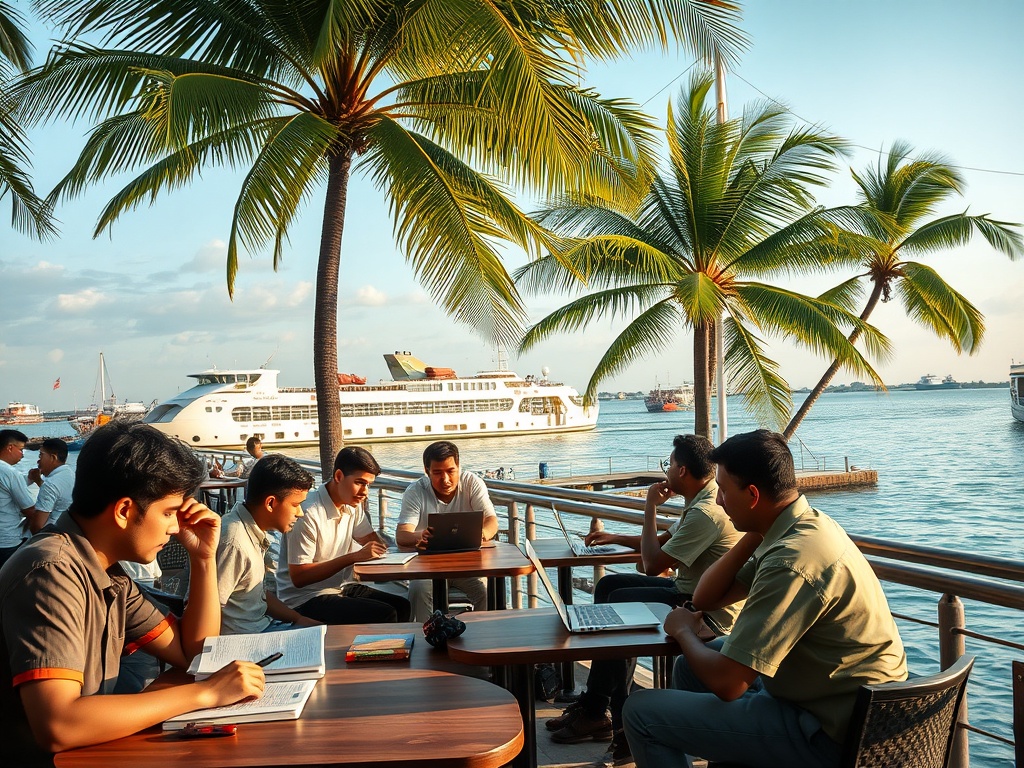
The morning ferry from Malé to Villingili carries students clutching textbooks filled with theories that were current when their parents were young. In cafés along Majeedhee Magu, graduates scroll through job listings realizing their four-year degrees feel like ancient scrolls in a world moving at fiber-optic speed. This isn't just about outdated curriculum—it's about an entire system built for a different era, leaving Maldivian youth navigating modern challenges with yesterday's maps.
Three years ago, artificial intelligence was largely theoretical mathematics. Today, it's reshaping how we communicate, work, and even think. Yet our classrooms still operate as if knowledge were static, as if the Britannica volumes gathering dust in school libraries contained eternal truths rather than historical snapshots. The gap between what's taught and what's needed widens with each passing semester, leaving graduates with qualifications that feel increasingly disconnected from the realities of our islands.
In the Maldives, where tourism innovation meets traditional fishing communities, where global tech trends intersect with local craftsmanship, this knowledge lag hits particularly hard. Young Maldivians return from overseas education with expertise in systems that have already evolved, while local industries desperately need skills that haven't yet been formalized in academic programs. The result is a generation caught between certificates and competence, between what their diplomas say they know and what the market actually demands.
Perhaps the solution lies not in discarding education, but in reimagining its purpose. Instead of measuring learning by years spent in classrooms, we might focus on demonstrable ability—proof that someone can solve real problems using current knowledge. Imagine certification based on creating functional AI tools rather than memorizing outdated algorithms, on building sustainable tourism models rather than reciting historical case studies.
This shift would honor the Maldivian tradition of learning by doing—the way fishermen understand currents not through textbooks but through experience, the way craftsmen master their art through practice rather than theory. It would create pathways for those who learn best outside formal institutions, for the innovators and problem-solvers whose talents don't fit neatly into semester schedules.
As the sun sets over our islands, casting long shadows across schoolyards and workspaces alike, we're reminded that knowledge, like the ocean, never stands still. The challenge isn't to keep up with every wave of innovation, but to build systems flexible enough to ride them—systems that value demonstrated capability over dated credentials, that prepare our youth not for the world that was, but for the world that's coming.