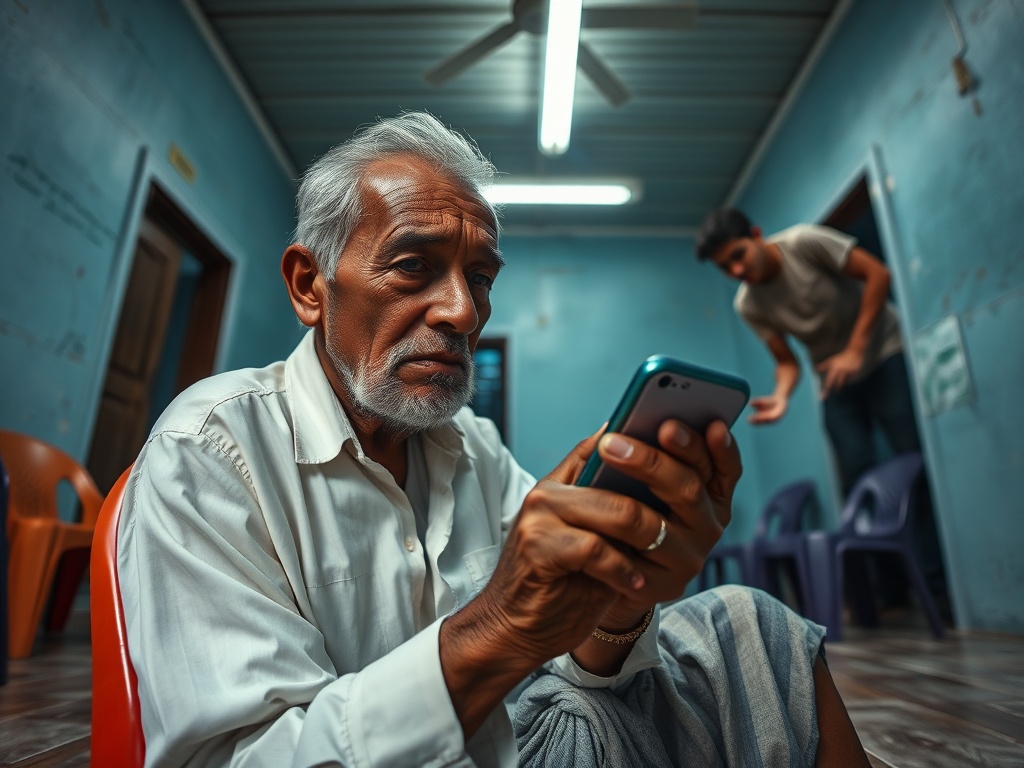
Elderly Campaigners Struggle with Login Screens as Maldives Embraces AI
The sleek vision of a government powered by AI assistants, e-voting, and chatbots clashes with the daily reality of error messages, unloadable forms, and smartwatches that fail to count kilometers accurately. This gap represents not a lack of access, but a failure of meaningful engagement with the tools now dictating public life.
An elderly campaign volunteer, a cornerstone of the islands' political machinery, is handed a smartphone and told to consult an AI assistant. The login screen alone becomes an insurmountable wall. This scene repeats across sectors, where official communications are jokingly compared to outdated relics in an age of promised AI revolution. The promise of a helpful chatbot rings hollow when basic internet connectivity falters and simple web searches drown in sponsored, low-quality results.
The friction is personal. A friend's TikTok link demands an app download, breaking the flow of conversation. An Instagram user opens the app for a specific purpose, only to be algorithmically diverted into an endless stream of Reels, forgetting their original intent. Repetitive system notifications create a digital nagging that treats all users as uniform data points. Social platforms enforce a 'confidence tax,' subtly reshaping communication by privileging video monologues over text.
This experience breeds deep skepticism. E-voting is dismissed not on technical grounds, but on a foundational lack of trust—seen as a tool for those who already believe they can be replaced by algorithms. Public debates about AI tools quickly veer from utility to accusations of embedded political or ideological bias. The technology is perceived not as neutral, but as another entity with an agenda, its intelligence questioned and its restrictions resented.
The issue transcends gadgets. It reflects a governance challenge where high-tech solutions are deployed onto a social fabric strained by economic pressures, a bloated public sector, and systemic inefficiencies. Investing in a flashy AI interface for a ministry matters little if the citizen trying to use it is grappling with a housing crisis, medicine shortages, or a crowded job market. The digital divide is no longer just about connection; it's about who can navigate, trust, and benefit from the connected world without being alienated, misled, or left behind.
— Source fragments: Teaching elderly campaigners to use Gemini; MOHE using 'dhalhu phone' vs. proposed AI chatbots; internet reliability issues; inaccuracy of smartwatches; elderly struggling with login processes; frustration with TikTok links requiring app downloads; buggy social media interactions; critique of Google search results; debates over AI bias and limitations; Instagram's algorithm favoring video over text; annoyance with repetitive notifications; app loading failures; skepticism toward e-voting; digital distraction (Instagram Reels).