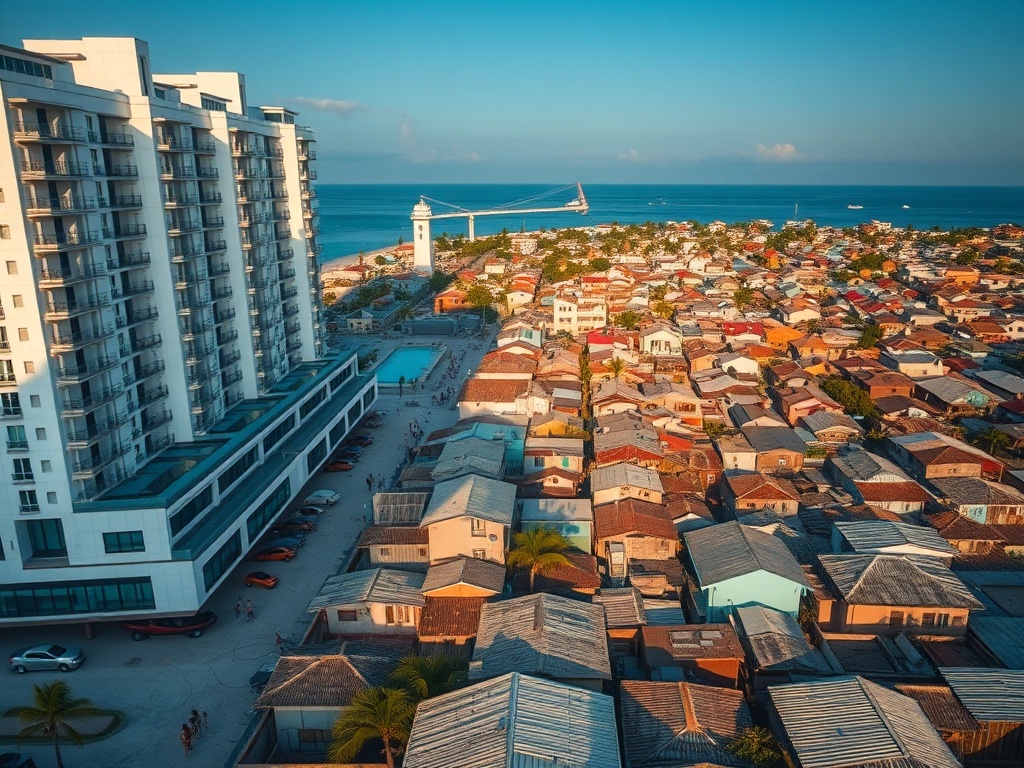
Election Promises Meet Malé's Crowded Streets
In the crowded archipelago of Maldives, where land is both scarce and sacred, housing programs have transformed from solutions to urban congestion into sophisticated political machinery. The pattern has become familiar: ambitious schemes promising land for the landless emerge during election cycles, only to reveal themselves as carefully calibrated vote-winning operations.
The current discourse reveals deep public cynicism about these programs. What began as initiatives against injustice have, according to many observers, morphed into systems where corruption and political connections determine outcomes. The criticism cuts across party lines, with accusations that both major political factions have perfected the art of using land distribution to consolidate power.
At the heart of the controversy lies the fundamental question of who truly benefits. Evidence suggests that many recipients already possess land or flats, either through inheritance or purchase. The system appears vulnerable to manipulation, with allegations of fake certificates and gaming of application processes becoming commonplace. This creates a perverse reality where those with existing assets receive additional state-subsidized property while genuinely needy citizens remain in limbo.
The political calculus is straightforward: land allocations create immediate constituencies of beneficiaries who feel obligated to the ruling party. Parliamentarians with majority support become willing accomplices, approving controversial distribution models that critics argue serve private interests over public good. The connections between political leaders and construction companies raise legitimate questions about whether national development plans serve the people or particular business interests.
This cycle of politicized land distribution has broader consequences for governance. When citizens perceive that justice is secondary to political connections, faith in institutions erodes. The pattern repeats across administrations—what one government implements as corruption, the next administration perfects as strategy. The result is a never-ending cycle where the innocent pay the price while the connected prosper.
The housing crisis in Malé, with its overcrowded conditions and exorbitant living costs, makes these schemes emotionally charged. For families struggling in the capital's cramped spaces, the promise of land represents more than property—it symbolizes dignity, stability, and belonging. When that promise becomes another political commodity, the disillusionment cuts deep.
As Maldives approaches future elections, the land question will undoubtedly resurface. The challenge for the political establishment is whether they can break this destructive pattern. For the public, the larger question remains: when will development plans prioritize justice over political expediency? The current model, as many critics note, benefits the already privileged while leaving the truly vulnerable behind—a system that ultimately serves neither development nor democracy.
— Source fragments: Multiple tweets discussing Binveriyaa scheme, land allocation corruption, political beneficiaries, and systemic injustice in housing distribution