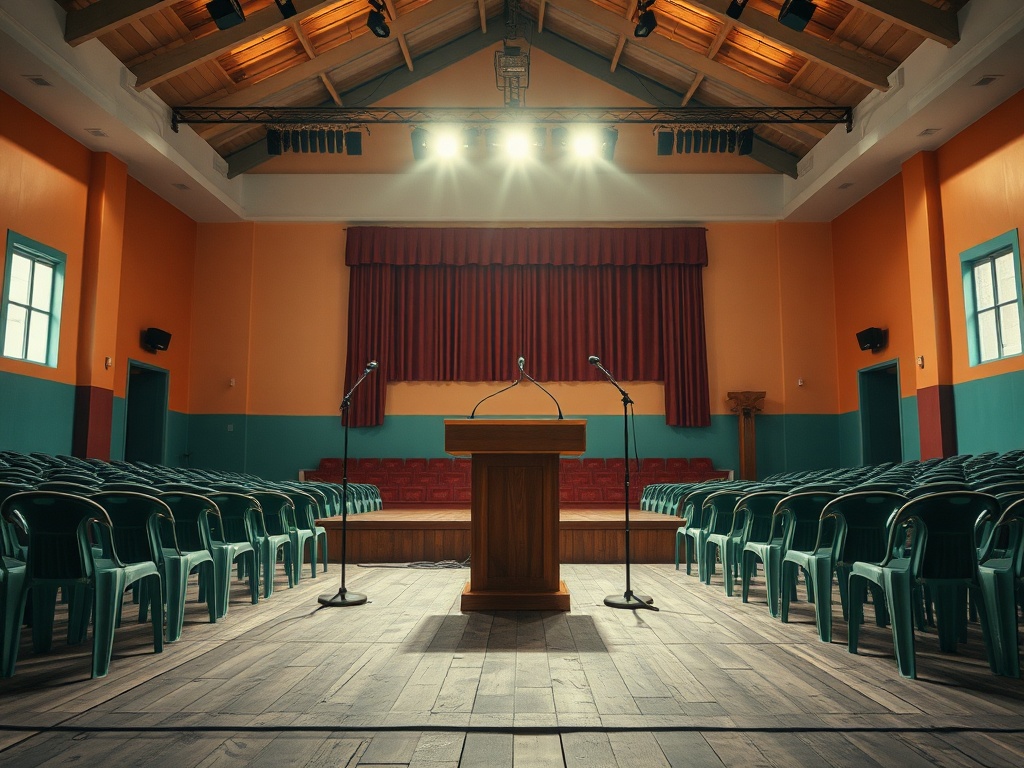
Empty Microphones on Malé's Political Stage
In the theater of Maldivian politics, the stage has been set for a performance that leaves many viewers squirming in second-hand embarrassment. The recent political discourse has reached levels of awkwardness that transcend mere policy disagreement, descending into what many describe as cringe-inducing spectacle.
The phenomenon extends beyond individual gaffes to reveal deeper currents in the political landscape. Critics point to what they describe as educated but xenophobic rhetoric creeping into mainstream discourse, raising questions about what certain political movements truly represent. The conversation has become so polarized that any substantive policy discussion risks being drowned out by performative nationalism.
Recent developments suggest a troubling trend toward empty rebranding exercises rather than substantive reform. The renaming of ministries with foreign-inspired titles, coupled with slogans reminiscent of international political campaigns, has done little to address fundamental governance issues. Instead, these superficial changes appear to foster division within institutions and create pressure on career professionals through political intermediaries.
The religious dimension of political campaigning adds another layer of complexity. The invocation of divine authority in political contexts—"Kuda nubai ikhthiyaar kurun" (God will grant us authority)—has become standard rhetoric across party lines. Each political faction maintains its own religious figures who lend spiritual legitimacy to campaigns, creating a system where righteousness becomes a political commodity rather than a moral compass.
What emerges is a political culture where substance has been replaced by spectacle, where meaningful debate gives way to manufactured controversy, and where the actual challenges facing the nation—from economic pressures to governance failures—are obscured by political theater. The awkwardness many feel when watching these political performances stems from the growing disconnect between the gravity of national issues and the triviality of political discourse.
As Maldives navigates complex domestic and international challenges, the question remains whether political leaders will rise above performative politics to address the substantive issues that affect citizens' daily lives, or whether the awkward theater will continue to dominate the national stage.
— Source fragments: awkward videos in political history, educated but xenophobic representation, ministry rebranding as empty gesture, religious rhetoric in democratic campaigning