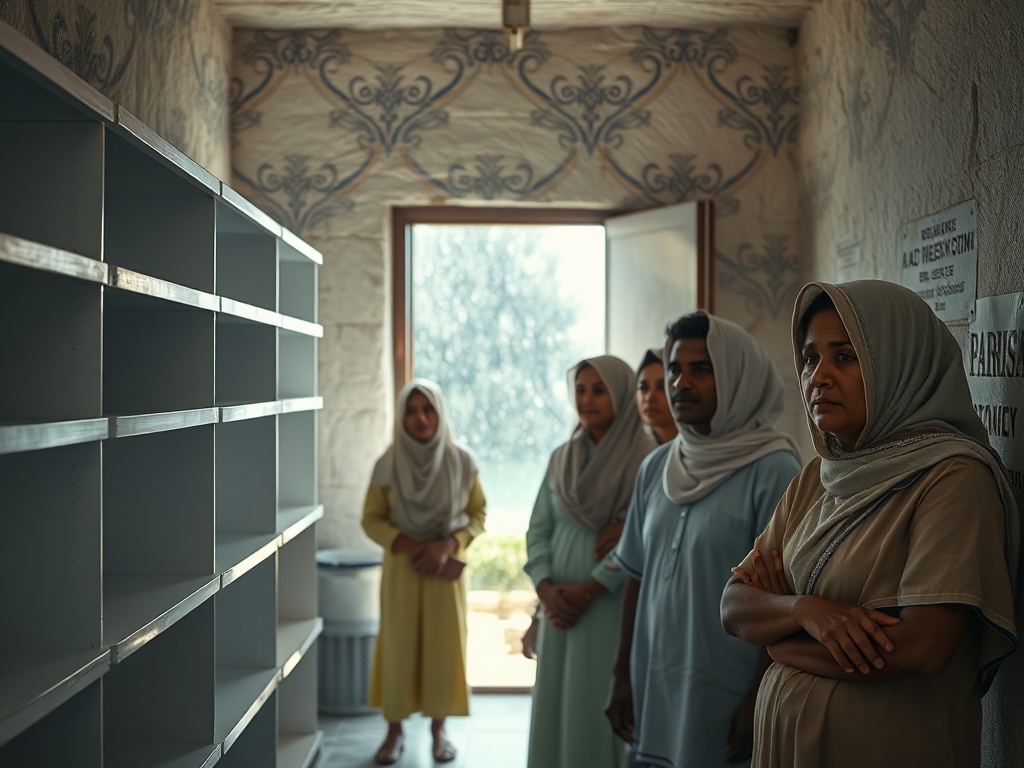
Empty Pharmacy Shelves and the Mother Who Hesitates to Give Her Child the Medicine
The pharmacy shelf sits empty where essential medications should be. A mother hesitates before giving her child prescribed treatment, having heard troubling stories about side effects. Another family pays out-of-pocket for critical tests that should be covered. These are not isolated incidents but symptoms of a healthcare system in distress.
Across the archipelago, the conversation around medicine has shifted from clinical efficacy to economic survival. Patients report being caught between alleged distribution monopolies and government inaction. "Because of greedy medical mafia," one observer notes, calling for drastic measures against those controlling medicine supply chains. The sentiment reflects a growing public frustration with systems that seem to prioritize profit over patient care.
The problem manifests in multiple dimensions. Some families report refusing certain medications for their children after years of therapy showed limited improvement, particularly in severe cases where treatment accessibility remains a challenge for most Maldivians. Others point to the unavailability of essential medicines in local pharmacies as a fundamental governance failure rather than an issue of specific drug origins.
Parallels emerge with international healthcare scams, such as the "Florida shuffle" where patients are cycled between facilities to maximize insurance billing. While the Maldivian context differs, the underlying concern about profit-driven healthcare resonates deeply in a system where national health insurance faces allegations of provider overcharging.
At the heart of these discussions lies a crisis of confidence. Patients question both the medications prescribed and the systems delivering them. When a mother says, "I won't give olenzepine to my kid," citing concerns about functionality, she represents countless families making healthcare decisions without adequate trust in the medical establishment.
The Ministry of Health faces accusations of bureaucratic inertia, described by some as being "run by a bot" in its response to these systemic issues. Meanwhile, the financial burden shifts to families already struggling with the Maldives' high cost of living, creating a healthcare accessibility crisis that cuts across economic lines.
This convergence of supply chain concerns, treatment doubts, and systemic failures creates a perfect storm where healthcare becomes another battlefield for ordinary citizens. The solution requires more than just stocking pharmacy shelves—it demands rebuilding trust through transparency, breaking alleged monopolies, and ensuring that patient care consistently outweighs profit motives in a system meant to heal, not hinder.
— Source fragments: Because of greedy medical mafia. Govt should sieze them, put them in jail and forcefully take the sole distribution contracts they did with medicine manufacturers; omg yess this happened to me last month i had to cover a liver test out of pocket bec of that; To be fair, unavailability of medicine in our pharmacies is not a problem of EU medicine, it's a failure of our Gov; They don't seem to care about it at all. Health ministry is run by a bot; Holy, I won't give olenzepine to my kid. I have heard too many people saying they can't fully function under this