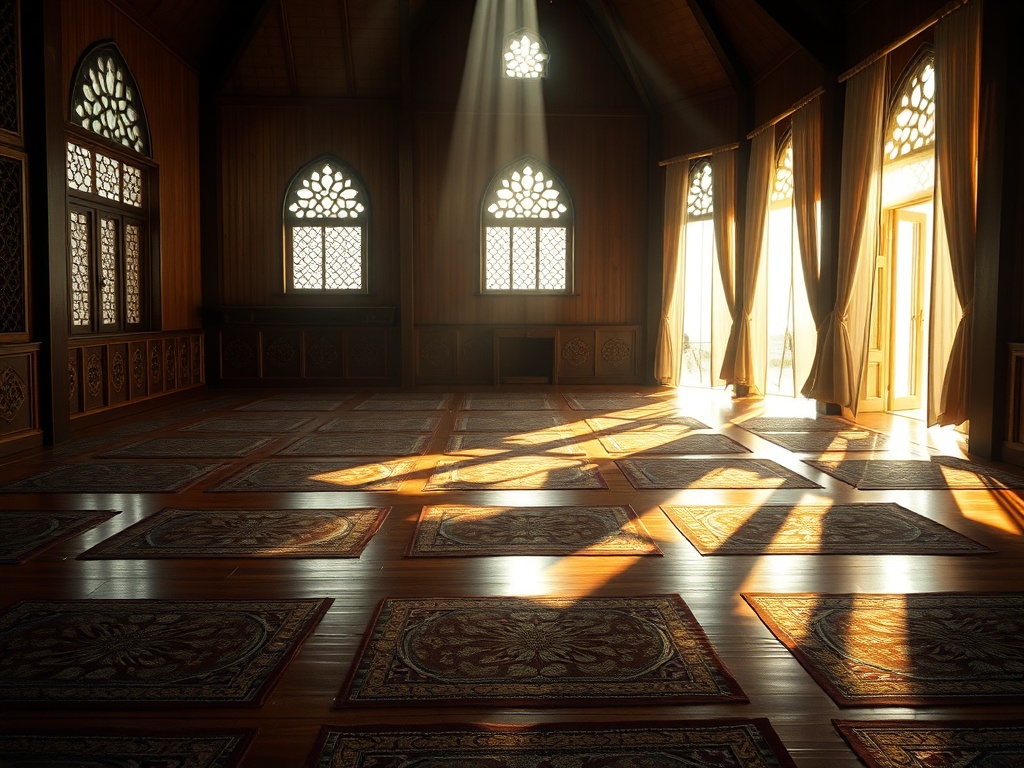
Empty Prayer Mats in a Nation of Muslims
In the quiet corners of Maldivian society, a conversation unfolds about the nature of religious identity and its implications in a nation where Islam is both constitutionally mandated and personally contested. The debate touches on fundamental questions: What does it mean to be Muslim in a country where nearly everyone is born into the faith? How do individual beliefs align with collective identity?
The theological discussions that once preoccupied previous generations now resurface with renewed relevance. The distinction between being born into a Muslim society and choosing to be Muslim emerges as a critical point of reflection. This is not merely academic—it speaks to the core of how religious identity functions in a modern nation-state.
Unlike other faith traditions that approach birth with concepts of original sin, racial purity, or reincarnation, Islamic theology holds that every child enters the world pure and sinless. This foundational belief carries profound implications for how responsibility and faith develop throughout one's life. The purity of birth gives way to the weight of choice and obligation as one matures.
The language of faith matters deeply in these discussions. Certain phrases, like referring to 'Allah's children,' may not resonate with local religious sensibilities, highlighting how theological concepts are filtered through cultural and linguistic contexts. This attention to phrasing reflects a broader concern with maintaining religious authenticity while navigating contemporary debates.
For those who embrace Islam as a conscious choice rather than a birthright, the obligations are clear and specific. The relationship between personal faith and public policy becomes particularly salient in a Muslim-majority nation. The question of implementing Islamic principles in governance is not abstract—it represents a tangible expression of religious commitment at the societal level.
This ongoing conversation reveals the complex interplay between individual belief and collective identity. In a nation where religious and national identities are deeply intertwined, the personal decision to embrace one's faith carries implications that ripple through both private life and public discourse. The debate continues, not as a theoretical exercise, but as a lived reality for those navigating what it means to be Muslim in the contemporary Maldives.
— Source fragments: Dont say we are muslim. Say i am muslim. Not everyone in maldives is a muslim; In Islam a baby is born pure and sinless; If you are a Muslim there are obligations on you; Allah's children? What kinda language is that? We Muslims don't use that phrasing