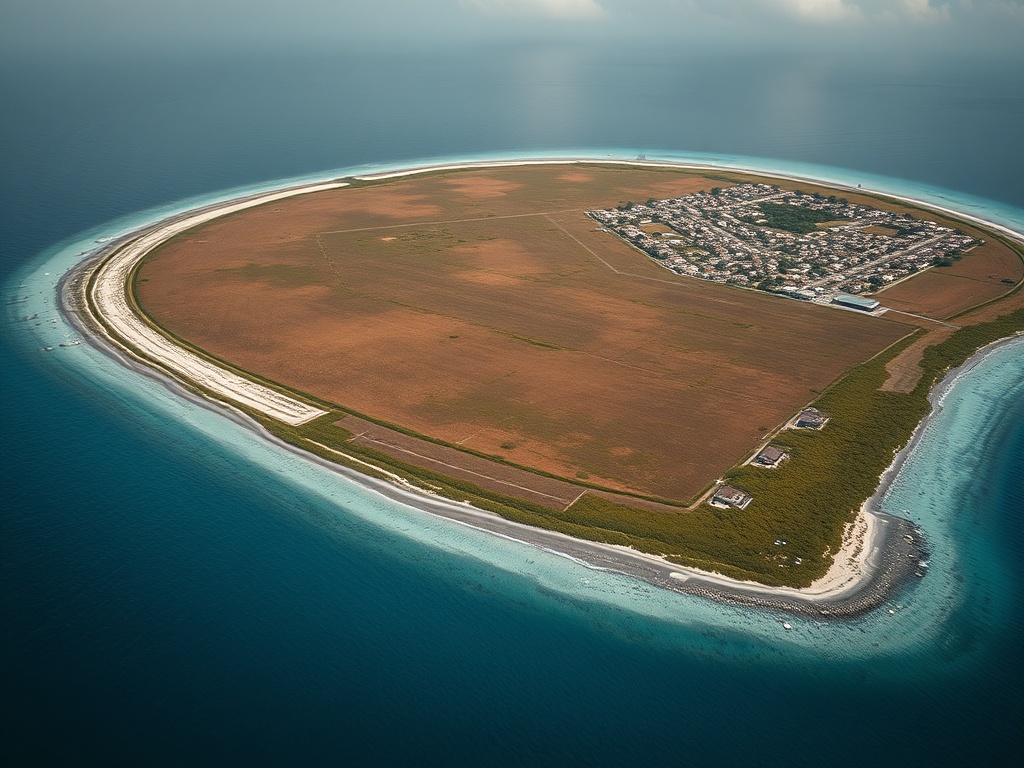
Empty Reclaimed Lands, Unanswered Island Needs
Walking past the vast, empty stretches of reclaimed land on the edges of our islands, you can’t help but feel a deep sense of waste. The coarse sand, now overgrown with wild grass, sits silent under the equatorial sun—a monument to political promises made and forgotten. For years, presidents have stood on newly dredged shores, announcing grand plans for housing, parks, and public spaces. Yet here we are, with at least 52 reclamation projects since 2007, most of them unused, while our communities continue struggling with overcrowded homes and inadequate infrastructure.
As Maldivians, we understand the genuine need for land. In Malé, where nearly half our citizens live crammed onto less than two square kilometers, the pressure is palpable. Families share single rooms, young couples postpone marriage for lack of housing, and public spaces shrink with each new building. But watching these expensive reclaimed plots lie barren for years—some for two decades, as Ibrahim Naeem told parliament—feels like a betrayal of that need. The machinery comes, the sea retreats, and then... nothing. Just empty space where children could have played, where families could have lived, where communities could have thrived.
The cycle repeats with each administration. Before the last reclaimed area even has a proper purpose, new proposals arrive at the Environmental Protection Agency requesting even more land. The justification is always the same: "this land is not sufficient." Yet we look at the vast unused expanses and wonder—insufficient for what? For whose plans? The disconnect between what’s promised and what’s delivered grows wider with each reclamation project, while the real needs of our people remain unaddressed.
Our islands are changing, and not always for the better. The environmental cost of reclamation is rarely discussed in public, but fishermen notice changes in currents, residents observe altered coastlines, and marine ecosystems bear the invisible burden. When Naeem stressed that "we should not reclaim it unless we really need to," he voiced what many of us feel in our hearts. This isn’t about stopping development—it’s about ensuring development serves our people, not political legacies.
Perhaps what hurts most is seeing these empty lands while our youth struggle with 25-30% unemployment, while families navigate healthcare shortages, while our guesthouse tourism operators compete in an increasingly crowded market. The funds spent on unnecessary reclamation could instead improve existing infrastructure, create jobs, or support the fishermen who form the backbone of our traditional economy. Every barren reclaimed plot represents missed opportunities to strengthen our communities.
We need to shift from a mentality of constant expansion to one of thoughtful utilization. Let’s first develop what we’ve already claimed—build the promised housing, create the public spaces, establish the facilities our islands genuinely need. Only then, if a clear, documented necessity exists, should we consider claiming more land from the sea. Our future depends not on how much land we have, but on how wisely we use what’s already ours.