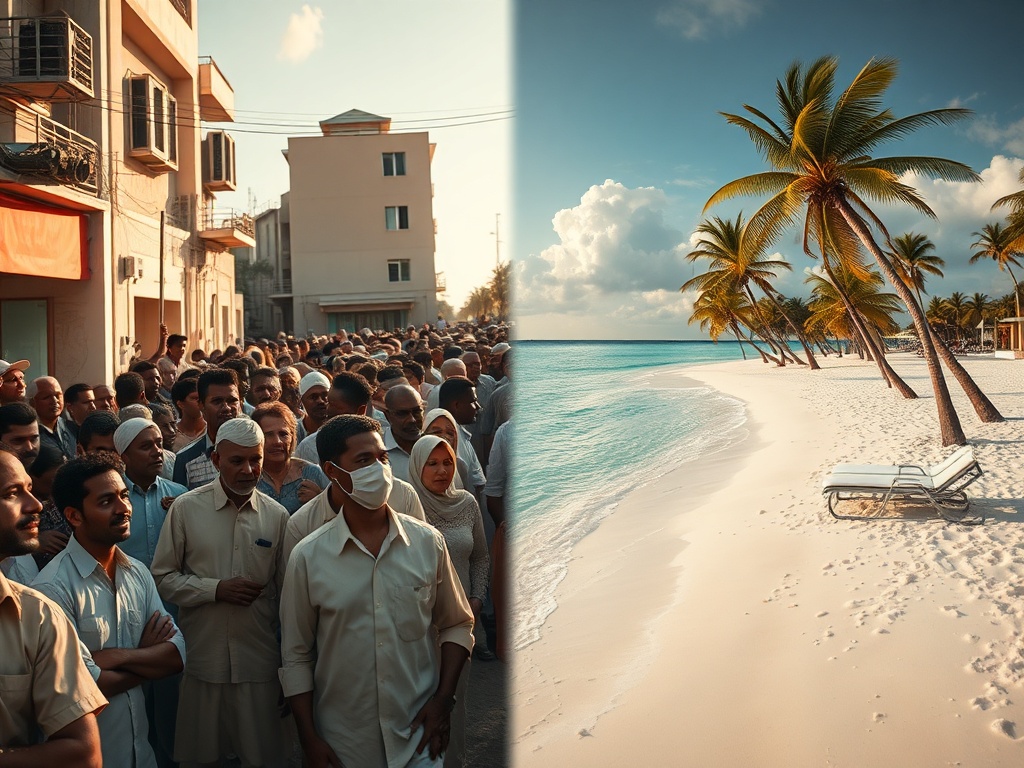
Empty Resort Beaches, Crowded Political Rallies
The architecture of modern economies appears increasingly designed to serve those at the top while leaving ordinary citizens exposed to market forces they cannot control. This pattern transcends borders, manifesting in both global superpowers and island nations alike.
In the United States, critics argue that neoliberal policies have transformed borders into economic tools for corporate interests. The relentless pursuit of cheaper labor creates a system where human worth becomes tied to productivity metrics set by market forces beyond individual control. Workers become interchangeable parts in a machine designed to maximize profit rather than human dignity.
This phenomenon finds its parallel in the Maldives, where tourism was meant to be the economic safety net—the reliable foundation upon which other sectors could be built. Yet this safety net has been compromised by domestic mismanagement. The destruction of brand value through self-inflicted wounds represents a profound failure of stewardship. When a nation's primary economic engine sputters due to internal decisions rather than external forces, it reveals deeper systemic issues.
The political response to these economic anxieties often follows a familiar script worldwide. Concrete projects become theater—visible manifestations of progress that mask underlying economic stagnation. Pouring tax revenue into physical infrastructure can provide the illusion of momentum while the fundamental economic structure remains unchanged. Citizens are left with impressive buildings but diminishing opportunities.
The desperation visible in small financial incentives for political participation speaks volumes about economic conditions. When modest sums can sway political engagement, it suggests a broader economic fragility that transcends partisan divides.
What connects these disparate examples is the recurring theme of economic systems failing to serve the people they're meant to support. Whether through open borders serving corporate interests or tourism policies undermining national stability, the outcome remains the same: ordinary citizens bear the brunt of economic decisions made by distant power centers.
The challenge for societies navigating these realities is to rebuild economic systems that prioritize human dignity over pure utility, that value stability alongside growth, and that recognize economic policy as fundamentally about people rather than abstract market forces.
— Source fragments: American borders and populace as economic utility to oligarchs; Tourism as safety net destroyed by own hands; Politicians pouring tax revenue into concrete projects for false progress; Economic desperation visible in political participation