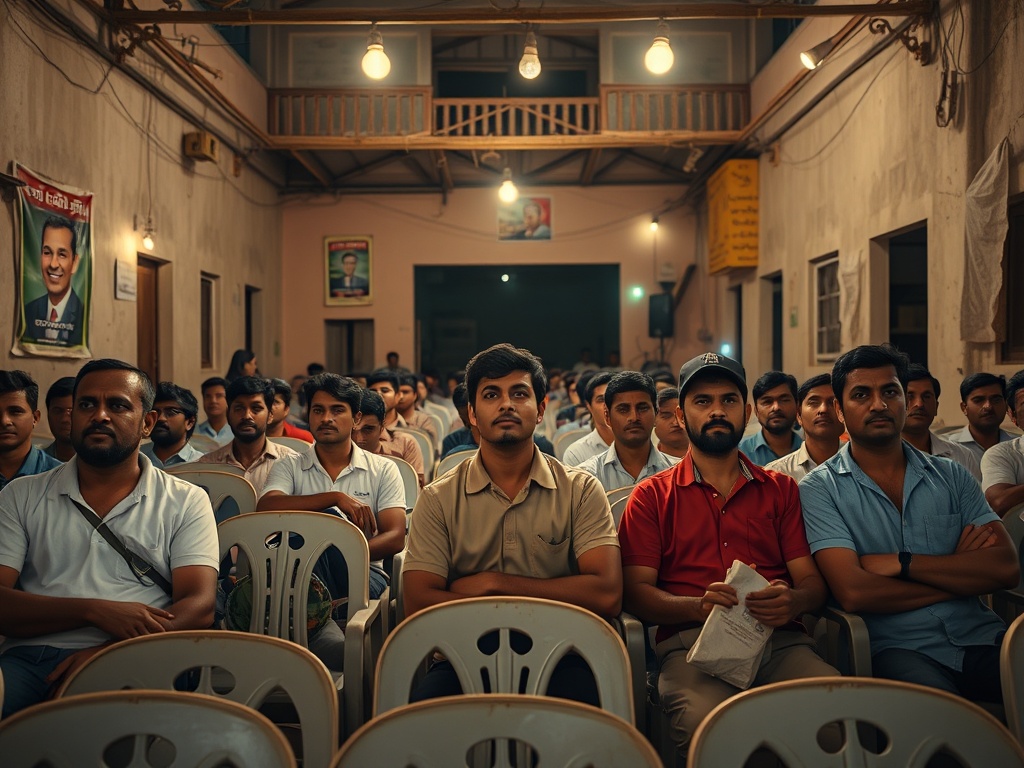
Empty Seats Where Campaign Promises Once Stood
Across the Maldives' scattered atolls, a quiet but profound disillusionment is taking root. The political landscape, once vibrant with promise and ideological conviction, now shows troubling cracks in its democratic foundations. The concerns are no longer confined to policy disagreements but strike at the very integrity of political institutions and their ability to govern effectively.
The internal workings of major parties have become a source of public concern rather than pride. When party members cannot resolve basic organizational issues, and financial transparency remains elusive, it raises fundamental questions about competence and accountability. The democratic process within parties themselves often appears chaotic—characterized more by procedural confusion than by the orderly electoral standards observed in established democracies. This internal disarray inevitably spills over into governance, affecting the quality of leadership and decision-making that reaches the national stage.
Coalition politics, a necessary feature of the Maldives' multiparty system, has revealed its fragile nature. Recent events demonstrate how political alliances can collapse not over ideological differences but through simple unwillingness to compromise. When major parties fail to find common ground despite overlapping interests, it suggests deeper issues of political culture—where personal ambition sometimes outweighs collective responsibility.
For many voters, the disappointment cuts deepest when leaders they supported on specific platforms subsequently pursue contradictory policies. The emotional investment in a candidate who promised religious conservatism, only to witness policies that appear to undermine judicial independence, legislative integrity, and national sovereignty, creates a particular kind of political heartbreak. These perceived betrayals extend beyond individual leaders to the systems they represent—from allegations of media manipulation to controversial foreign military arrangements.
The cumulative effect is a growing sentiment that the mechanisms of democracy are being hollowed out from within. When citizens observe what they perceive as the hijacking of parliamentary processes, the politicization of judicial appointments, and the use of state resources for political advantage, their faith in the entire system erodes. The very parties that champion democracy externally sometimes fail to practice it internally, creating a dangerous credibility gap.
This crisis of confidence arrives at a precarious moment for the Maldives. With pressing challenges including economic instability, housing shortages, and social issues requiring thoughtful governance, the nation cannot afford political dysfunction. The solution may lie not in abandoning democratic principles but in demanding that political parties embody the standards they profess—transparency in their operations, integrity in their coalitions, and consistency between their promises and their governance. The future of Maldivian democracy depends on rebuilding trust, one honest political process at a time.
— Source fragments: Party members unable to resolve small issues, financial transparency concerns, coalition failures with PNC, disillusionment with religious conservative president, internal party democracy standards, policy contradictions after election