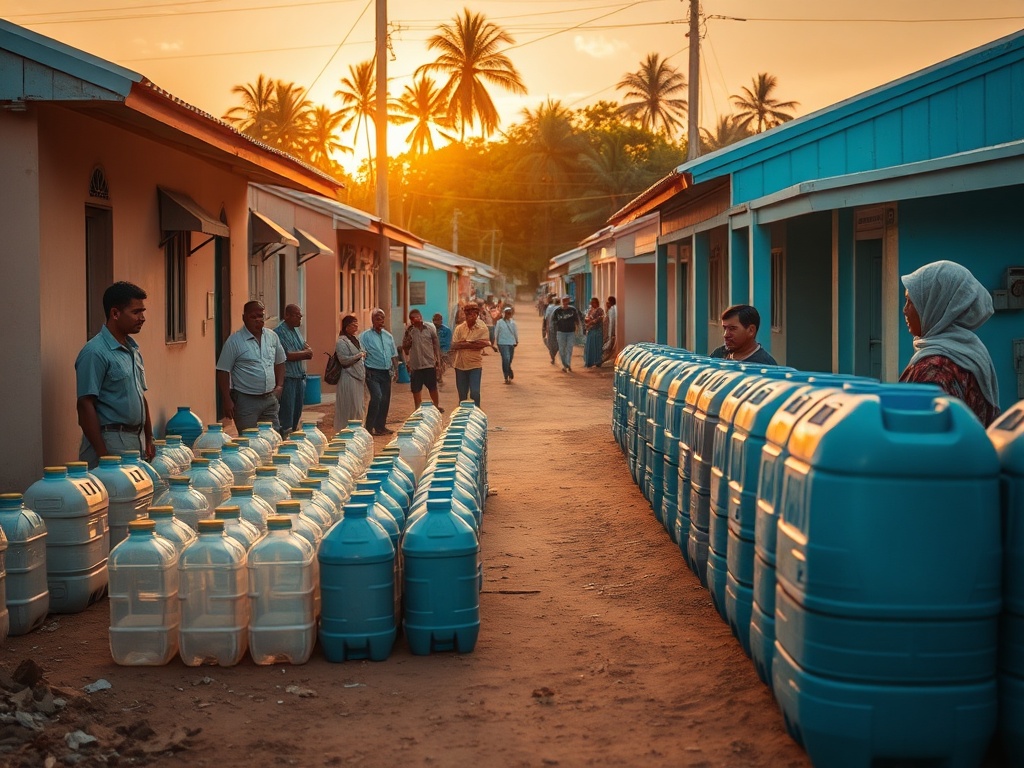
Empty Taps and Contaminated Jugs in Fuvahmulah
The island of Fuvahmulah is experiencing what many residents describe as a complete water system collapse. For days, taps have run dry, leaving households without water for drinking, cooking, or basic sanitation. The crisis has escalated beyond mere inconvenience into a public health emergency.
The state utility company FENAKA's response—pouring large quantities of chlorine into the water distribution network—has created new complications. While intended as a purification measure, the excessive chemical treatment has reportedly caused medical issues among residents, adding health concerns to the existing deprivation.
This isn't merely a temporary disruption but a symptom of deeper infrastructure challenges facing Maldivian islands. Fuvahmulah, one of the nation's few single-island atolls with natural freshwater resources, now finds itself paradoxically water-starved. The crisis highlights the fragile balance between natural resources and man-made systems in island communities.
The situation echoes broader patterns across the Maldives, where aging infrastructure struggles to keep pace with population needs. What makes Fuvahmulah's predicament particularly alarming is its scale—affecting an entire urban community and threatening basic human needs.
As the hashtag #FuvahmulahWaterCrisis circulates across social media, it represents more than just a call for help. It signals a breaking point in public patience with systemic failures. Residents aren't just asking for water delivery; they're demanding reliable, safe, and sustainable water systems.
The crisis raises urgent questions about resource management, emergency response protocols, and long-term infrastructure planning. When an island community cannot access the most fundamental resource for survival, it exposes vulnerabilities that extend far beyond broken pipes and empty reservoirs.
For now, Fuvahmulah waits—its people caught between dry taps and chemical-laden alternatives, their daily lives suspended in uncertainty. The solution requires not just immediate relief but serious commitment to addressing the underlying infrastructure deficits that leave communities vulnerable to such crises.
— Source fragments: Water crisis in Fuvahmulah City, no drinking water available, FENAKA chlorine treatment causing medical issues, calls for help