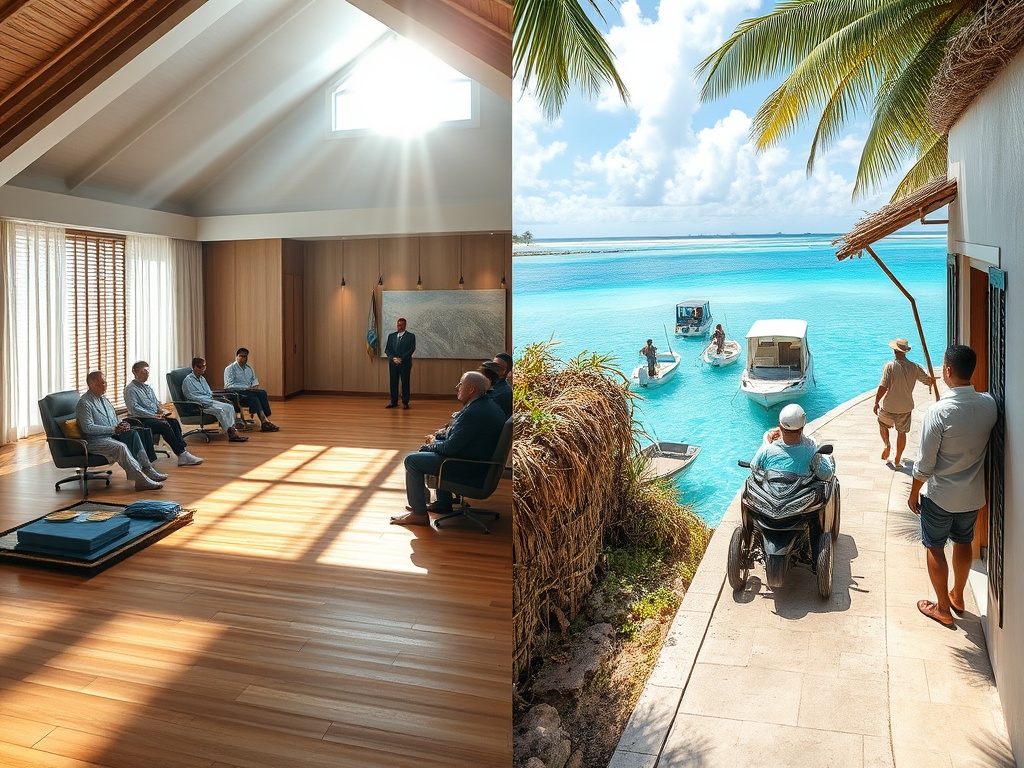
Environment Ministry Merges with Tourism, Loses Its Agency
The recent merging of the Ministry of Climate Change, Environment and Energy with the Ministry of Tourism raises fundamental questions about institutional priorities in the Maldives. This consolidation, which saw the Environment Protection Agency demoted to a mere section within the new ministry, reflects a broader pattern where environmental concerns risk being overshadowed by tourism interests. While framed as efficiency measures, such structural changes often signal shifting governmental focus in ways that may not serve long-term national interests.
Against this backdrop, the debate around presidential visits to the islands reveals a deeper tension in public expectations. The sentiment that 'whoever is ruling over us should see how our citizens are living with their own eyes' speaks to a fundamental democratic principle—that leaders must maintain direct connection with the people they serve. The presidential palace in Malé, for all its symbolic importance, cannot substitute for firsthand observation of island communities' realities. This grassroots perspective suggests that policy formulated without such direct engagement risks being disconnected from local needs.
The ongoing Local Policing Conference at Paradise Island Resort represents another layer of this governance puzzle. While conferences and policy discussions are essential for institutional development, their effectiveness ultimately depends on implementation. The public rightly questions whether such gatherings translate into tangible improvements in police operations and community safety.
Meanwhile, smaller administrative details—like the confusion over vehicle assignments between officials—may seem trivial but contribute to public perception of governance transparency. When citizens cannot easily distinguish between different ministers' resources, it fuels skepticism about accountability and proper resource management.
The Maldivian governance model faces the constant challenge of balancing administrative efficiency with meaningful public service. Structural reorganizations, while sometimes necessary, must be evaluated against their impact on service delivery and institutional independence. The environment-tourism merger, in particular, warrants careful monitoring to ensure environmental protection doesn't become secondary to economic interests.
What emerges is a picture of governance where the distance between policy decisions and ground realities requires constant bridging. Presidential visits, institutional reforms, and professional conferences all represent attempts to close this gap, but their success depends on genuine engagement rather than ceremonial gestures. As the Maldives navigates complex development challenges, the alignment between administrative structures and public needs remains a critical measure of effective governance.
— Source fragments: Ministry of Climate Change merged with Tourism, EPA demoted to section; Debate about presidential visits to islands and policy formulation; Local Policing Conference focusing on operational improvements; Clarification about official vehicle assignments