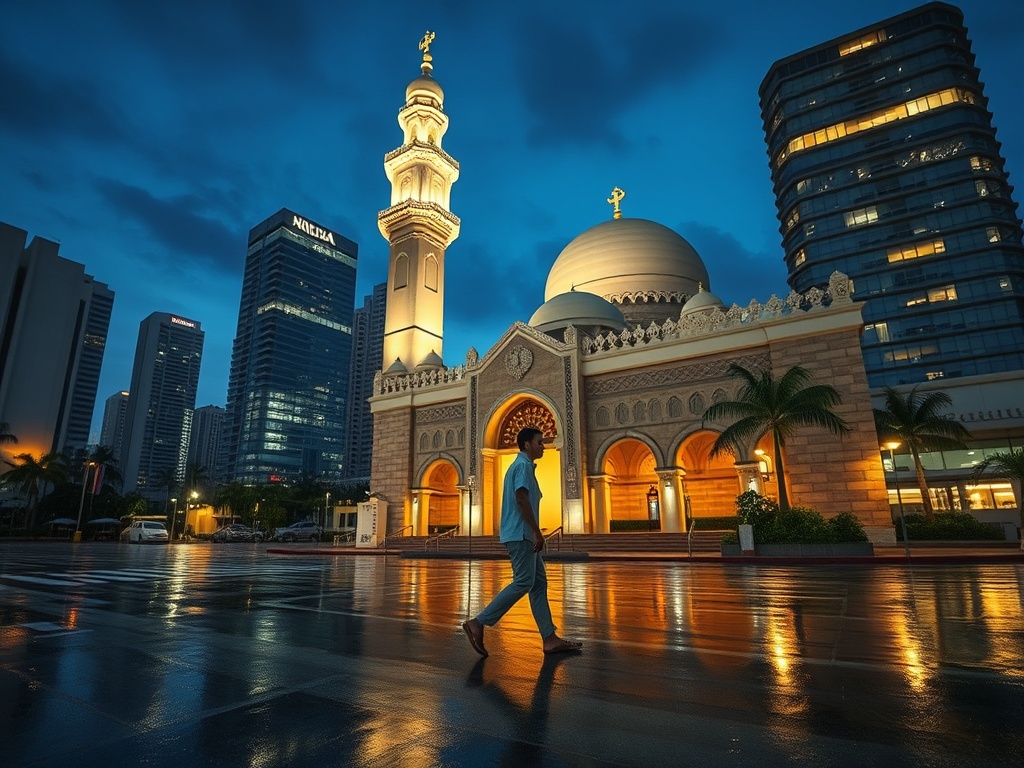
Every Child Born Muslim by Constitutional Decree
In the Maldives, where every child is born Muslim by constitutional decree, a quiet tension simmers beneath the surface of religious uniformity. This island nation of approximately 500,000 people presents a complex religious landscape where official doctrine often conflicts with lived experience and private interpretation.
The constitutional requirement that all citizens be Muslim creates a unique social dynamic, one where religious identity is legally enforced rather than individually chosen. This mandate extends to the foreign workers who contribute to the Maldivian economy, who find themselves in a country where they cannot openly practice their own faith traditions. The contrast becomes particularly stark when viewed against nations like the United Kingdom, where diverse interpretations of Islam coexist freely.
Within this framework, religious sincerity becomes a contested concept. Some voices within the Maldivian religious community have taken extreme positions, with tragic consequences for those expressing alternative viewpoints about Islam. This enforcement of orthodoxy stands in stark contrast to the personal choices some religious leaders make in their own lives, creating what critics describe as a culture of hypocrisy.
The tension extends to family life and religious education, where some parents prioritize personal convenience over religious instruction, then express outrage when societal institutions fail to compensate for their own neglect. This pattern reveals a broader societal contradiction: demanding religious conformity while often failing to embody the principles being enforced.
At the heart of this conflict lies the question of what constitutes authentic religious practice in a modern society. Is it the strict adherence to constitutional mandates and public displays of piety? Or does genuine faith require the freedom to question, interpret, and sometimes struggle with religious teachings?
The Maldivian experience suggests that when religion becomes a legal requirement rather than a personal conviction, it can lead to superficial compliance rather than deep engagement. The result is a society where religious identity is unquestioned in theory but often unexamined in practice, creating space for both extremism and apathy to flourish simultaneously.
As the Maldives continues to navigate its relationship with globalization and modernity, these tensions around religious practice and identity will likely intensify. The challenge will be balancing constitutional requirements with the evolving understanding of what it means to be both Muslim and Maldivian in the 21st century.
— Source fragments: Why are jews mad about Americans being American?; In the UK, ppl are able to practice Islam more strictly than the kulheykulhey Islam you have in Maldives; It is about time we call out the regressive practices of islam which are not compatible with constitution. In tiny Maldives, with around 5 lakh population, every born child is Muslim. People from India who work there, cannot practise their religion; And that's why the sincere advisors among Maldivian religious community have killed multiple people for having different opinions about Islam. The hypocrisy is so blatant it's sickening