Fading Friendships, Rising Walls: A Maldivian Lament
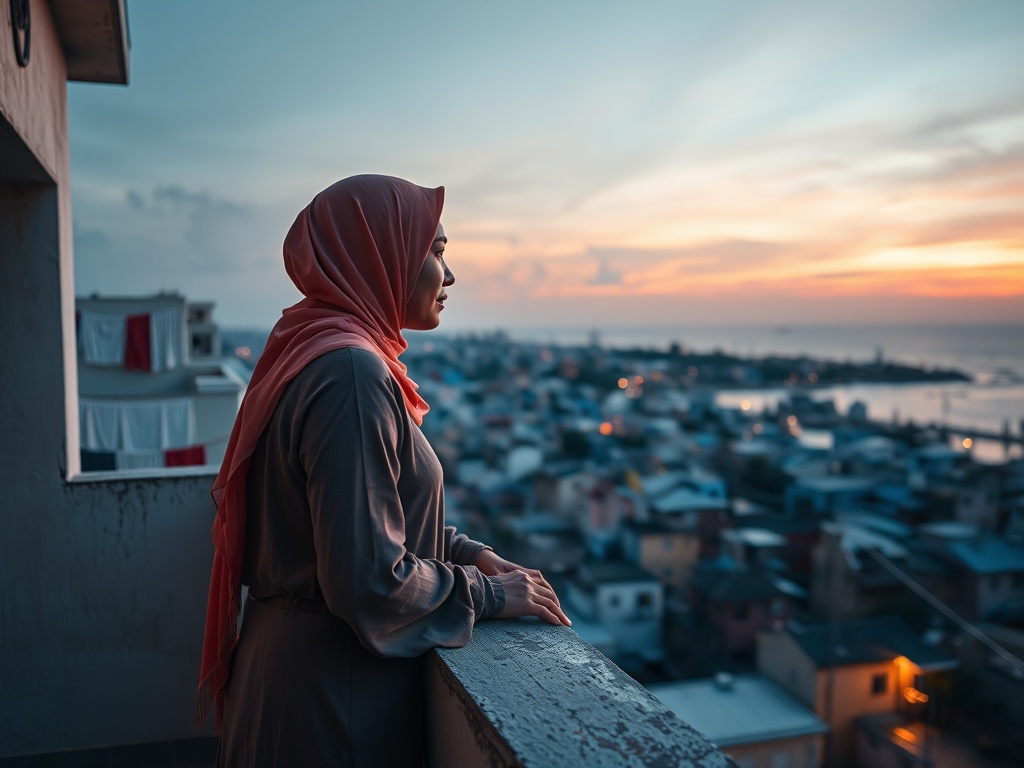
The call to prayer echoed across the tightly-packed buildings of Malé, the sound bouncing between concrete walls painted in fading pastels. Aisha stood on her balcony, the familiar scent of salt and diesel mixing with the evening air. Below, the narrow streets pulsed with life—scooters weaving between pedestrians, children chasing each other past corner shops, the constant hum of a city that never slept.
She remembered when Malé felt different. When her family first moved from their island twenty years ago, the city had seemed vast and intimidating. But her neighbor, Fathimath, had taken her under her wing. They'd shared stories of their islands—Fathimath from the north, Aisha from the south—and discovered how much they had in common despite coming from different atolls.
Now, Fathimath's balcony across the way remained empty most evenings. Their conversations had grown strained in recent months, the political rhetoric seeping into their friendship like saltwater into fresh concrete.
'It's not about where we're from,' Aisha had tried to explain last week. 'It's about where we're building our lives.'
Fathimath had shaken her head. 'You don't understand what it's like to watch your island empty out while everyone fights over space here.'
Aisha watched as lights began to flicker on across the cityscape. Each window represented a family, a story, someone trying to make a life in this crowded capital. The political debates on social media reduced them all to categories—Malé people versus RT people, us versus them. But from her balcony, she saw only people: the young couple who ran the corner shop, the fisherman's family downstairs, the students sharing a flat across the street.
The division felt artificial, like drawing lines in the sand at low tide. Sooner or later, the ocean would wash them away. But in the meantime, the walls were growing—not the concrete ones that defined the city's skyline, but the invisible ones that separated neighbor from neighbor.
Aisha remembered her father's words when they first arrived in Malé: 'The ocean doesn't care which island you're from. It treats us all the same.' She wondered when they'd forgotten that simple truth, when they'd started building fortresses around their identities instead of bridges between them.
As darkness settled over the city, she noticed movement on Fathimath's balcony. Their eyes met across the divide. No words passed between them, just the shared understanding of two women watching their city change, wondering if the ties that bound them were stronger than the forces trying to pull them apart.
— Source fragments: What Ibra refuses to believe is that Malé is no longer another island with 500 people. Malé is the capital that belongs to everyone; Malé is an elitist who believes Malé people deserve way more than RT people; Watching MV Twitter and thinking how is the cause of the biggest source of hatred between Malé and the islands; promised to address the discrimination between Malé and RT