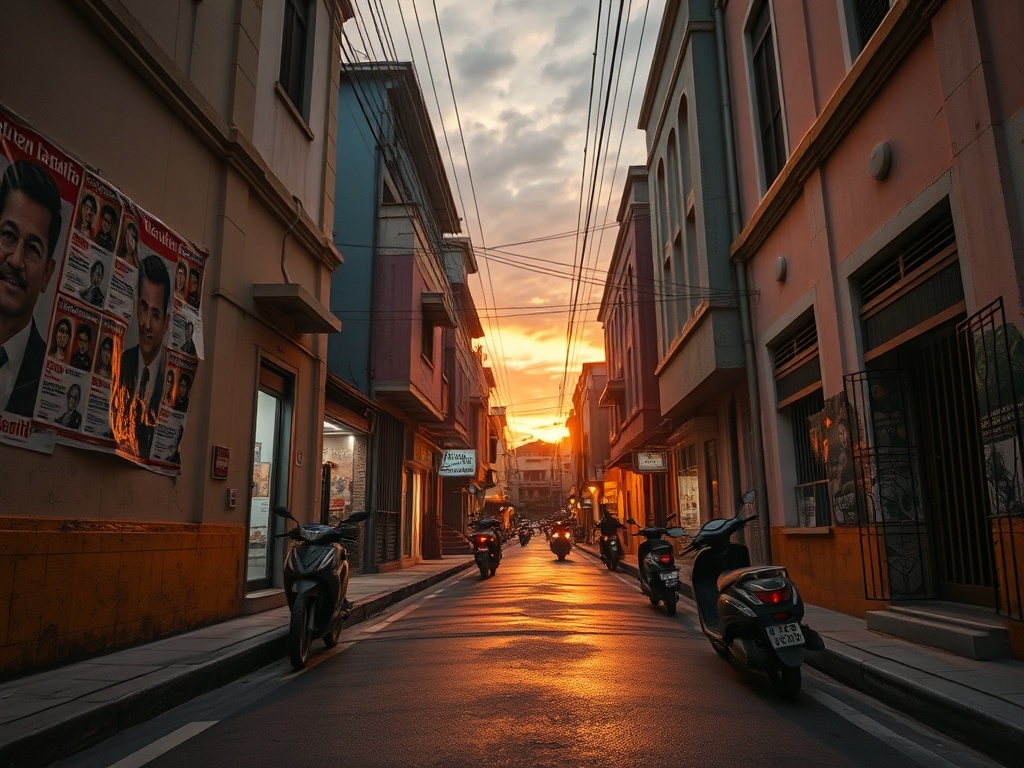
Fading Posters on Malé Walls, and No One Left to Believe In
The political conversation in Maldives has reached a critical juncture, characterized not by competing visions but by widespread disillusionment. The sentiment echoes across social media platforms and private discussions: a profound disappointment with both government and opposition that threatens the very foundations of democratic engagement.
This disillusionment manifests in multiple dimensions. First, there's the critique of opposition leadership—specifically the perceived lack of qualified, compelling candidates within established parties. The complaint that 'educated and qualified people are not interested' speaks to a deeper concern about political talent drain and the dominance of career politicians over substantive reformers.
Simultaneously, there's growing skepticism about the system's capacity for meaningful change. The presidential system, originally modeled on American democracy, faces mounting criticism for its compatibility with modern Maldivian politics. Critics argue the framework assumes a political landscape without factions or parties—a reality far removed from today's multiparty democracy where parliamentary control often trumps separation of powers.
The memory of past political transitions adds complexity to current frustrations. Many who lived through the Maumoon era recall the hope that accompanied democratic reforms, only to find the current situation feeling 'worse' in some respects. This isn't merely nostalgia but a genuine concern that the system has failed to deliver on its promise of accountable governance.
Amid this pessimism, some voices call for 'revolutionary action' rather than incremental reform. They point to successful rallies and grassroots movements as evidence that public energy exists, but question whether traditional political channels can harness it effectively. The government's control of parliament further fuels this perception that conventional opposition politics may be insufficient.
Yet the most telling indicator of the crisis may be the growing segment of citizens who declare they'll 'vote for any joker' rather than support established party candidates. This isn't mere apathy but active rejection—a warning sign that the social contract between citizens and their political representatives is fraying.
The challenge for Maldives' democracy isn't just about which party holds power, but whether the system can regenerate trust and participation. As one observer framed it, the question has become whether political structures designed for a different era can adapt to the realities of 21st century governance, or whether they'll continue to fuel the very disillusionment they were meant to overcome.
— Source fragments: Disappointing that MDP has only these two useless Azims. Educated and qualified people are not interested I guess; Presidential system of separation of powers is a fictitious system. It is incompatible to 2025 Maldives of multiparty democracy; Maldives feels like a lost cause drifting further away. I'll vote for any joker but can't stand to vote for anyone from any party ever again; Opposition politics is about strong activism