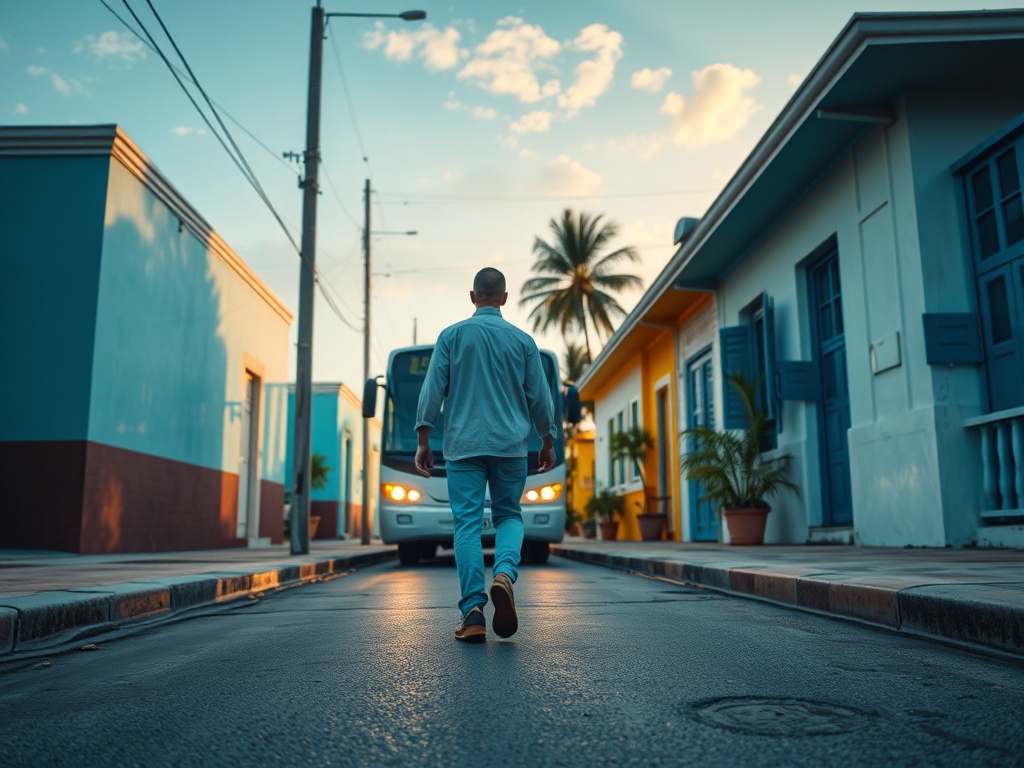
Feeling better from walking and bus compared to driving
Sometimes the most profound shifts in our daily lives come not from grand policy announcements, but from quiet personal realizations. In the humid evenings of Malé, or on the sandy paths of the outer atolls, a simple truth is echoing: the way we move through our world directly shapes how we feel within it. The comment about feeling noticeably better from walking and bus travel, compared to the recent reliance on driving, isn't just an isolated observation. It's a lived experience that countless others are likely encountering but have yet to articulate.
This speaks to a subtle but significant transformation in the Maldivian relationship with mobility and urban space. As development accelerates and vehicle ownership becomes more common, especially in the capital, we are conducting a vast, unplanned experiment on our own wellbeing. The physical act of walking—feeling the sun, nodding to neighbors, moving at a human pace—offers a rhythm that air-conditioned car cabins cannot replicate. The shared journey on a bus, with its inherent pauses and community presence, provides a social texture that solitary driving strips away. We are, perhaps without realizing it, trading passive convenience for active vitality.
Yet, this isn't merely about exercise. It's about the fabric of daily life. The comment hints at a re-evaluation of what 'convenience' truly means. Is it the speed of a car, or the holistic wellness gained from a more integrated, physical commute? As the nation celebrates the convenience of new passport services reaching every atoll—a genuine achievement for connectivity—this personal reflection invites a parallel conversation. It asks how we build our local environments. Do we prioritize infrastructure that encourages this healthy, active movement, or do we default to designs that favor the private vehicle, potentially at the cost of our collective health and the character of our islands?
The feeling of 'better' is powerful because it is subjective and deeply human. It can't be easily quantified in a economic report, but its impact on quality of life is immense. This single voice, noticing a change in their own body and mood, points toward a larger, collective question about the future we are building. It suggests that progress isn't just measured in services delivered or roads paved, but also in the silent, daily wellbeing of the people who inhabit these spaces. The real convenience of the future might just be the ability to walk through our communities and arrive home feeling not just transported, but truly better.