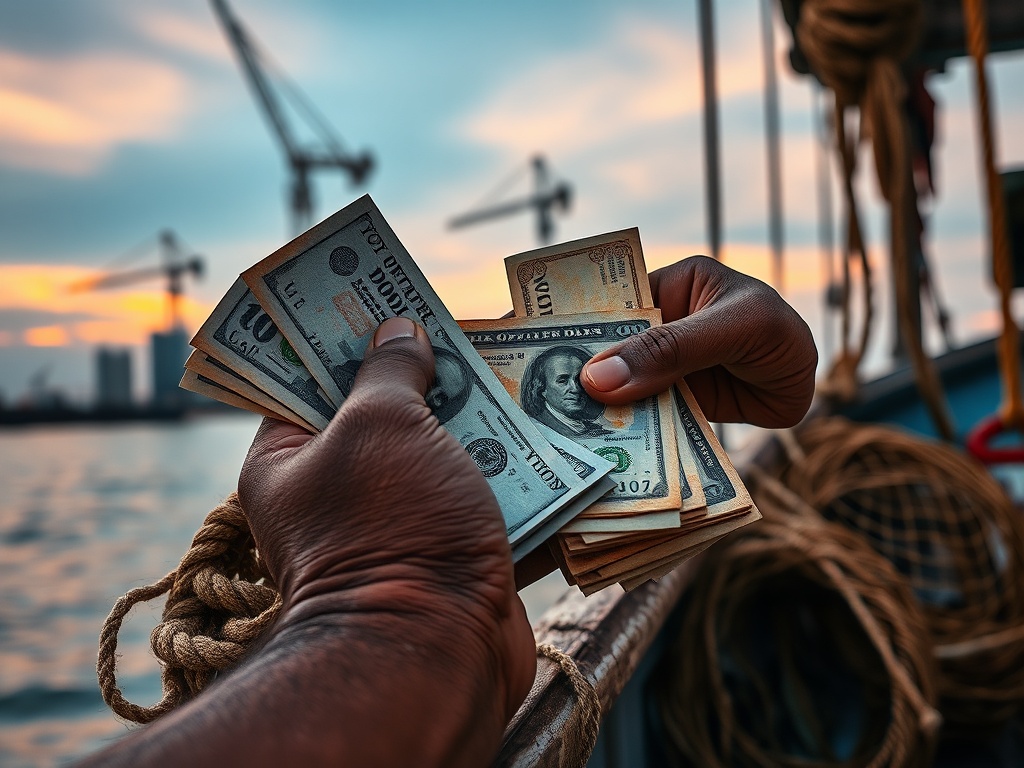
Fifty Years of Promises, the Same Two Currencies in Our Hands
The question hangs in the humid air like the salt spray off the reef: what really drives our economy? We've been told for fifty years about diversification, yet we remain tethered to the same cycles, the same dependencies. The frustration isn't just about policies—it's about the daily reality of holding rufiyaa that feels increasingly like paper promises.
In the narrow streets of Malé, the economic theories collide with human necessity. The shopkeeper faces an impossible equation: follow regulations that seem disconnected from the street's rhythm, or survive in an economy where the rules feel written for someone else. When we talk about currency policies, we're really talking about the fisherman who can't afford diesel, the construction worker watching his wages shrink against rising prices, the family calculating how many tins of tuna equal a day's work.
The resorts glitter on distant islands, economic engines running on foreign currency while local workers navigate the complicated exchange between dollars earned and rufiyaa paid. This isn't just about conversion rates—it's about the distance between where wealth is generated and where it's supposed to circulate. The black market isn't some shadowy conspiracy; it's the economy's pressure valve, the system's admission that official channels can't contain the reality of how money needs to move.
We've become experts in reading between the lines of economic announcements, translating government statements into their impact on the price of rice, the cost of a child's school uniform, the dream of building a home beyond the capital's congestion. The real private sector isn't the abstract concept in policy papers—it's the woman selling phone credit from a small counter, the man repairing fishing nets, the young graduate wondering if their education will translate into meaningful work.
Our economic conversations keep returning to the same fundamental tension: between the systems we're told to trust and the daily evidence that trust might be misplaced. The numbers matter less than the feeling of holding currency that doesn't hold its promise, of working in an economy that doesn't work for everyone.
— Source fragments: What is the 'private sector' that matters to our economy; Its not fair and they have no clue to fix this mess; maldivian workers suffering because they're being paid in ruffiya now instead of dollars; why does the resorts have mvr to pay workers in mvr in the first place; our economy needs diversification, we've been saying that for 50 years