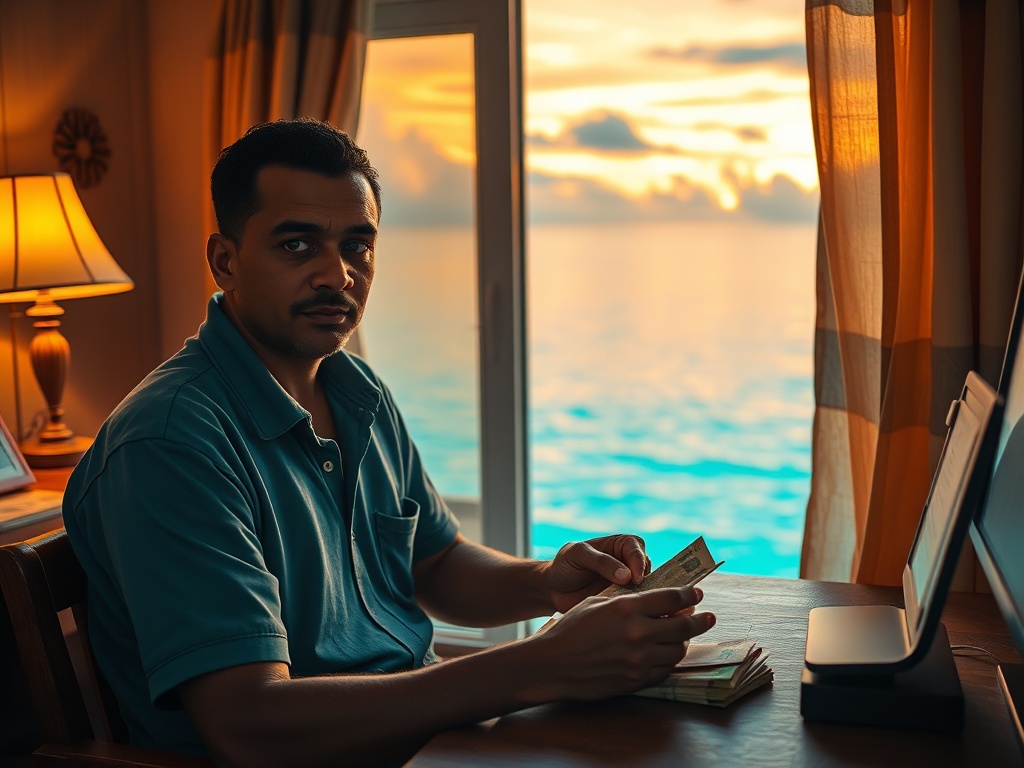
Fifty Years of Talking Diversification While Counting Rufiyaa
The question hangs in the salty air between islands—what truly constitutes the private sector that sustains us? It's not the newspapers, as one voice observes, but something more fundamental, woven into the fabric of our daily struggles. We've spoken of economic diversification for half a century, yet the conversation remains trapped in the same eddies, going round and round like a dhoni caught in a reef's current.
Now, new policies ripple through our lives. The generation ban, the remittance caps, the forced currency conversions—they land not as abstract concepts but as tangible shifts in the rhythm of our days. The resort worker who once received dollars now holds rufiyaa, feeling the invisible devaluation with each purchase at the corner shop. The shopkeeper, in turn, faces the impossible choice: obey regulations or survive, when survival means selling to the customer who comes with cash in hand.
There's a particular irony that stings—we watch drugs flow openly in broad daylight while debating cigarette sales, as if closing one small leak matters when the hull is already breached. The frustration isn't just about policy; it's about the feeling that those making decisions inhabit a different Maldives than the one where we wake to the call to prayer and the scent of salt and diesel.
Our economy, built on the beauty that draws visitors to our shores, sometimes feels like it's constructed on sand that shifts with each political tide. The resorts earn foreign currency, but where does it flow? The workers receive local currency, but what can it truly purchase? We speak of diversification as if it's a destination, when perhaps it's the journey itself—the daily navigation between what is mandated and what is necessary, between the economy on paper and the one that puts fish on the family table.
The real private sector isn't some distant entity; it's the sum of these small transactions, these quiet negotiations for dignity amid policy winds. It's the resilience that keeps opening shop each morning, even when the math doesn't add up. Perhaps fixing the economy begins not with grand pronouncements but with understanding the currents that already flow between us—the unspoken agreements, the shared burdens, the quiet determination that has always been our true national currency.
— Source fragments: What is the 'private sector' that matters to our economy?; even in the forced usd policy it's the maldivian workers suffering because they're being paid in ruffiya now instead of dollars; generation ban is a useless woke policy; why does the resorts have mvr to pay workers in mvr in the first place?; Yes, our economy needs diversification, we've been saying that for 50 years