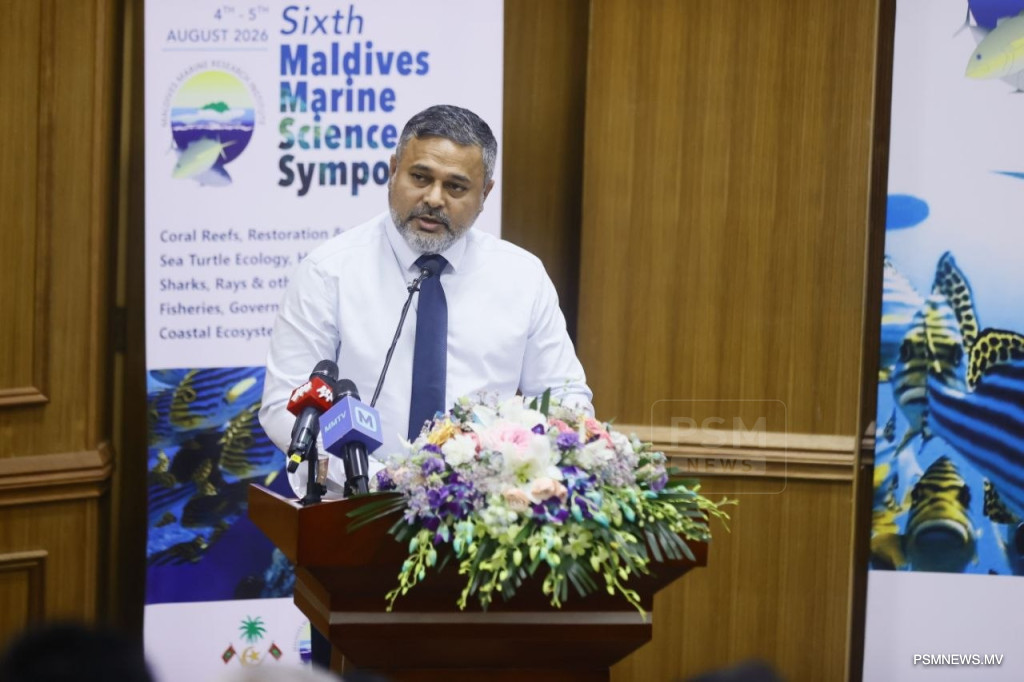
Fisheries Minister Urges Science-Based Policies to Protect Maldives Marine Resources
The Maldives must prioritize scientific research to safeguard its marine biodiversity and ensure the sustainable use of ocean resources, Minister of Fisheries, Agriculture and Ocean Resources Ahmed Shiyam announced.
Speaking as the keynote speaker at the 6th Marine Science Symposium, Minister Shiyam emphasized that the nation's vibrant coral reefs and unique ecosystems are the bedrock of the Maldivian economy and its communities. He noted that despite years of study, the ocean continues to yield new discoveries, highlighting a critical gap in current knowledge.
With the Maldives remaining one of the most vulnerable nations to climate change, the Minister stressed that research is no longer optional but essential. He called for a surge in data collection regarding coral reefs to develop scientific solutions that help local communities adapt to shifting environmental conditions.
"By investing in research and science, we can protect our marine environment, safeguard the livelihoods that depend on it, and build a sustainable future for generations to come," Minister Shiyam stated.
Aligning with President Dr Mohamed Muizzu's vision of a knowledge-based society, the government is shifting toward science-based decision-making to drive economic prosperity. A key pillar of this strategy is increasing the participation of Maldivians in the marine science sector through strategic collaborations with international experts.
Organized by the Maldives Marine Research Institute (MMRI), the biennial symposium serves as the country's premier forum for marine research. This year's event, held from August 4 to 5 at the Maldives National University, features 47 selected research papers. These are divided into 32 oral and 15 poster presentations.
The research spans five critical thematic areas: coral reef restoration and climate change; fisheries governance and society; sea turtle ecology and conservation; sharks, rays, and marine megafauna; and coastal ecosystems and seabirds.
Since its inception in 2016, the symposium has acted as a vital bridge between researchers, policymakers, and the public, facilitating the exchange of knowledge necessary to manage the Maldives' vast oceanic territory sustainably.