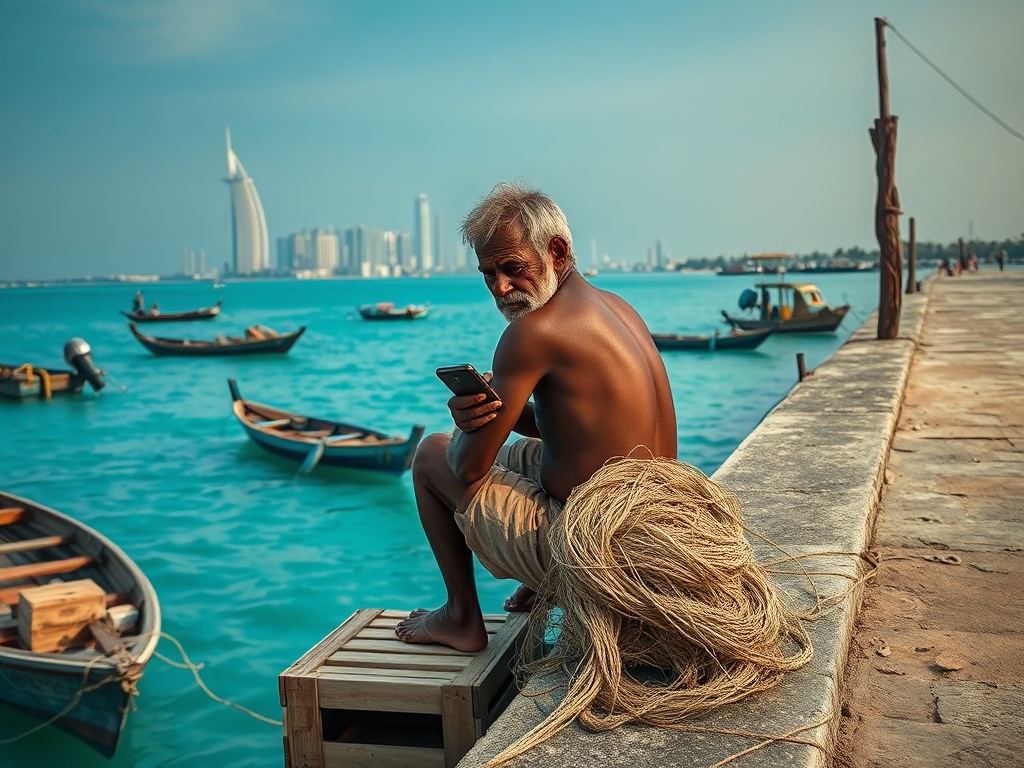
Fisherman's Net-Mending Hands Scroll Through Global Tensions
In the archipelago nation of Maldives, where politics and identity have become increasingly intertwined, recent geopolitical tensions have sparked intense public debate about the country's place in a divided world. The conversations unfolding across social media platforms and coffee shops reflect a nation grappling with its values, alliances, and international responsibilities.
When regional conflicts erupt thousands of miles away, their echoes reach Maldivian shores with surprising force. The country's 100% Muslim population brings particular sensitivity to conflicts involving Muslim communities abroad, creating moral and political imperatives that sometimes clash with diplomatic pragmatism. Recent discussions have highlighted this tension, with some citizens expressing strong positions on international matters while others question the consistency of such stances.
The relationship between foreign policy and domestic politics remains particularly fraught. Previous attempts to normalize relations with certain nations became political lightning rods, with critics framing such moves as betrayals of both religious solidarity and national interest. The emotional charge surrounding these debates reflects deeper anxieties about sovereignty and autonomy in a nation historically susceptible to external influence.
Meanwhile, the practical challenges facing ordinary Maldivians continue to mount. As youth unemployment persists and housing shortages worsen in the congested capital, some question whether international positioning distracts from urgent domestic concerns. The high cost of living, driven by economic policies that prioritize political expediency over sustainable development, creates a backdrop of everyday struggle against which geopolitical debates play out.
This tension between international idealism and domestic reality defines the current moment. As one of the world's most vulnerable nations to climate change and economic shocks, Maldives must navigate complex diplomatic waters while addressing systemic governance issues at home. The politicization of everything from judicial appointments to housing allocations undermines public trust in institutions precisely when consistent, principled leadership is most needed.
The conversations happening today reflect a society in transition—one seeking to balance religious identity with pragmatic statecraft, moral consistency with national interest, and international solidarity with domestic responsibility. How Maldives resolves these tensions will shape not just its foreign relationships but the quality of life for generations of Maldivians to come.
— Source fragments: Geopolitical positioning, normalization debates, religious identity in foreign policy, domestic governance challenges