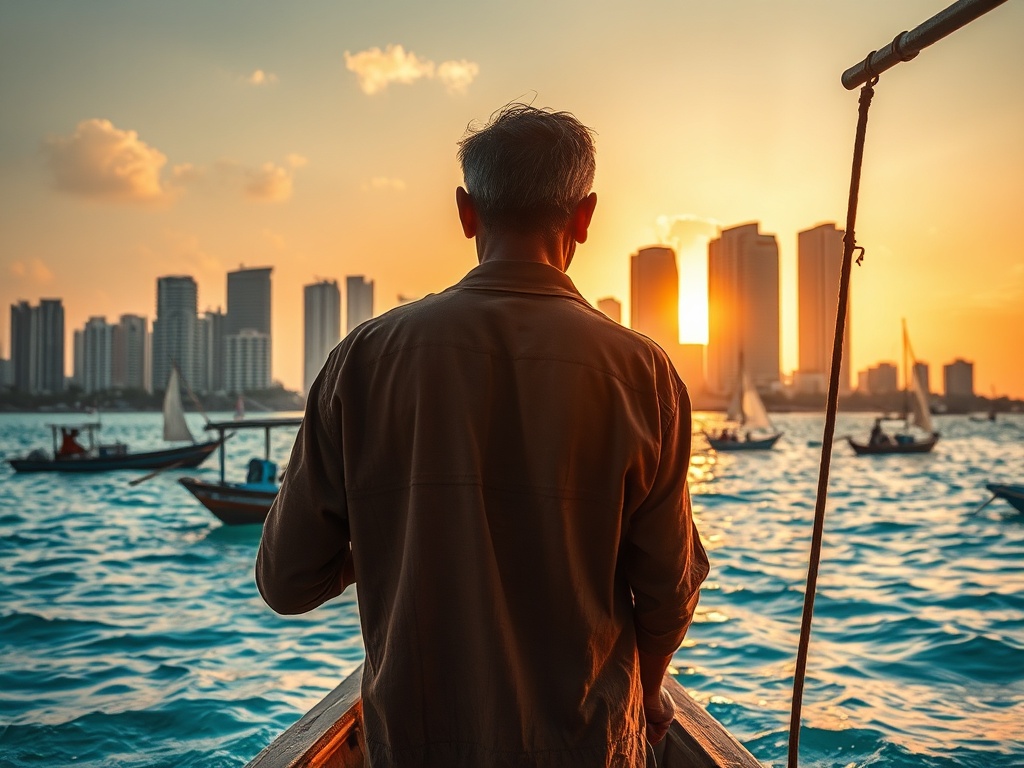
Fishermen Look Toward Malé, Questioning Centralized Power
In the scattered archipelago of the Maldives, where islands dot the Indian Ocean like emerald beads, the question of governance structure strikes at the heart of national identity. Why does a nation of small, distinct communities need centralized presidential power? This isn't merely an academic debate—it's a reflection of the growing disconnect many citizens feel between their daily lives and the political machinery operating from Malé.
The call for a 'minister of trees' portfolio, while whimsical on surface, reveals deeper yearnings for environmental stewardship and specialized attention to natural resources that sustain island communities. It speaks to the desire for governance that reflects local priorities rather than political ambitions.
Meanwhile, the proposal for digital complaint systems highlights how technology could bridge the physical distances that separate leaders from their constituents. The suggestion that rulers should dedicate regular time to directly hear citizen grievances—drawing from Islamic governance principles—points to a hunger for accessibility and responsiveness that current systems often lack.
This conversation unfolds against the backdrop of immigration policies aimed at monitoring foreign workers, a sensitive topic in a nation grappling with economic pressures and employment concerns. The acknowledgment that policies can and should evolve when proven ineffective represents a mature understanding of governance as an adaptive process rather than a fixed system.
At the municipal level, decisions about parking taxes and infrastructure studies demonstrate the tangible ways governance impacts daily life. Yet the suggestion to file Right to Information requests indicates that transparency remains a work in progress.
The underlying thread connecting these diverse voices is a search for governance that serves rather than commands, that listens rather than dictates. In an island nation where communities have historically governed themselves through local councils and traditional structures, the centralized presidential model sometimes feels like an imported solution to local challenges.
As Maldives continues its democratic evolution, these conversations suggest a population increasingly sophisticated in its understanding of governance mechanics. Citizens aren't just complaining about outcomes; they're questioning structures, proposing alternatives, and demanding systems that reflect both modern realities and traditional values.
The challenge ahead lies in building governance bridges—between islands and capital, between citizens and leaders, between traditional values and modern administration. The answers may not be simple, but the questions themselves represent progress in a nation learning to govern itself in the 21st century.
— Source fragments: Why do we need a president in an island nation? Why does there have to be one state one government?; A ruler who wants to abide by the Islamic method will dedicate at least 1 hour of his time a week to listen to complaints from his people, directly. In this day and age, it is easier than ever before. Set up a digital queue system; You should file to an RTI; I want the minister of trees portfolio