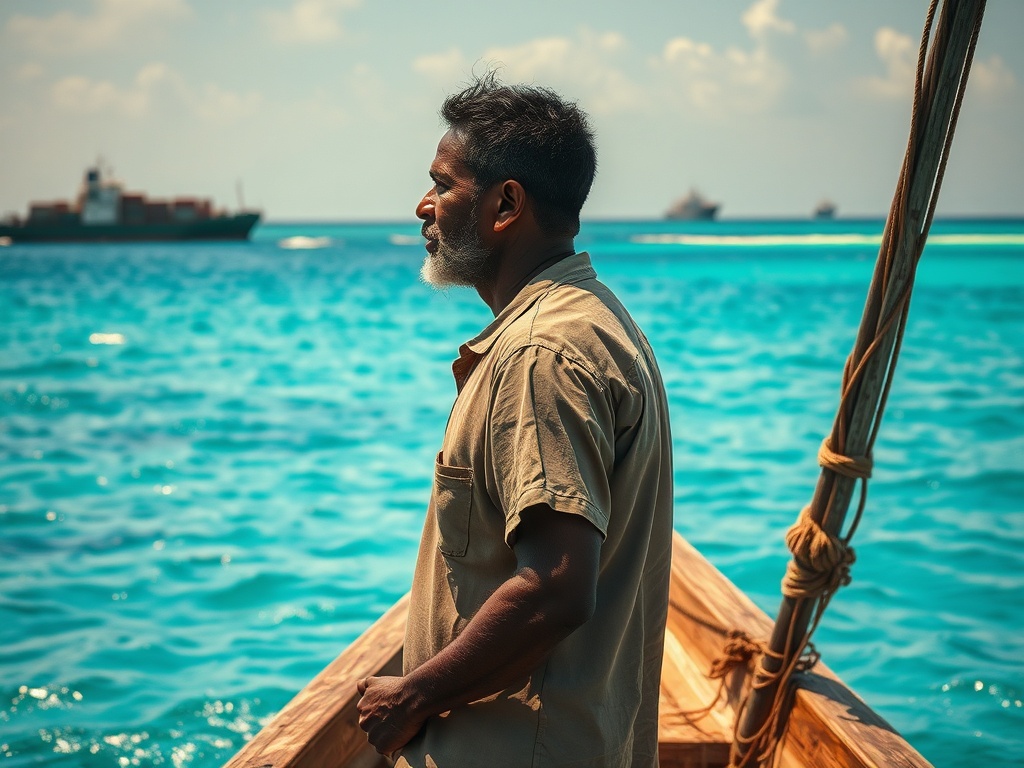
Fishermen Watch Foreign Ships Cross Their Horizon
The conversation about sovereignty in the Maldives has shifted from abstract principle to tangible fear. Across dinner tables and digital platforms, Maldivians are grappling with what it means to maintain national identity in an era of geopolitical maneuvering and economic dependency. The concerns are no longer theoretical—they're about the very fabric of Dhivehi Raajje.
At the heart lies a paradox: a nation fiercely protective of its independence yet acutely aware of its vulnerabilities. The strategic location that makes the Maldives a tourism paradise also makes it a geopolitical prize. When foreign powers acquire islands or extend influence, it triggers deep-seated anxieties about control and autonomy. These aren't mere diplomatic concerns—they're felt in the daily lives of citizens who wonder whether their children will inherit the Maldives they know.
The economic dimension compounds these fears. With limited investment in domestic defense capabilities and manufacturing, the nation remains dependent on external partners. This dependency creates a perpetual tension between pragmatic cooperation and perceived compromise. The debate has moved beyond simple nationalism to complex questions about how a small nation can maintain sovereignty while navigating global realities.
Meanwhile, demographic concerns reflect broader anxieties about cultural preservation. The hypothetical scenario of growing foreign communities and potential external influence touches on fundamental questions of identity. Will Dhivehi language, traditions, and governance structures remain dominant, or will they gradually erode beneath the weight of external interests?
This isn't just political rhetoric—it's a reflection of the Maldivian condition. A nation of scattered islands must constantly negotiate between isolation and engagement, between preserving what makes it unique and participating in a global system that often favors the powerful. The sovereignty debate has become a proxy for larger questions about the Maldives' place in the world and what it means to be Maldivian in the 21st century.
The challenge now is to transform these anxieties into constructive dialogue. How does a nation maintain its sovereignty while acknowledging interdependence? How does it protect its identity while engaging with the world? These questions define the current moment—a moment where fear and hope coexist in equal measure, and where the future of Dhivehi Raajje hangs in the balance.
— Source fragments: We are ready for our sovereignty to be easily dismantled; We have to sell our sovereignty because of lack of investment; Dhivehinge dhivehiraajje will then exist in history book only