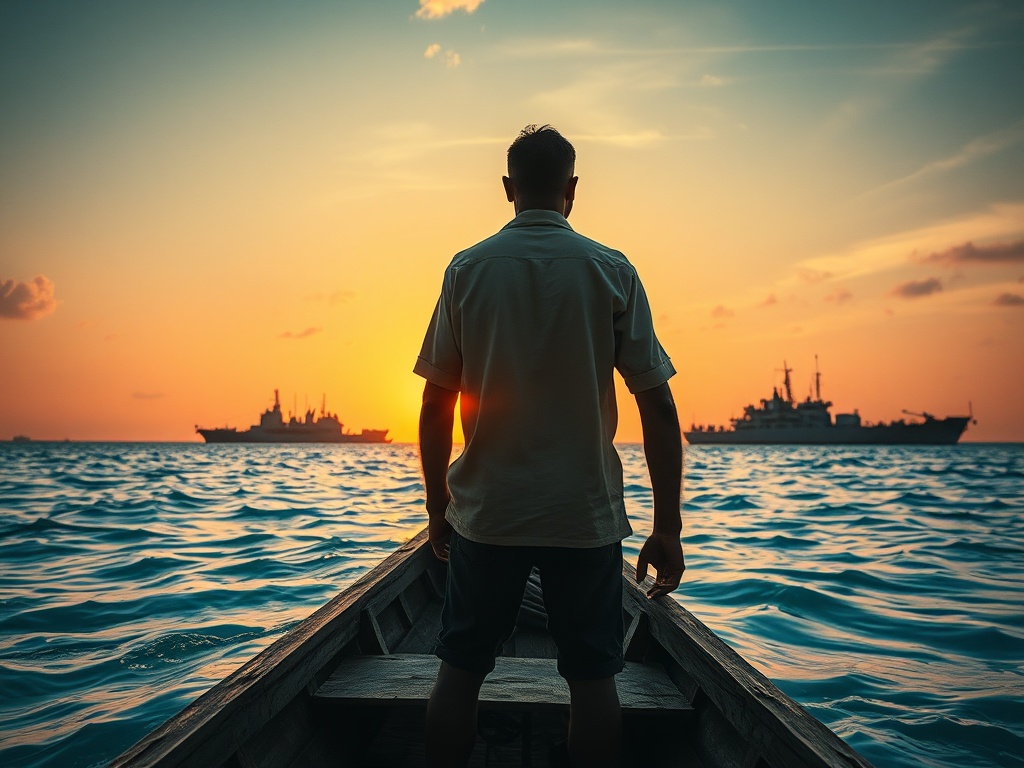
Fishermen Watch Foreign Warships Anchor Where British Left in 1976
The conversation begins with a stark acknowledgment: the Maldives finds itself in uncharted waters. For the first time since the British base closure in 1976, foreign military presence has become a reality in the archipelago. This development has ignited a complex national dialogue about sovereignty, security, and spending priorities that cuts across generational lines.
At the heart of the debate lies the tension between perceived external threats and internal necessities. Proponents of increased military spending argue that with Indian military assets already operating within Maldivian territory—including helicopters and planes that reportedly answer only to their embassy—the nation has no choice but to bolster its defensive capabilities. The sentiment echoes through social media: "We need to spend on military more now because we have another country's military here for some reason."
Yet counterarguments question the fundamental premise of this military buildup. Critics point to the Maldives' unique position: no territorial conflicts with neighbors, no imminent invasion threats, and a military budget that, at 4% of annual spending, represents significant resources that could be redirected toward education, healthcare, housing, and decentralized services. The comparison is sobering—the combined GDP of the Maldives over 25 years would only match one year of India's military budget, raising questions about the effectiveness of any arms race.
The discourse reveals deeper anxieties about national agency in a region where major powers are expanding their influence. With Indian vessels reportedly patrolling the Exclusive Economic Zone and multiple foreign militaries operating in the vicinity, some citizens fear the Maldives is becoming collateral in larger geopolitical contests. The worry isn't just about sovereignty in principle, but about becoming "physically ravaged in case of war" between competing powers.
Meanwhile, practical concerns about basic services persist. Islands lack fundamental infrastructure, the nation faces loan repayments, and the housing crisis in Malé continues unabated. The question being asked isn't whether coastal protection and emergency services deserve funding, but whether million-dollar weapons systems represent the wisest use of limited national resources.
This isn't merely a policy debate—it's a conversation about national identity and future direction. Should the Maldives pursue militarization as a path to sovereignty, or invest in human development and diplomatic engagement? The answers being forged in public discourse will likely shape the archipelago's trajectory for decades to come, as it navigates the delicate balance between asserting independence and recognizing regional realities.
— Source fragments: traditional libraries with books and stuff... i think that era is gone; We shall spend on our defense; India is slowly trying to assert their power; Maldives didn't had a foreign military base except for the British base which closed in 1976; 4% of annual budget; We can stop military spendings and allocate the money to education, housing, health; militarizing Maldivian territory with military presence from three countries; Our EEZ is patrolled 24/7 by Indian military vessels; Maldives has no enemy countries, no territorial conflict