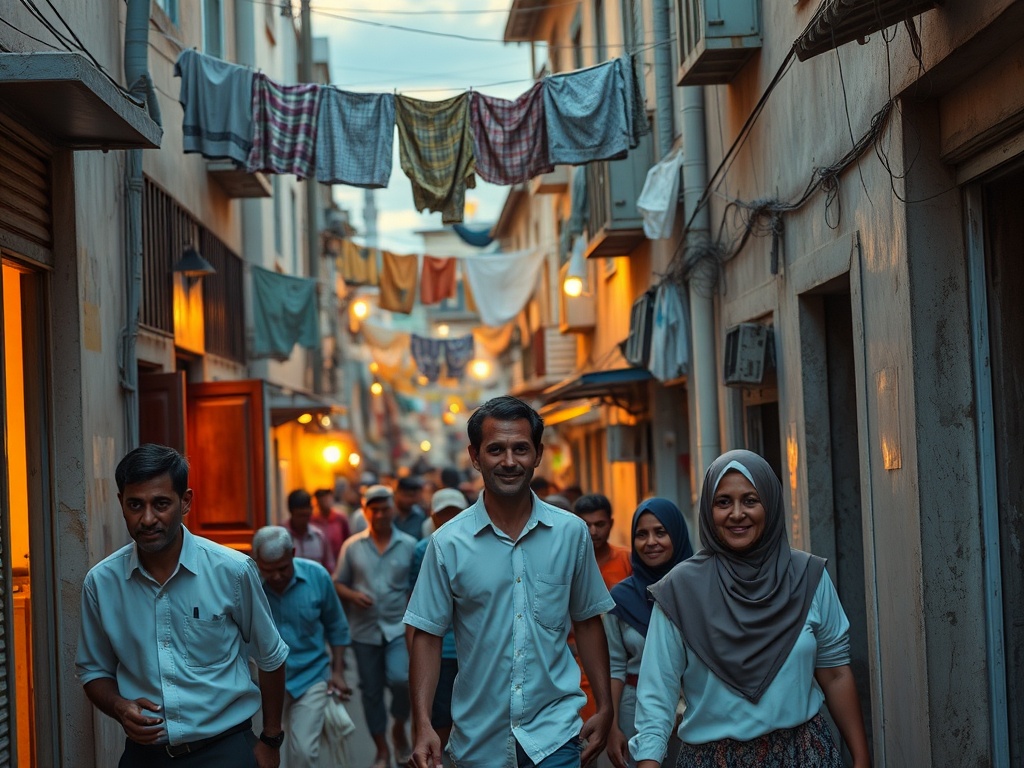
Five Families Share One Apartment in Malé
In the cramped living rooms of Malé, where multiple families often share a single small apartment, a quiet desperation has been building for years. The promise of housing—a basic human need—has become a political bargaining chip, leaving thousands trapped in a cycle of unaffordable rent and vanishing opportunities.
The recent distribution of land in Hulhumalé Phase 2 was meant to represent progress, but instead revealed the same patterns that have plagued Maldivian housing policy for generations. Within weeks of allocation, some recipients were already listing their plots for sale on online marketplaces—a stark betrayal of the program's intended purpose. This isn't merely about individual choices; it's about a systemic failure that perpetuates elitism and inequality.
At the heart of the crisis lies a fundamental imbalance. While some receive government-subsidized land and loans to build houses, thousands of Malé natives face the reality of paying 24,000 rufiyaa or more monthly for apartments they will never own. The mathematics of survival in the capital have become brutal: 16,000 for a two-bedroom, 23,000 for three bedrooms—figures that drain household budgets and crush aspirations.
The government's contradictory approach exacerbates the problem. While authorities readily fix taxi rates for vehicle owners, they claim helplessness when it comes to regulating a rental market that's breaking the backs of working families. This selective intervention reveals priorities that favor certain constituencies over others, creating a system where housing security depends more on connections than need.
Meanwhile, the human cost accumulates in silent ways. Children who grew up in Malé now watch their own children become adults, all while waiting for the housing solutions that never materialize. The argument that islanders forced to migrate to Malé deserve consideration is valid, but it shouldn't come at the expense of those born and raised in the capital, for whom these crowded four walls represent their only option.
The solution requires moving beyond temporary fixes and political patronage. True reform would address both the speculative practices that distort the market and the fundamental shortage of affordable housing. It would recognize that when people pay exorbitant rents for government-subsidized housing units—units where the original loans have long been paid off—the system has failed its basic purpose.
What's needed isn't just more construction, but a comprehensive policy that prioritizes those most in need, prevents speculation, and creates a fair rental market. Until then, the dream of a home in Malé will remain just that—a dream deferred for another generation.
— Source fragments: No one believes any of what was given was given through a comprehensive policy; Some selling Hulhumalé Phase 2 plots on ibay; Malé citizens deprived of housing rights for years; I have lived in Malé since I was seven, my children are now adults, still no flat; What about 'I was born here and these four walls are my only option'; Malé meeha should get priority; Someone must always be there to pay rent; Gov gives free land & loans yet says it can't regulate rent; I'm from Male' paying 24k for rent