Five Years Away, One Look at the Atolls
The plane descended through clouds that felt like damp cotton, and suddenly there it was—the atolls scattered across the Indian Ocean like turquoise shards of broken glass. After five years studying civil engineering in Malaysia, Aishath was coming home.
Her father met her at Velana Airport, his face more lined than she remembered. 'The sea misses you,' he said, his voice rough with emotion. They took the ferry to Malé, the city rising from the water like a concrete reef. The capital felt different—denser, louder, the air thick with diesel fumes and the salt-tang of the sea.
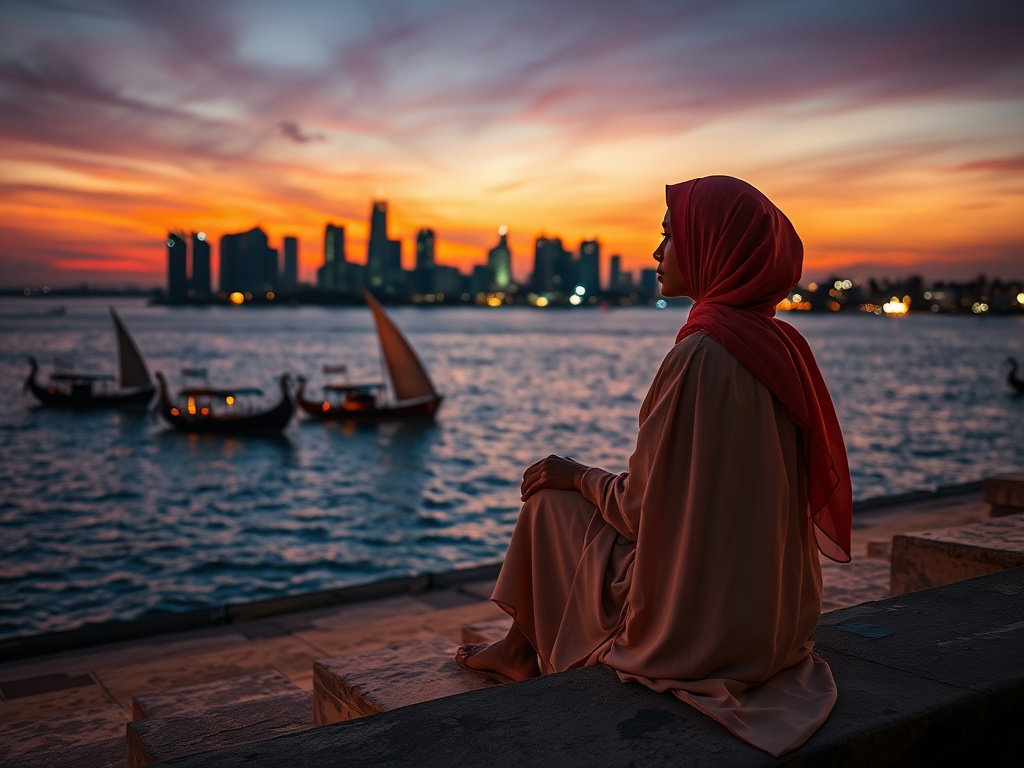
That evening, sitting on the concrete steps leading to their family's modest home, Aishath watched the dhoni boats crisscross the harbor. Her father spoke of neighbors—young men who'd taken construction jobs in Saudi Arabia, others who'd turned to fishing after tourism jobs disappeared during the pandemic. His own brother's son had gotten caught up with pills, his dreams dissolving like sugar in tea.
'Your cousin Hassan—he finished his business degree last year,' her father said, stirring his sweet milk tea. 'Still helping at his uncle's shop. Says there are no positions.'
Aishath thought of her engineering textbooks, the precise calculations, the clean lines of structural designs. Here, everything seemed to curve and flow like water around obstacles. Her aunt visited later, complaining about the flat they'd been waiting seven years to get through the housing scheme. 'They gave it to someone's nephew,' she said bitterly. 'We're still in that room with the leaking ceiling.'
Later, walking through the narrow streets as evening prayer calls echoed between buildings, Aishath passed a new luxury resort office with glossy photos of overwater villas. A young European couple examined dive packages while local staff stood patiently behind counters. The contrast stung—this world of curated paradise existing alongside the daily struggles just outside the glass doors.
She thought of her university friends who'd taken jobs abroad and never returned. The brain drain, her professors had called it. But standing here, feeling the humid embrace of the familiar air, understanding the unspoken expectation in her father's eyes, she wondered what was heavier—the weight of leaving or the weight of staying.
That night, lying under the slow-turning fan in her childhood room, Aishath listened to the rhythm of the sea against the seawall. Each wave carried stories—of fishermen navigating changing currents, of mothers saving for children's education, of young people trying to build futures on these fragile islands. Her engineering degree felt both useless and essential here, like bringing a blueprint to a living organism.
The islands didn't need fixing so much as understanding—how to build without breaking, how to grow without drowning what made them home. And as sleep finally claimed her, Aishath dreamed not of concrete and steel, but of finding the delicate balance between holding on and letting go, like learning to walk on water without making waves.
— Source fragments: Youth issues: unemployment, lack of educational/job opportunities; Housing crisis in congested capital; Tourism is main forex source but limited national benefit; Many travel abroad for treatment/education