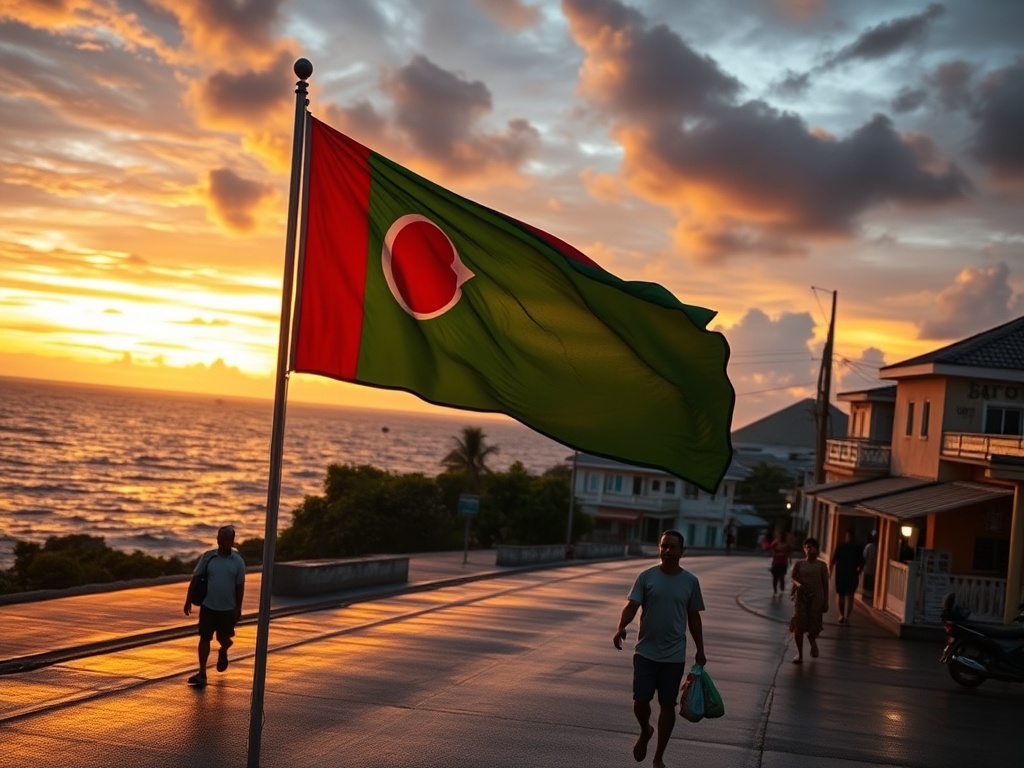
Flags Fly While Daily Lives Unfold Unchanged
The flags flutter with practiced precision, the parades march in perfect formation, and the speeches echo across the islands. Another Republic Day unfolds across the Maldives with all the ceremonial grandeur one would expect. Yet beneath the surface of official celebration, a quiet dissonance grows louder each year.
For many Maldivians, the day meant to symbolize national unity now serves as a stark reminder of division. The carefully choreographed displays of patriotism feel increasingly distant from the daily struggles facing ordinary citizens. While official rhetoric speaks of collective progress, the lived experience tells a different story—one of economic pressures, political polarization, and a growing sense that the nation's founding ideals have been overshadowed by contemporary realities.
The disconnect manifests in subtle ways. The same citizens who watch flag-raising ceremonies return to homes grappling with the highest cost of living in recent memory. The youth who participate in school events face uncertain futures in an economy where opportunity seems increasingly concentrated. The families who gather for public celebrations do so in a capital where housing remains a perpetual crisis and healthcare often requires traveling abroad.
This isn't merely about political disagreement—it's about the erosion of shared meaning. Republic Day was conceived as a moment to reflect on collective identity and common purpose. Yet as governance becomes more centralized and political rights face new pressures, the celebration risks becoming performative rather than participatory. The symbols remain powerful, but their connection to daily life grows more tenuous.
The challenge isn't in abandoning tradition, but in reimagining what national unity means in a complex modern society. True celebration requires more than ceremonial observance—it demands genuine engagement with the concerns that shape Maldivian lives. It calls for bridging the gap between official narratives and lived experiences, between political power and public need.
As the last speeches fade and the flags are carefully stored away, the question lingers: How do we restore the sense of common purpose that Republic Day was meant to embody? The answer may lie not in grander celebrations, but in quieter conversations—in recognizing that national unity is built not through spectacle, but through addressing the real divisions that separate us.
— Source fragments: Each Republic Day feels less like a celebration of the people and more like a show for those in power. Somehow, the day meant to unite us now only reminds me of how disconnected we've become