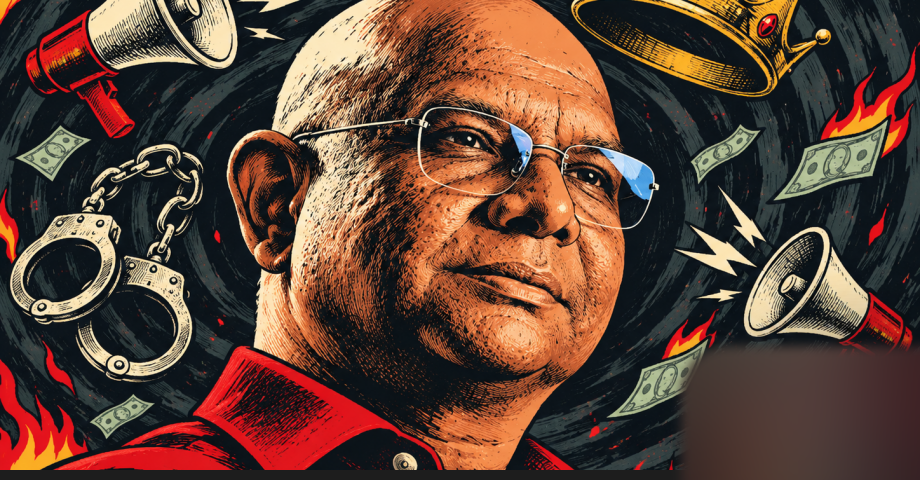
Former Maldives Speaker Abdulla Shahid Arrested on Child Sexual Assault Charges, Sparking Debate on Justice and Privilege
A controversial case has reignited debate in the Maldives over whether family name and political influence can shield individuals from legal accountability, following the arrest of former Foreign Minister and former Speaker of the People’s Majlis, Abdulla Shahid.
Abdulla Shahid, 64, was arrested at approximately 21:59 on Monday under a court order in connection with allegations of sexually assaulting a child under 18 years of age while in a position of trust. He was produced at the Criminal Court on Tuesday for a bail hearing, where the court ordered him to be detained for 30 days—the maximum period allowed under law—citing the nature and seriousness of the alleged crime and plausible evidence submitted by police.
Shortly before his arrest, Abdulla Shahid denied the allegations in a post on X, appealing to the public and media not to spread untrue stories. He claimed the case was politically motivated, though police have not linked the investigation to his political activities.
Commentators have highlighted the double standards in how such accusations are treated depending on the accused's social standing. Abdulla Shahid comes from a prominent family; he is the son of Sheikh Mohamed Jameel and Maimoona Vajeer, and Sheikh Mohamed Jameel belongs to influential political families in Malé, such as the Kakagey, Bodugaley (or Daravandhey), and Velidugey lineages. Critics argue that such family prestige should not serve as a shield against legal scrutiny, nor should it automatically equate to innocence.
The case has also drawn attention to political hypocrisy. The article notes that within Maldivian political parties, sexual assault allegations against opponents are loudly condemned, but when similar accusations target senior figures in one's own party, silence or political protection often follows. For instance, former Tourism Minister Ali Wahid—who was removed from office and charged in 2021 over allegations of sexually assaulting female Ministry of Tourism employees—was included in Abdulla Shahid’s campaign for the Maldivian Democratic Party (MDP) presidential ticket, despite public criticism. The charges against Ali Wahid were withdrawn before he returned to the country in July 2023.
The piece further questions why senior female political figures in the MDP who advocate for women and children’s rights have not issued statements on Abdulla Shahid’s arrest, suggesting that advocacy should not depend on the political affiliation of the accused.
Above all, the report emphasizes that the child who claims to have been abused must be protected, regardless of the accused’s influence or fame. It calls for an end to the culture of treating “adults” and “upper-class families” differently from ordinary citizens, insisting that conviction or acquittal must be based solely on evidence and legal procedures, without regard to family lineage, political party, wealth, or past positions.