Free Land, Full Islands, and the Tax Bill to Come
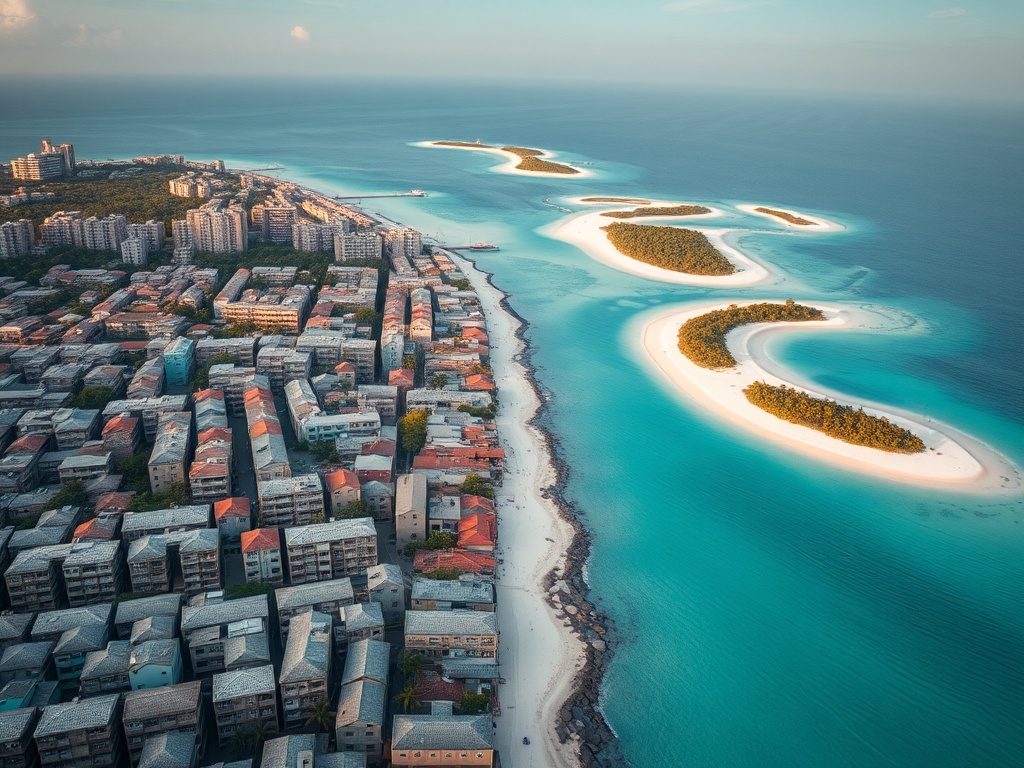
The debate over free land distribution in the Maldives has moved beyond simple political rhetoric into a complex examination of national resources, equity, and sustainable development. Across social media and public discourse, citizens are grappling with the reality that in a nation of scattered islands and limited space, every plot given represents an opportunity cost that cannot be recovered.
The core tension lies between the immediate need for housing and the long-term consequences of land allocation. Critics point to cases where individuals with existing properties in Malé and other islands still receive plots through government schemes, raising questions about targeting and fairness. The emotional appeal of land ownership clashes with the practical reality that we simply lack the physical space to provide substantial plots to every citizen.
This isn't merely about the Binveriya scheme itself, but about comprehensive reform of land ownership and social housing policies nationwide. The conversation has evolved to consider practical mechanisms like land value taxation, which could address the problem of speculative land banking where recipients hold plots without developing them. Currently, there's little financial incentive to either develop or relinquish unused land.
The geographical disparities in land value create another layer of complexity. A plot in Hulhumalé carries different economic potential than one in Mathimaradhoo, affecting everything from rental profitability to tax obligations. This uneven playing field means that the same policy produces dramatically different outcomes depending on location.
What's emerging is recognition that while canceling existing land distributions may be politically impossible, there's growing consensus against repeating such schemes. The discussion has shifted toward making the best of current allocations while establishing more sustainable policies for the future. This includes addressing the fundamental reasons people cluster in Malé—not just for land, but for education, healthcare, and employment opportunities that remain concentrated in the capital.
The land debate ultimately reflects broader questions about development priorities and resource management in a small island nation. As one observer noted, the conversation has moved from whether we can give land to whether we should, and what systems need to change to ensure that land distribution serves national interests rather than political cycles.
— Source fragments: Multiple tweets discussing Binveriya scheme equity issues, land scarcity arguments, taxation proposals, geographical disparities in land value, and calls for comprehensive reform rather than just scheme cancellation