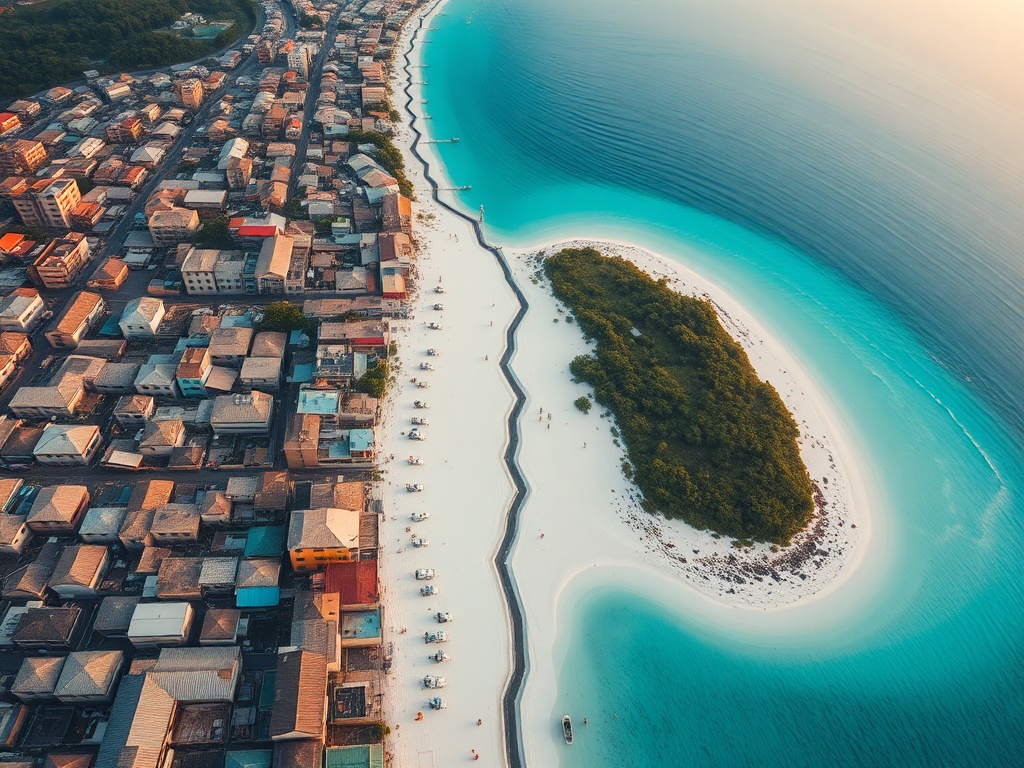
Free Land Plots in Malé Region, a Nation Divided
The announcement of free land plots in the Greater Malé Region was meant to be a solution. Instead, it has become a mirror reflecting the complex social geography of the Maldives, where questions of who deserves what—and why—reveal fundamental tensions in how this nation sees itself.
At the heart of the controversy lies a simple, painful question: Does being from Malé make you more or less deserving of state resources? The debate has polarized social media, with some arguing that Malé residents shouldn't receive free land in the capital because the city was built on national resources and should serve the entire country's future. Others counter that Malé supremacy—the perceived dominance of capital residents in political and economic life—threatens to marginalize the rest of the nation.
This isn't merely about real estate. It's about historical memory and intergenerational trauma. Many from the atolls recall decades of centralized governance that prioritized Malé's development while outer islands languished. The dismissive attitude toward what some call 'raajjetherey meehaa'—those from the outer atolls—reflects deeper wounds that have never fully healed.
Meanwhile, a generation finds itself caught between two worlds. They are the 'baakee generation'—those who left islands with limited opportunities for Malé, only to discover that their island origins still mark them as outsiders in the capital. They navigate a liminal space where they're not fully of the islands nor fully of Malé, facing what many describe as systemic discrimination in housing and employment.
The language of the debate itself has become contentious. The distinction between 'RT' (Raajjetherey, or from the atolls) and 'Malé meeha' (Malé people) carries emotional weight, with some finding certain terms offensive while others see them as simple descriptors. This linguistic tension underscores how deeply identity politics has penetrated everyday discourse.
What emerges from these fragmented voices is a picture of a society grappling with the legacy of centralization. The concentration of resources, opportunities, and political power in Malé has created what critics call an 'elite Malé' class—landlords who benefit from the very system that disadvantages others. Yet many Malé residents themselves struggle with the same housing crisis, living in cramped conditions while watching valuable land being distributed through what they perceive as discriminatory policies.
The solution, many argue, isn't to pit Malé against the atolls, but to address the underlying 'thafaathu kurun'—discrimination—that affects citizens regardless of their origin. As one voice noted, 'The Malé person should have the same rights as the RT person.' Until the conversation moves beyond geographical determinism toward equitable principles that recognize every Maldivian's equal claim to dignity and opportunity, these divisions will likely persist, shaping not just who gets land today, but what kind of nation the Maldives becomes tomorrow.
— Source fragments: Malé people don't deserve Free land; Malé supremacy will ruin rest of Maldives; trauma forced upon raajjetherey meehaa; baakee generation no opportunity; thafaathu kurun is the problem; discrimination in land distribution; geographic inequality in rights and opportunities