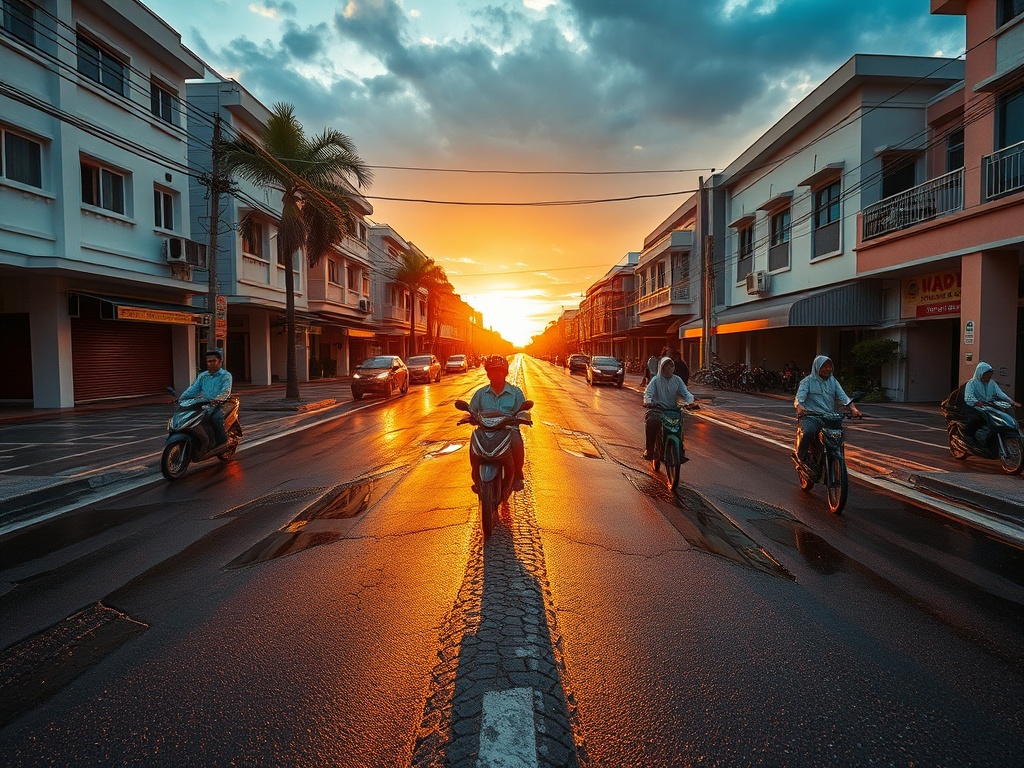
Fresh Asphalt, Permanent Trenches: Hulhumale's Unwalkable Promise
The freshly laid asphalt on Hulhumale's main roads tells a familiar story of urban decay in paradise. What should be smooth thoroughfares connecting a modern planned community have become patchworks of utility trenches and temporary repairs, their structural integrity permanently compromised by repeated digging and poor execution. This isn't just about potholes—it's about a fundamental failure in urban planning that forces residents into expensive, environmentally damaging transportation choices.
The cycle is predictable and frustrating: a road is built, then utility companies dig it up for water, electricity, or telecommunications work. The repairs are temporary, the surface never fully recovers, and within months, the process repeats. Each iteration weakens the road's foundation until what remains is a bumpy, uneven surface that's unpleasant to drive on and dangerous to walk along.
This systemic incompetence has real consequences for residents who now face an impossible choice: navigate these unwalkable streets or invest in what one resident calls a "40,000 to 100,000 death machine"—a private vehicle that becomes not a luxury but a necessity. The working conditions and infrastructure design actively discourage walking as a viable commuting option, creating a car-dependent culture in a country that can ill afford more traffic congestion and environmental damage.
The irony is particularly sharp in Hulhumale, conceived as a modern solution to Malé's overcrowding. Planned communities should prioritize pedestrian access, public transportation, and mixed-use development that reduces the need for private vehicles. Instead, residents find themselves replicating the very problems the development was meant to solve.
Even the placement of essential services like police stations becomes another point of frustration when viewed through this lens of poor planning. Rather than being integrated thoughtfully into the urban fabric, facilities appear with little consideration for how they affect neighborhood character or resident quality of life.
The broader implications extend beyond transportation. When cities aren't walkable, community interaction suffers, local businesses struggle without foot traffic, and public health declines as physical activity becomes inconvenient. The environmental cost of increased vehicle emissions compounds the climate vulnerability that already threatens the Maldives' very existence.
What's needed isn't just better road maintenance but a fundamental rethinking of urban design philosophy—one that prioritizes people over vehicles, long-term planning over quick fixes, and sustainable development over political expediency. Until then, residents of even the newest Maldivian communities will continue paying the price of systemic planning failures, both in their wallets and in their quality of life.
— Source fragments: Road conditions in Hulhumale, systemic incompetence in urban planning, repeated utility trenching destroying road integrity, necessity of car ownership due to unwalkable conditions