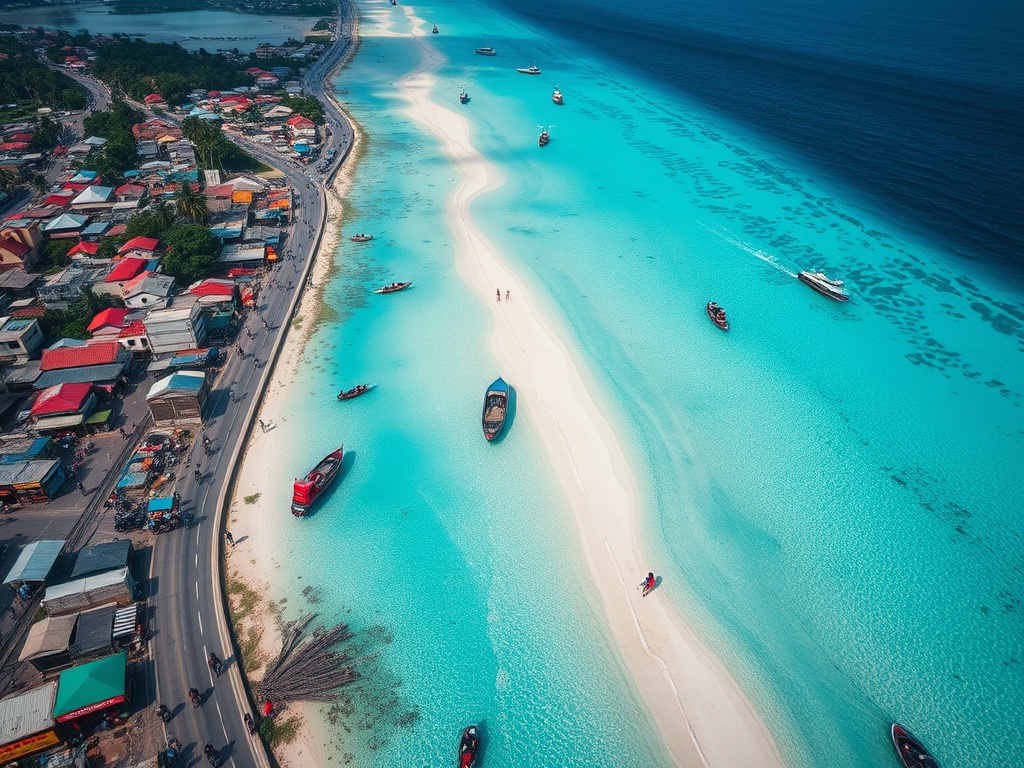
From 200 Islands to One City's Morning Rush
Every morning, the ferry terminals and airport lounges of the Maldives tell the same story—a nation in motion, flowing toward a single point. From over 200 scattered islands, students, job seekers, and entrepreneurs converge on Malé, drawn by the gravitational pull of an economy designed with one city at its center. This migration isn't merely about convenience; it's about survival in a system that offers few alternatives.
The question haunting this archipelago isn't why Malé has become so crowded, but why other potential urban centers remain undeveloped. The answer lies in an economic reality where we've built magnificent resorts but failed to cultivate the business infrastructure that would allow innovation to take root beyond tourism. We have offices but lack the companies that transform ideas into industries. We have talent but provide few platforms for it to flourish locally.
Consider the curious case of one of the most successful Maldivian-founded companies now worth millions—registered not in Malé but overseas. This isn't betrayal; it's pragmatism. When the ecosystem for research, development, and scaling businesses doesn't exist at home, ambition naturally seeks more fertile ground. The loss isn't just symbolic; it represents economic potential that could have created jobs, inspired others, and diversified our national revenue streams.
The human cost of this economic monoculture is measured in separation. Thousands live for years apart from parents and families, surviving however they can in the greater Malé region because opportunities elsewhere remain scarce. This isn't a temporary arrangement but a permanent feature of Maldivian life—a generational displacement that weakens community bonds and strains social fabric.
The solution requires more than just building physical infrastructure in other atolls. It demands reimagining our economic priorities to actively cultivate ventures beyond tourism. This means creating the regulatory environment, financial incentives, and educational pathways that allow technology, creative industries, and specialized services to thrive. It means recognizing that economic diversification isn't a luxury but a necessity for national resilience.
As other island nations have demonstrated, geographic dispersion need not mean economic fragmentation. With strategic planning and investment, regional hubs could emerge as centers for specific industries, reducing pressure on Malé while creating new pathways for prosperity across the archipelago. The alternative is continuing a pattern where our brightest ideas and most ambitious ventures must either shrink to fit Malé's limitations or leave the country entirely.
The tide of people flowing toward Malé each day represents both a challenge and an opportunity—the chance to build an economy that serves all islands, not just one city.
— Source fragments: What's stopping governments from developing 4 mega cities that's not Male'? We have nothing to develop except few offices. There are no companies that does anything really. The only solution is we need to expand ventures beyond Tourism. Thats what almost everyone from over 200 islands have been doing for decades, coming to Male' for everything due to how our economy is designed. Thousands live away from their parents & families for years surviving on whatever way they can in the greater Male' region. Why is one of the biggest MV made companies currently worth millions in USD registered to USA? Could have been MV if we had the infrastructure.