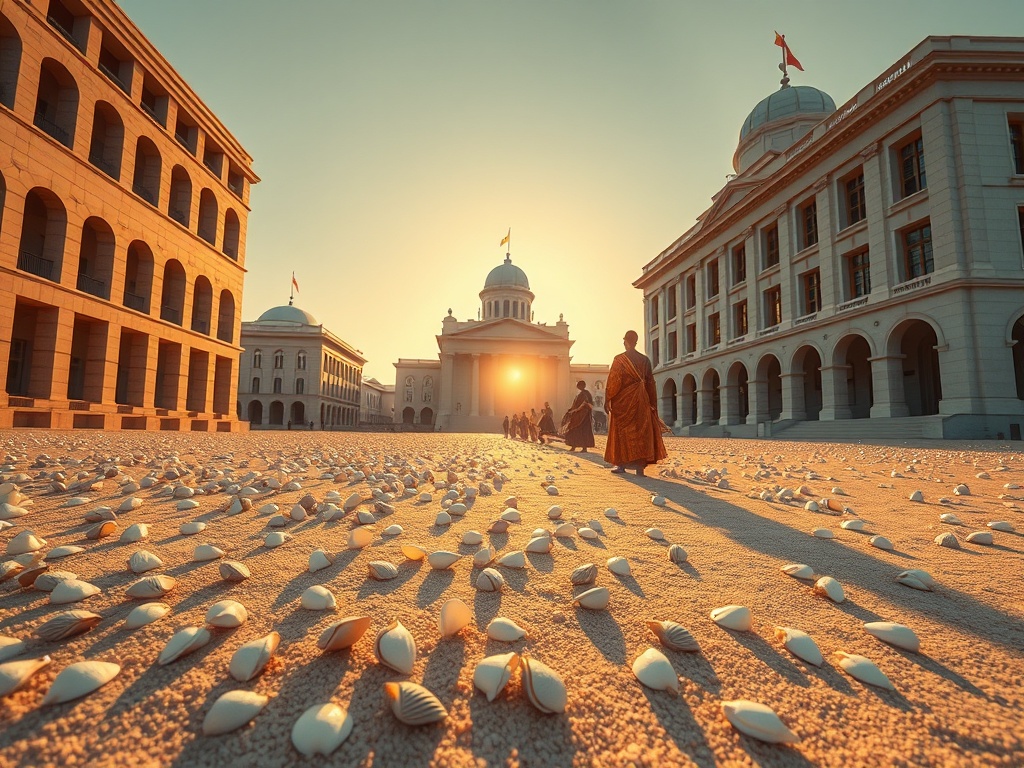
From Cowrie Shells to the Halls of Malé's Power
In the archipelago's collective memory, cowrie shells once represented more than mere currency. They were the bedrock of Maldivian prosperity, the medium through which our forefathers built fortunes and secured contentment. These small, gleaming treasures from the sea established social hierarchies and economic stability in a nation defined by its relationship with the ocean.
Today, the dynamics of looking up to those in power persist, though the currency has changed. Where cowrie shells once determined status, political influence now serves as the new measure of elevation. The observation that 'proud men don't like having to look up' resonates deeply in contemporary Maldivian society, where positions of authority carry both visible and invisible weight.
The transition from tangible economic symbols to abstract political capital reflects broader shifts in how Maldivians conceptualize power. Where once wealth was measured in shells harvested from the sea, today it manifests in government appointments, ministerial portfolios, and the subtle hierarchies that determine who must look up to whom. This evolution speaks to both continuity and change in our social fabric.
Modern power structures often mirror the same patterns established generations ago. The distribution of influence follows channels not unlike the trade routes that once carried cowrie shells across the Indian Ocean. Those occupying the 'highest seats' today wield a different kind of currency, but the fundamental human dynamics remain remarkably consistent.
As the nation grapples with economic pressures and political tensions, understanding these enduring patterns becomes crucial. The discontent that feeds on rumors and speculation often stems from the same fundamental tensions between those who look down and those compelled to look up. In a society where DNA connects us to South Asian neighbors across millennia, these power dynamics represent a thread connecting past and present.
The challenge for contemporary Maldives lies in navigating these inherited structures while building a more equitable future. Just as our ancestors found prosperity through the sea's bounty, today's leaders must cultivate new forms of wealth and influence that benefit the many rather than the few, transforming the nature of who must look up, and why.
— Source fragments: "You sit upon the highest seat in the realm, Your Grace. Proud men don't like having to look up." "once upon a time we made a living exporting cowrie shells our forefathers became rich due to the shells and lived a happy contented lives." "To the discontented, rumors are feed." "i don't know about sri lankans specifically but the majority of us do share 95-98% dna with south asians"