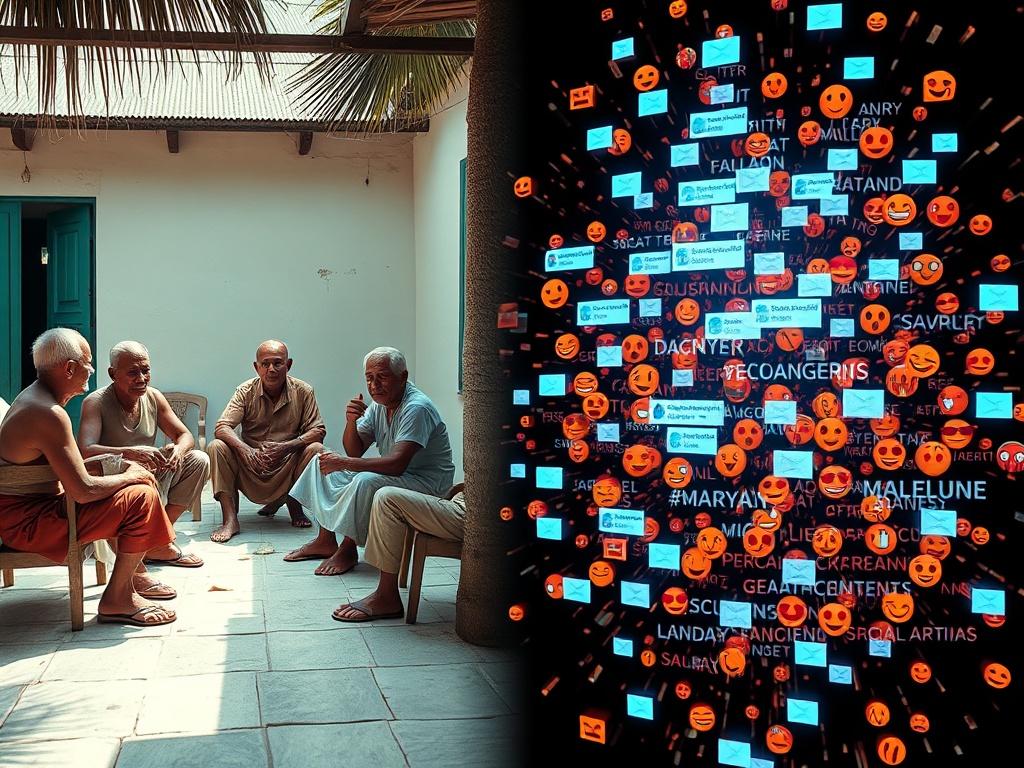
From Dhivehi Raajje's Coffee Shops to Twitter's Cancel Culture
In the digital town squares of Maldivian social media, political discourse has taken a sharp turn toward the personal. What begins as ideological disagreement often devolves into attempts to 'cancel' opponents, creating a toxic environment where genuine debate becomes impossible. This phenomenon reflects a broader crisis in our political culture, where winning arguments through intimidation has replaced the hard work of persuasion through reason.
The warning echoes across platforms: if you're entering politics, don't start by trying to silence others. Cancellation, after all, works both ways. This isn't just about political strategy—it's about the fundamental health of our democracy. When we weaponize social media to attack rather than engage, we undermine the very institutions that sustain civil society.
What's particularly troubling is the disconnect between online bravado and substantive discussion. The challenge isn't to prove who can deliver the most cutting tweet, but who can defend their positions with evidence and reason. Yet many who are quick to challenge others online retreat when asked for meaningful engagement. This suggests a troubling reality: some participants aren't interested in finding common ground or even understanding opposing views—they're invested in the performance of conflict itself.
The path to meaningful political engagement requires looking beyond abstract theory and examining our own society. Understanding the concentration of wealth among specific families, the mechanisms of political patronage, and the real economic pressures facing ordinary Maldivians provides more insight than memorizing political texts. Theory serves as a guide, but genuine understanding comes from observing how power actually operates in our islands.
This isn't merely an academic concern. The personalization of political conflict has real consequences. When we reduce opponents to caricatures or dismiss them based on their account privacy settings, we lose sight of the human beings behind the screens. A public profile doesn't guarantee intellectual honesty, just as a private account doesn't indicate bad faith. The quality of discussion should be measured by the substance of arguments, not the visibility of the person making them.
As Maldives grapples with pressing issues—from economic inequality to governance challenges—we need dialogue that builds understanding rather than entrenches divisions. The digital arena should be a space where we test ideas, not destroy reputations. Our political future depends on our ability to disagree without dehumanizing, to challenge without cancelling, and to recognize that behind every account is a person deserving of basic respect, even in vigorous disagreement.
— Source fragments: If you are doing any social or political stuff make sure not to start your political career by cancelling others. Because cancelling works both ways. If you are upto challenging me on twitter (without discussing specific issues) ... what holds you back from a proper discussion? My recommendation is not to read theory, but to research on Maldivian society. But its also a person behind the account. You can't appeal to that? Having a public or private account is just your choice. That doesn't hold any empherical value on a discussion in Twitter.