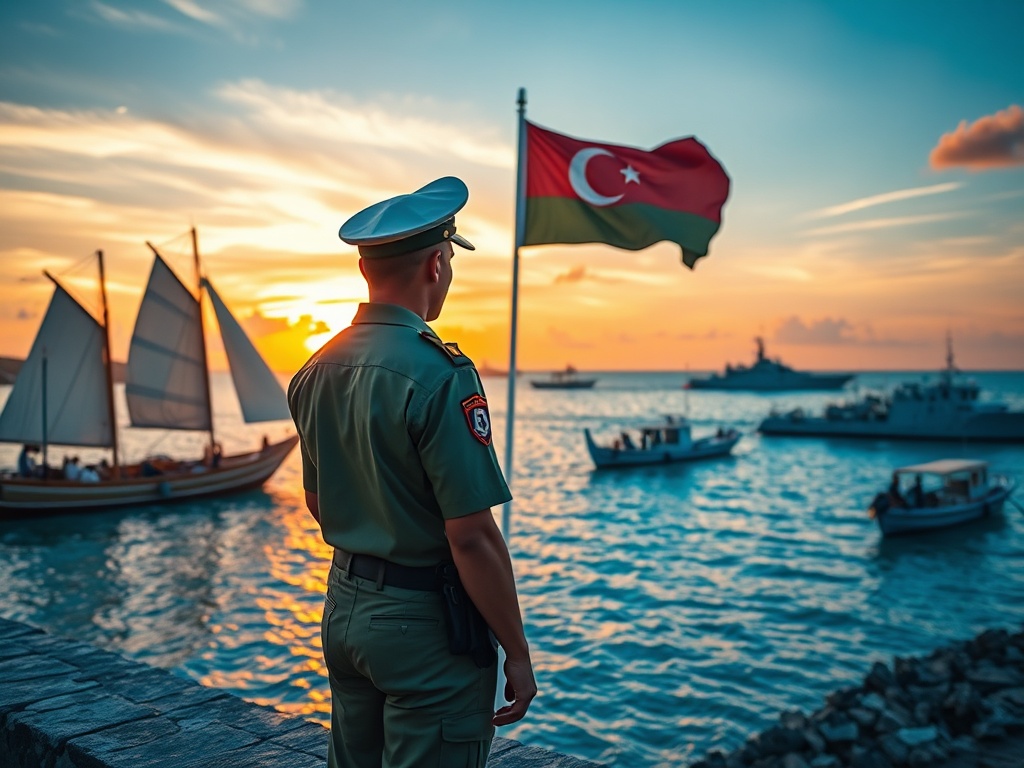
From Harbor Walls to Naval Vessels: What Sovereignty Costs Today
The annual commemoration of Victory Day arrives amid renewed debate about what true national sovereignty requires in the 21st century. The 1988 coup defense remains a powerful symbol of Maldivian resilience, but contemporary discussions have shifted toward how that resilience should be maintained in an increasingly complex security landscape.
Across social platforms and public discourse, a clear consensus emerges that defense deserves greater investment after what many describe as fifteen years of neglect. The sentiment echoes through conversations about military hardware, training, and strategic partnerships. This isn't merely about preparing for hypothetical conflicts but about establishing Maldives as a serious player in regional affairs. The argument extends beyond traditional defense to encompass economic security—the belief that credible military capability attracts foreign investment by signaling national stability.
The debate reveals nuanced perspectives on sovereignty. Some voices advocate for expanding the Maldives National Defence Force's capabilities through drones, missile systems, and naval assets, viewing such investments as essential for maintaining strategic autonomy. Others connect military readiness to broader principles of independence, arguing that the ability to defend oneself constitutes the ultimate expression of national freedom.
Historical references surface repeatedly in these discussions. The bravery of individuals like retired Brigadier General Ibrahim Didi during the 1988 crisis serves as both inspiration and benchmark for contemporary expectations of military preparedness. These historical touchpoints ground abstract policy debates in tangible examples of why defense matters.
The conversation inevitably touches on geopolitical positioning. Some perspectives suggest diversifying international military partnerships as a strategic necessity, particularly following controversies surrounding foreign military presence during previous administrations. This reflects a broader desire for balanced foreign relations that maximize Maldivian agency.
Critics of increased defense spending question whether massive allocations to military hardware represent the most effective use of limited national resources, given pressing domestic needs. Yet even skeptics acknowledge that strategic defense investments, when properly calibrated, can serve national interests beyond mere combat readiness.
The underlying thread connecting these viewpoints is the recognition that for a small island nation, sovereignty is not a static achievement but an ongoing project requiring constant attention to both hard security and soft power. As Maldives continues its development journey, the balance between military capability, economic stability, and diplomatic independence remains a central challenge for policymakers and citizens alike.
— Source fragments: wealth is generated over time, we should spend on military hardware, independence worth spending, Victory Day honoring 1988 coup defense heroes, end to 15 years of defense neglect, security important for investment, defense important even without imminent threat, need to invest in airforce and drones, balancing military powers, sovereignty enables free speech