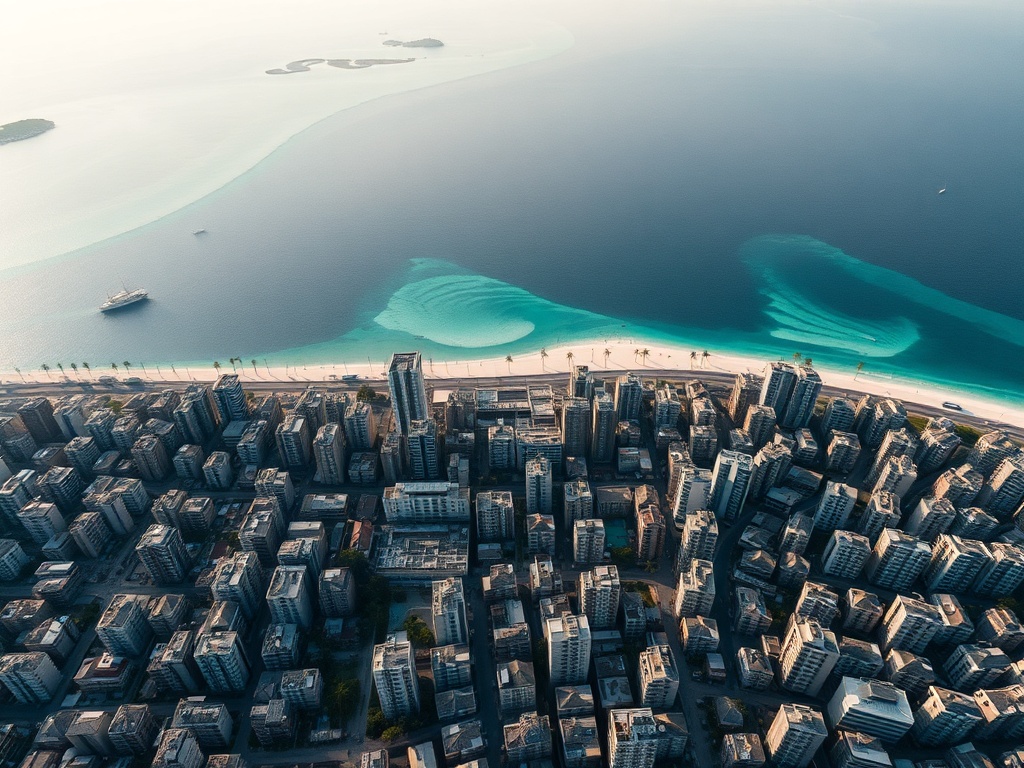
From Island Community to Congested Capital: Male's Lost Identity
The transformation of Male' from a vibrant island community into what critics call 'a mess' represents one of the Maldives' most pressing national conversations. The capital's identity crisis—captured in the lament that 'Male' has lost its identity'—speaks to deeper structural issues that extend far beyond traffic congestion and parking shortages.
The Very-Cumming development in Male', described by some as 'the biggest blunder by the elites,' symbolizes a pattern of centralized decision-making that prioritizes vertical expansion over thoughtful urban planning. This approach has created a city where impounding vehicles for minor parking violations becomes an 'undue burden on the everyday person' while the government fails to provide adequate parking infrastructure.
Hulhumale's development under the corporate management of HDC raises fundamental questions about democratic accountability. As one observer notes, 'They are not elected officials, and citizens have no way to hold them accountable.' The call for Hulhumale to have its own elected council reflects growing dissatisfaction with corporate governance models that exclude community participation.
The debate extends beyond Male' to encompass national development philosophy. Critics argue that maintaining 200 communities with basic infrastructure creates unsustainable recurrent costs, making the nation 'eventually poorer.' Yet the alternative—hyper-centralization—forces people 'to live on rent via migration' and promotes 'congested unhealthy living over a dignified healthy living space for everyone.'
Technology enables decentralized systems, but political will remains the missing ingredient. Some suggest governments resist decentralization because they 'will not earn income from BML loans,' pointing to financial incentives that perpetuate centralized models.
The solution lies not in creating new urban centers but in genuine decentralization that redistributes development opportunities across the archipelago. As one voice insists, '#DecentraliseMaldives should be the focus here'—a recognition that congestion becomes inevitable 'if everyone is forced to flock to one single area.'
The conversation represents more than urban planning critique; it's about reclaiming Maldivian identity from the pressures of uncontrolled development. The challenge ahead involves balancing economic sustainability with community dignity, corporate efficiency with democratic accountability, and centralized services with distributed opportunity.
— Source fragments: Male' identity loss, Very-Cumming development critique, Hulhumale corporate governance concerns, decentralization vs centralization debate, congestion and infrastructure sustainability, parking and transportation burdens