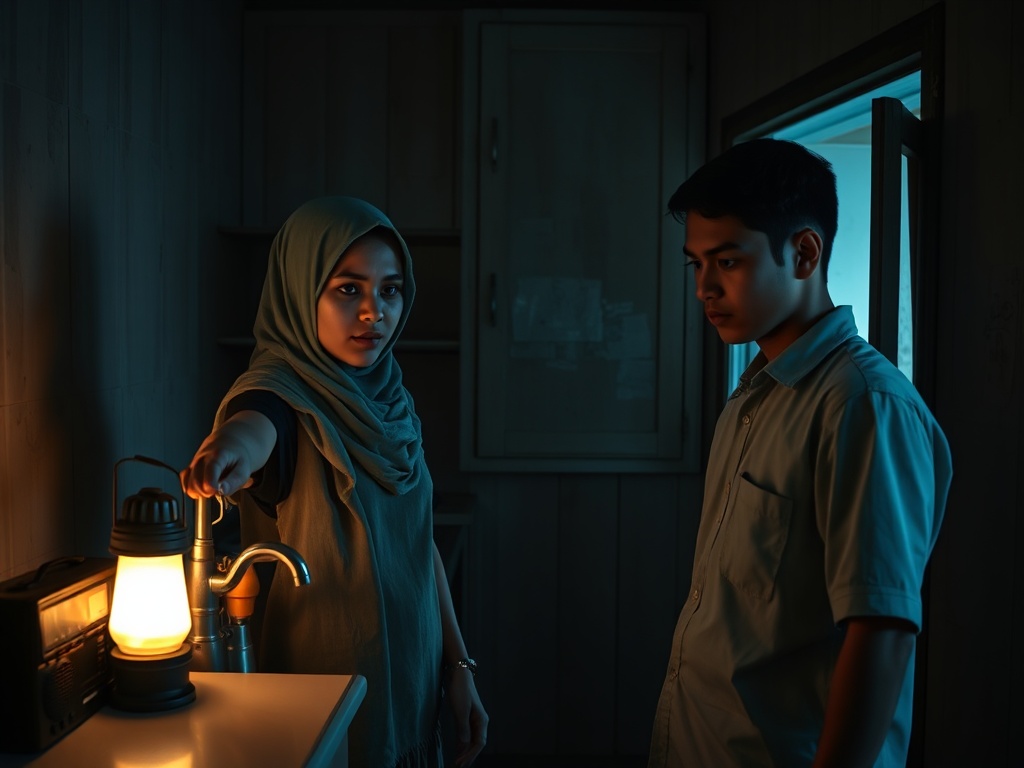
Fuvahmulah's Taps Ran Dry, Then the Lights Began to Flicker
The taps ran dry first. Then the lights began to flicker. Now, the island of Fuvahmulah holds its breath, waiting for the sewage to overflow into the streets. This isn't a gradual decline but a sudden, systemic collapse that has left residents grappling with the most basic elements of modern life: clean water, reliable electricity, and sanitation.
The crisis began with the water supply failing completely across Fuvahmulah City. For an island community surrounded by ocean, the irony of having no drinking water is particularly sharp. Residents who normally worry about sea-level rise now face a more immediate threat: dehydration and sanitation emergencies. The situation underscores how precarious water security remains, even in a nation where desalination technology has been widely adopted.
Compounding the water crisis, electricity outages have begun sweeping across the island. These aren't the brief, scheduled interruptions that many Maldivians have grown accustomed to, but sustained blackouts that disrupt everything from refrigeration to communication. Medical facilities run on backup generators, businesses shutter early, and students study by flashlight. The dual failure of both water and power systems suggests deeper systemic issues than mere coincidence.
Most alarmingly, one of the main sewage treatment plant pumps has failed, creating the imminent threat of raw sewage overflowing into public spaces. This represents not just an inconvenience but a serious public health hazard. The potential contamination of living areas could lead to disease outbreaks in a community already stressed by other service failures. The sewage system's vulnerability highlights how interconnected these infrastructure systems are—when one fails, others follow.
What makes the Fuvahmulah situation particularly troubling is its demonstration of how quickly normalcy can unravel. Within hours, a functioning modern community found itself facing medieval conditions. The crisis raises urgent questions about maintenance schedules, emergency preparedness, and the long-term sustainability of infrastructure investments across the archipelago.
Beyond the immediate emergency response, this cascade of failures demands a broader conversation about how Maldivian islands are maintained and supported. Are we investing enough in preventive maintenance? Do we have adequate technical capacity locally to address complex mechanical failures? Are spare parts and expertise readily available when critical systems break down?
The people of Fuvahmulah are living through a real-time stress test of their island's infrastructure. Their experience serves as a warning to other islands and a call to action for those responsible for maintaining these essential services. When the water stops flowing and the lights go out, everything else becomes secondary.
— Source fragments: Fuvahmulah City is currently out of water, and electricity outages are occurring across the island. Also one of the main STP pump is out of order, and the sewerage system may soon start overflowing onto the streets.