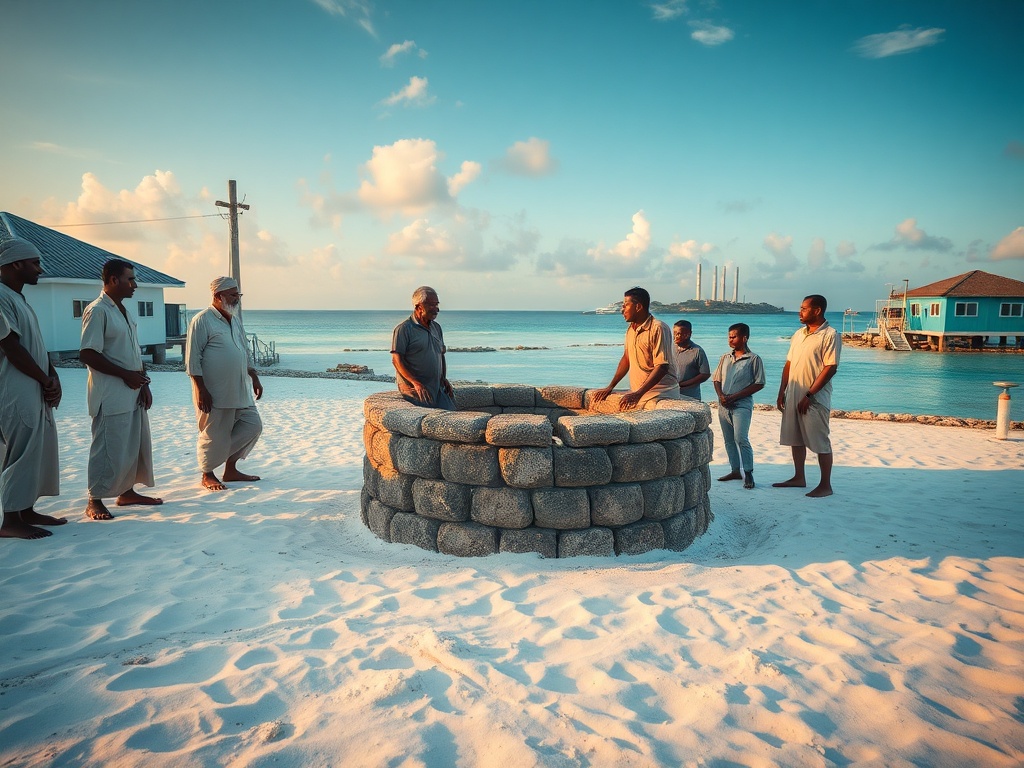
Fuvahmulah's Water Tanks Stand Empty While Addu's Generators Go Silent
The complaints echo across social media and household conversations: Fuvahmulah residents struggling for drinking water, Addu citizens enduring electricity blackouts. These aren't isolated incidents but symptoms of a broader systemic challenge facing the Maldives' utility infrastructure.
The current model relies heavily on state-owned enterprises managing utilities from the center, a system that critics argue has failed to account for the geographical and logistical realities of an island nation. When power flickers in the southern atolls or water runs scarce in specific islands, the limitations of centralized management become painfully apparent.
This isn't merely about technical failures or infrastructure gaps. It speaks to a deeper question of governance philosophy. Historically, many Maldivian communities developed localized solutions for water collection, storage, and energy needs. Rainwater harvesting systems, once the backbone of island water security, reflected both environmental adaptation and community self-reliance. Similarly, smaller-scale power generation allowed islands to maintain control over their essential services.
The shift toward centralized management promised efficiency through scale and professionalization. Yet the reality has often meant bureaucratic delays, one-size-fits-all solutions that don't account for local conditions, and decision-making processes disconnected from on-the-ground realities. When a water crisis emerges in Fuvahmulah, the response must navigate layers of administrative hierarchy rather than drawing on local knowledge and immediate community resources.
This isn't a call to abandon modern infrastructure or professional utility management. Rather, it suggests a hybrid approach that combines technical expertise with community involvement. Some of the most successful utility projects in the islands have emerged where local governance structures work in partnership with technical agencies, creating systems that are both professionally managed and locally accountable.
The conversation now evolving isn't about nostalgia for simpler times. It's about practical effectiveness. In a nation where islands can be separated by hours of travel, where weather patterns vary significantly between atolls, and where local conditions demand customized solutions, the purely centralized model shows its limitations.
As climate change intensifies and population needs grow, the question of how to deliver reliable utilities becomes increasingly urgent. The answer may lie not in choosing between complete centralization or total local control, but in developing smarter systems that leverage the strengths of both approaches—combining technical capacity with community wisdom to ensure that no island goes without the basic services that define modern dignity.
— Source fragments: Fuvahmulah has no drinking water. Addu has no electricity. Things were better when communities sorted their own utilities. The current centralized SOE system as established by isn't working.