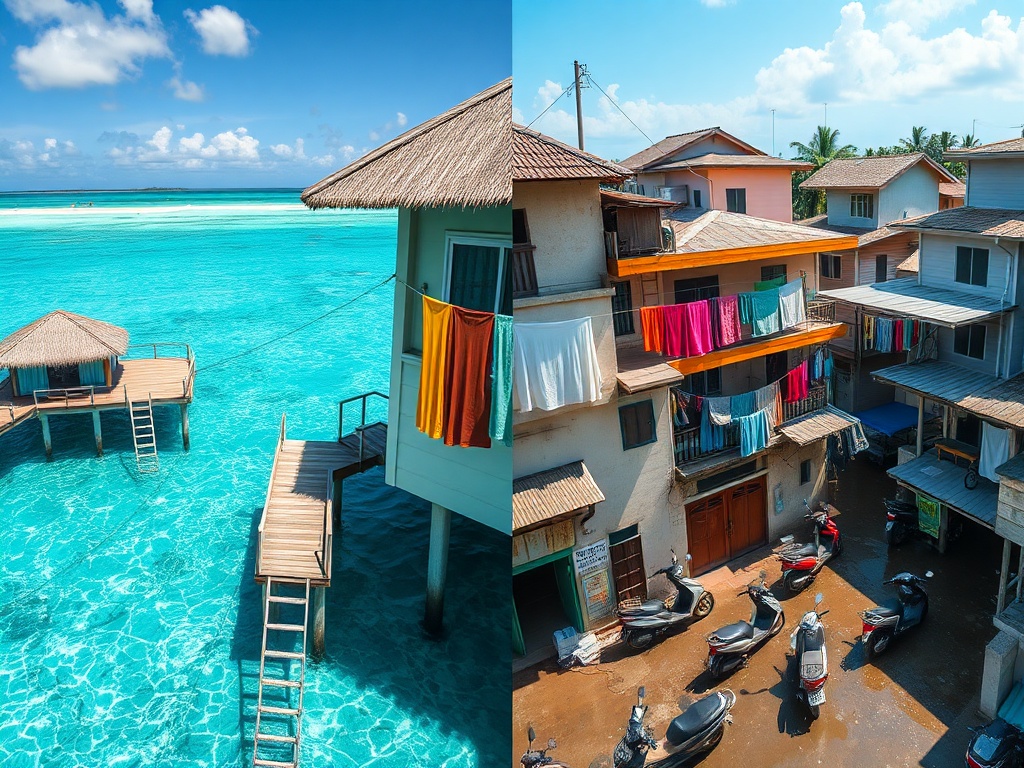
GDP Growth 3.9% as Resort Villas Rise and Malé's Streets Crumble
When the World Bank forecasts a meager 3.9% GDP growth for 2026—a figure that would have been unthinkable under previous administrations—it reveals more than just economic stagnation. It exposes the fundamental contradictions of a development model that has long promised prosperity but delivered deepening inequality.
The Maldives stands at a peculiar crossroads. Our economy, transformed five decades ago by visionary private sector pioneers who built a tourism industry from nothing, now seems trapped in its own success. That industry generates over 80% of national revenue, yet the benefits remain concentrated in the hands of a privileged few. The very families who pioneered tourism now dominate economic policy-making, creating a system where wealth distribution increasingly favors those already at the top.
Consider the housing crisis. With over 50,000 people needing immediate housing, the solution isn't simply building more units—it's addressing who actually benefits. When land distribution policies emerge, only the wealthiest families possess the capital to develop properties without relying on loans. Given our banking sector's limitations, financing won't reach every family, effectively creating another wealth transfer mechanism to the elite.
This pattern repeats across sectors. The national airport's prolonged dysfunction, the forced USD forex policy that degrades the Rufiyaa, the cap on remittances that leaves diaspora communities stranded—these aren't isolated policy failures but symptoms of a system designed to protect established interests. Even as the government prints money to fuel consumption, creating excess liquidity that must be absorbed through housing loans, the fundamental architecture remains unchanged.
The tragedy is that this narrow focus has cost us alternative economic pathways. The shipping industry, once poised to rival tourism in potential, was systematically dismantled by the same forces that built the resorts. Now, when agricultural initiatives emerge despite our comparative advantage in services, it reflects not economic strategy but the inertia of a system unable to evolve beyond its original design.
What emerges is a nation of forced economic migrants—people crowded into Malé not by choice but by necessity, while policy decisions continue to prioritize resort expansion over community development. The debate has shifted from how to build a more inclusive economy to how to manage the consequences of an exclusive one.
Until we confront this fundamental imbalance—until economic policy serves the many rather than the few—we will continue seeing these disappointing growth figures, these housing shortages, these currency crises. The architecture of privilege, once built, proves difficult to dismantle, even when its foundations are clearly cracking.
— Source fragments: World Bank forecasts 3.9% GDP growth for 2026; Only the wealthiest families will be in a position to develop the land; pioneers of tourism industry are hathar kashi mathi male'; they also played a pivotal role in destroying the shipping industry; majority of people are in Male' region by forced economic migration; country is nearly bankrupt; inequitable wealth distribution in favor of a privileged few