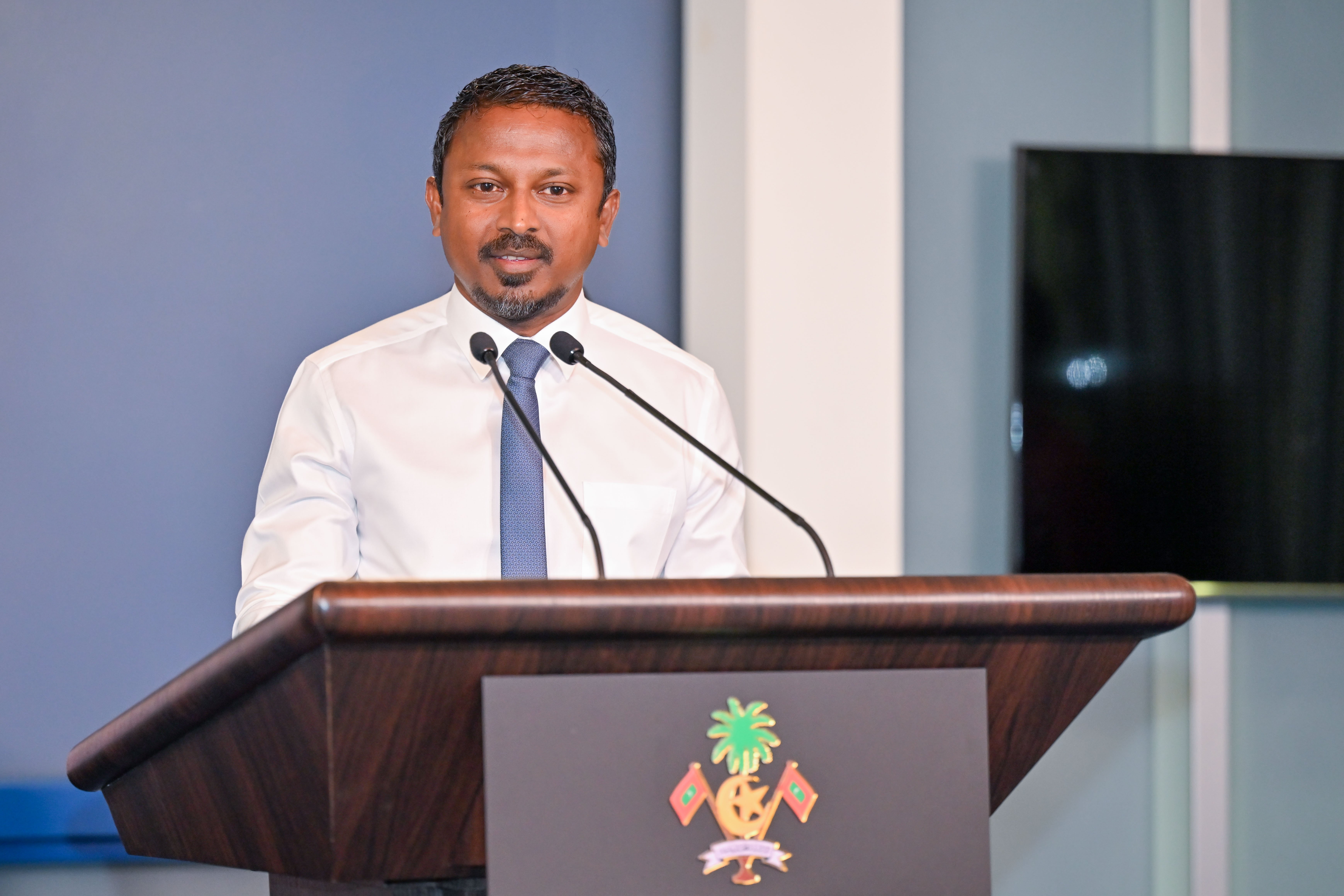
Genocide bill could hurt Maldives' ICJ interventions, says Attorney General Usham
Two years after the Maldives intervened before the International Court of Justice (ICJ) in cases involving Palestinians and Rohingya Muslims, Attorney General Ahmed Usham said tonight that criminalising genocide could affect the legal arguments the Maldives has presented in those cases.
Usham made the remarks on X amid growing concern that the bill filed by the government is intended to silence voices against the Rasmale project and Zionists.
The government-sponsored bill, submitted by Maafannu Dhekunu constituency MP Abdullah Rifau, was initially placed as the first item on the agenda for tomorrow's parliament sitting but was later abruptly removed. The parliament secretariat has not yet explained why the bill was taken off the agenda.
Usham noted that the Maldives became a party to the International Convention on the Prevention and Punishment of the Crime of Genocide (Genocide Convention) on April 24, 1984. The convention obliges states to enact laws to give effect to it and to provide penalties for genocide-related crimes.
"Even after 42 years, the Maldives has not fulfilled this obligation," Usham said.
He added that the Maldives' interventions in ongoing ICJ cases against countries committing or having committed genocide against Muslims would be affected by the failure to fulfil the country's obligations under the convention.
"When calling on other countries to adhere to the Genocide Convention, the absence of implementation of the Maldives' own obligations under that treaty affects the legal points the Maldives has presented," he said.
The Maldives filed its intervention in the case concerning genocide against the Rohingya Muslims by Myanmar on November 16, 2023, and applied to intervene in South Africa's case against Israel's alleged genocide in Gaza on October 1, 2024.
The government bill defines as a crime the killing of people or causing serious bodily or mental harm with the intention of destroying, in whole or in part, a group identified by nationality, ethnicity, race or religion. Critics say that, as drafted, the provision could allow action against some anti-Zionist speech by Maldivians.
The bill proposes a penalty of between 10 and 25 years in prison for the crime, and includes a provision making direct and public incitement to commit such a crime an offence.