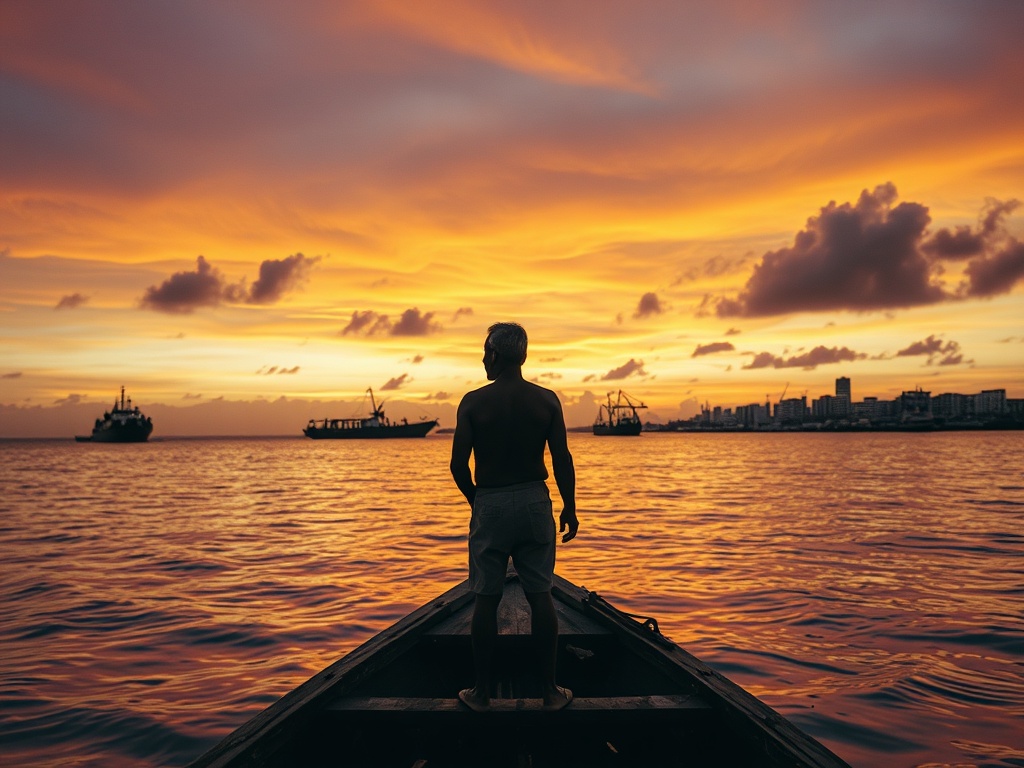
Ghosts on the Horizon: What Maldivian Fishermen See That Politicians Ignore
The foreign vessels appear on the horizon like ghosts in the midday haze. They don't recognize our 200-mile shore, but the fishermen do. They've seen the brutality up close—sharks stripped of their fins, discarded bodies sinking into the blue abyss. This isn't speculation; it's what happens when you're out there day after day, watching the systematic plunder of what should be protected.
Meanwhile, on land, we argue about who deserves free plots and flats, as if land were infinite and the sea could wait. The conversations in tea shops and social media feeds circle back to the same worn topics: who gets what, which party betrayed whom, who was arrested when. We measure justice by whose side gets heard, forgetting that the ocean makes no such distinctions.
There's a peculiar freedom in being unaffiliated, in watching the political strings tangle from the shore. But that freedom feels precarious when foreign military bases appear against public will, when the weapons we never wanted become necessary purchases. The fishermen know this tension well—they navigate both the natural boundaries of currents and the man-made boundaries of politics.
Our housing debates rage while the real plunder happens beyond the reef. We calculate generational wealth in square feet of land, ignoring the generational loss happening just beyond our shores. The sea has always been our true inheritance, the source of our identity and survival. Yet we bargain over concrete while industrial-scale fishing vessels strip our waters.
The fishermen don't need policy papers to understand what's happening. They see the evidence in their nets, in the changing migration patterns, in the brutal efficiency of those who take only the valuable parts and discard the rest. Their knowledge is earned through salt spray and sunrise watches, through reading the water in ways no politician ever could.
Perhaps we've become so focused on dividing the land that we've forgotten we're island people. Our survival has always depended on reading the sea as clearly as we read each other's politics. The vessels will keep coming as long as we're distracted by land grabs and party loyalties. But the ocean remembers what we choose to forget.
— Source fragments: Foreign vessels doing lanu masverikan at industrial scale, fishermen know this, they just cut fins and throw away shark; Free of government and its affiliations; Indian military base against our wishes; Why see only half side of humanity; Land policy debates and generational wealth