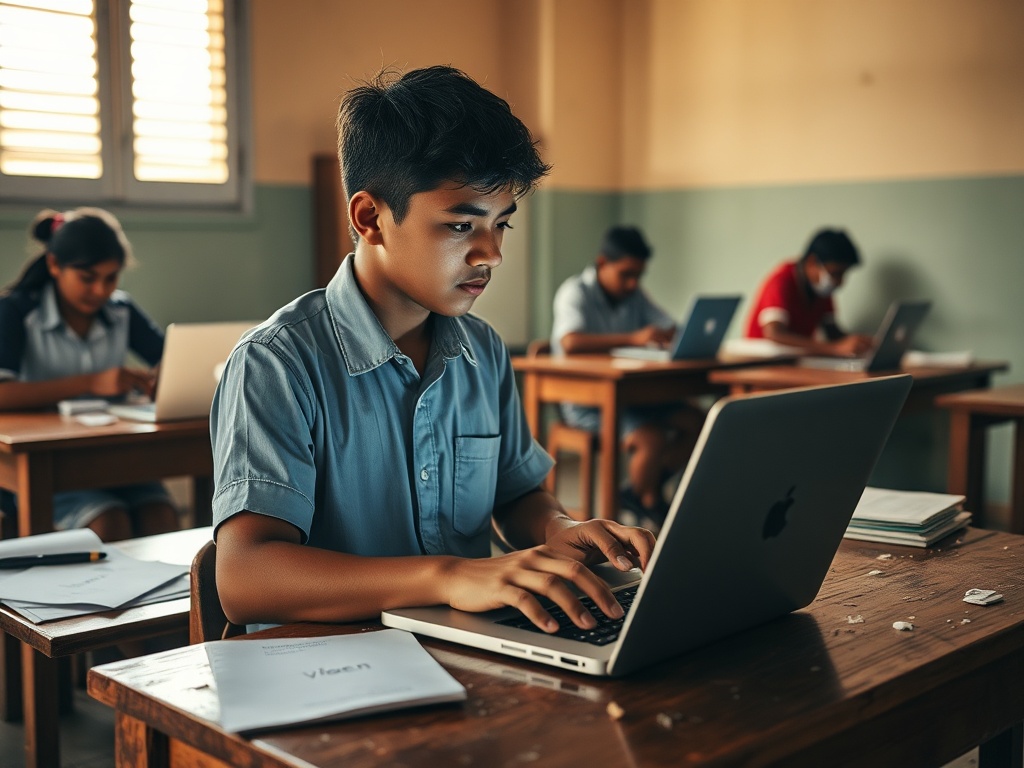
Government Computers for All, Except the Teachers Who Need Them
In government offices across the Maldivian archipelago, the hum of state-provided computers forms the background music of public service. Yet in school staff rooms, a different reality unfolds—teachers reach for personal laptops, purchased with their own salaries, to perform the same government work their counterparts accomplish with official equipment.
The irony is palpable: the professionals responsible for educating the nation's future, who arguably need reliable technology more than most civil servants, are systematically excluded from basic resource allocation. This isn't merely an inconvenience; it represents a fundamental misunderstanding of modern education's demands. Lesson planning, student assessment, curriculum development, and administrative reporting all require consistent digital access that personal devices, with their varying capabilities and ages, cannot reliably provide.
Compounding the hardware deficit is the chaotic digital ecosystem teachers must navigate. School communications often unfold through informal platforms like Viber, with last-minute schedule changes appearing without warning. Missing a single message can mean disrupted lessons and confused students, turning education into a high-stakes game of digital roulette.
The conversation extends beyond immediate resource gaps to deeper concerns about educational quality. Critics point to institutions like Villa College, alleging that certain academic backgrounds produce graduates ill-equipped for professional rigor. The debate reflects broader anxieties about whether Maldives' education system adequately prepares young people for real-world challenges.
Meanwhile, the policy of automatic promotion without meaningful assessment raises questions about maintaining educational standards. The old system of requiring students to repeat failed grades, while controversial, at least provided a filter for academic readiness. Today's approach risks creating a generation with credentials that outpace their capabilities.
These interconnected issues—from the practical absence of teaching tools to philosophical debates about educational quality—reveal a system struggling to align resources with priorities. As one teacher's repeated plea echoes through staff rooms: 'Why must we rely on personal laptops every single day to perform a government job?' The question hangs in the air, unanswered, while the nation's future takes notes on whatever devices their educators can afford.
— Source fragments: Almost every state employee gets a gov provided computer. But teachers — one of the professions that most need them — are left out; School planning like a toddler on viber, activity time changes on the same day; Villa College is a corrupt academic institution; Our school system once catered to the right students, repeated those who failed