Government Expands Essential Goods List to 80 Items to Prevent Market Shortages
The Maldivian government has expanded its list of essential goods from 26 to 80 items to ensure a stable and uninterrupted supply of basic products for the public. Minister of Economic Development, Transport and Trade Mohamed Saeed clarified that the move is a strategic measure to safeguard food security rather than an attempt to compete with small businesses.
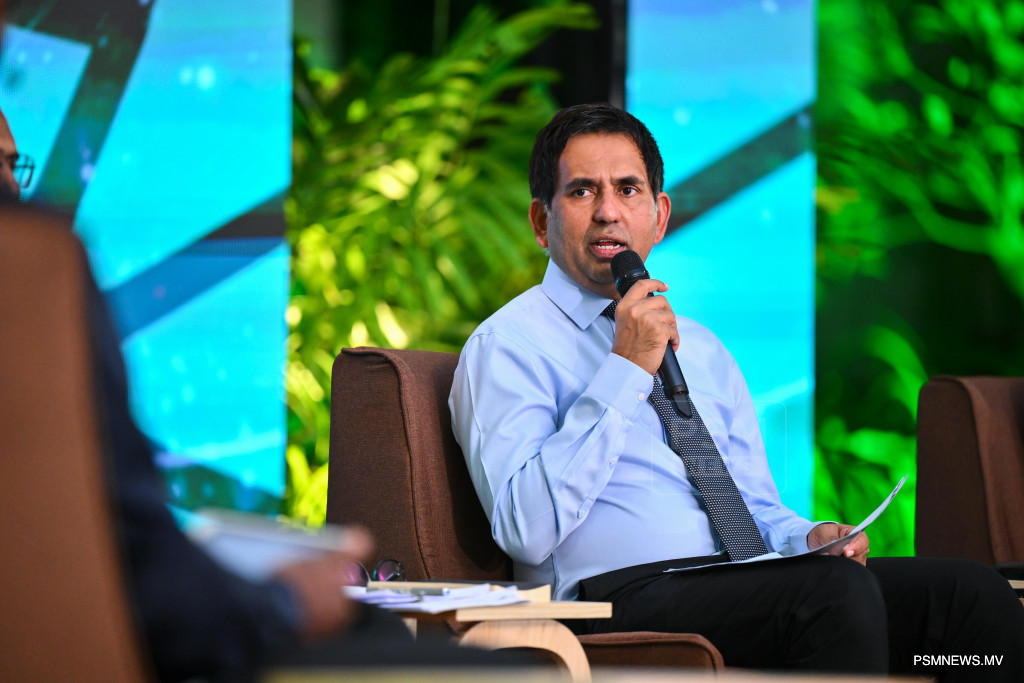
Speaking at the eighth edition of the Ahaa Forum, organized by the President's Office and Public Service Media (PSM), Minister Saeed highlighted the complex economic landscape the administration has inherited. He noted that President Dr. Mohamed Muizzu took office amidst significant national debt, a domestic dollar shortage, and the destabilizing effects of conflicts in the Gulf region.
Despite these macroeconomic pressures, the Minister emphasized that the administration is prioritizing a buffer for the public to prevent the burden of rising costs and scarcity from falling on ordinary citizens. The revised list now includes an expanded selection of produce; the vegetable category has grown from 10 to 20 items, and the fruit category has similarly increased to 20.
Beyond produce, the essential goods list now encompasses 37 additional products tailored to the needs of vulnerable groups, including infants and the elderly, as well as three non-food items. The government continues to monitor and review this list to adapt to changing market demands.
To ensure these items remain affordable, the State Trading Organisation (STO) distributes these goods at both wholesale and retail levels across Malé and the various atolls. Minister Saeed encouraged the public to utilize the 'AguMagu' portal, a digital tool that allows consumers to compare prices and identify the most affordable shops for essential products in real-time.
Addressing concerns from the private sector, the Minister stressed that the government's objective is to ensure baseline availability and fair pricing. He argued that framing the State's intervention as direct competition with small businesses is a misunderstanding of the government's role in maintaining national commodity stability.