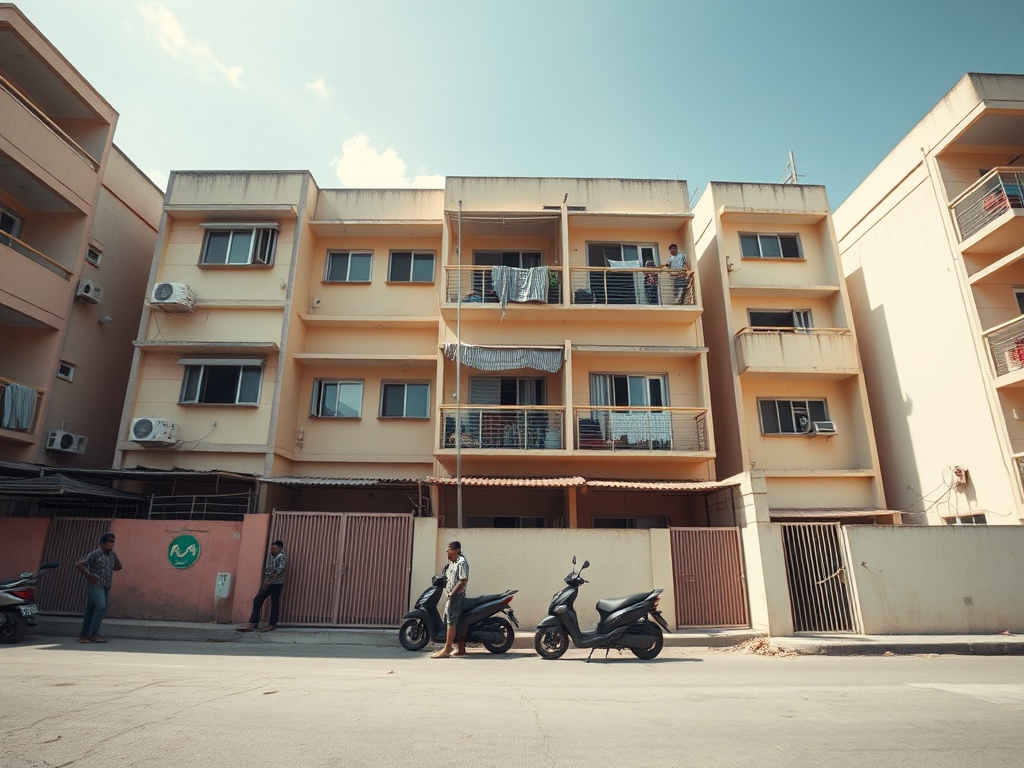
Government housing projects are politicized.
In the heart of Malé, where the ocean breeze mingles with the scent of diesel and salt, the dream of a home remains just that—a dream for many. The government’s housing projects, once hailed as a solution to the capital’s crippling congestion, have instead become another arena for political maneuvering. Why does a system designed to provide shelter so often end up deepening the divide between the privileged and the desperate?
Subsidized flats, constructed with public funds and intended for Maldivian families, are frequently allocated not to those in greatest need, but to individuals with political connections. This isn’t merely a failure of logistics; it’s a calculated erosion of trust. When housing becomes a currency for loyalty, what does that say about our commitment to social justice? The very foundations of these buildings seem to rest on shifting sands of favoritism.
Many of these leaseholders don’t even reside in the country. They live abroad, yet they hold the keys to homes that stand empty in overcrowded Malé. Instead of providing refuge, these apartments are subleased at market rates, turning a public good into a private revenue stream. How can a family struggling to make ends meet compete with such profiteering? The answer, sadly, is that they cannot.
This practice doesn’t just worsen the housing shortage; it fuels resentment and disillusionment among the youth. When young people see that merit and need are secondary to political allegiance, why should they believe in a system that so clearly betrays them? The housing crisis is more than a lack of space—it’s a symptom of a deeper moral decay.
What happens when the social contract is broken? We see it in the overcrowded homes, the rising rents, and the quiet despair of those who watch from the sidelines. If housing is a basic right, then its politicization is a fundamental wrong. The solution isn’t just building more towers; it’s rebuilding the integrity of the allocation process. Until then, the keys to a better life will remain in the wrong hands.