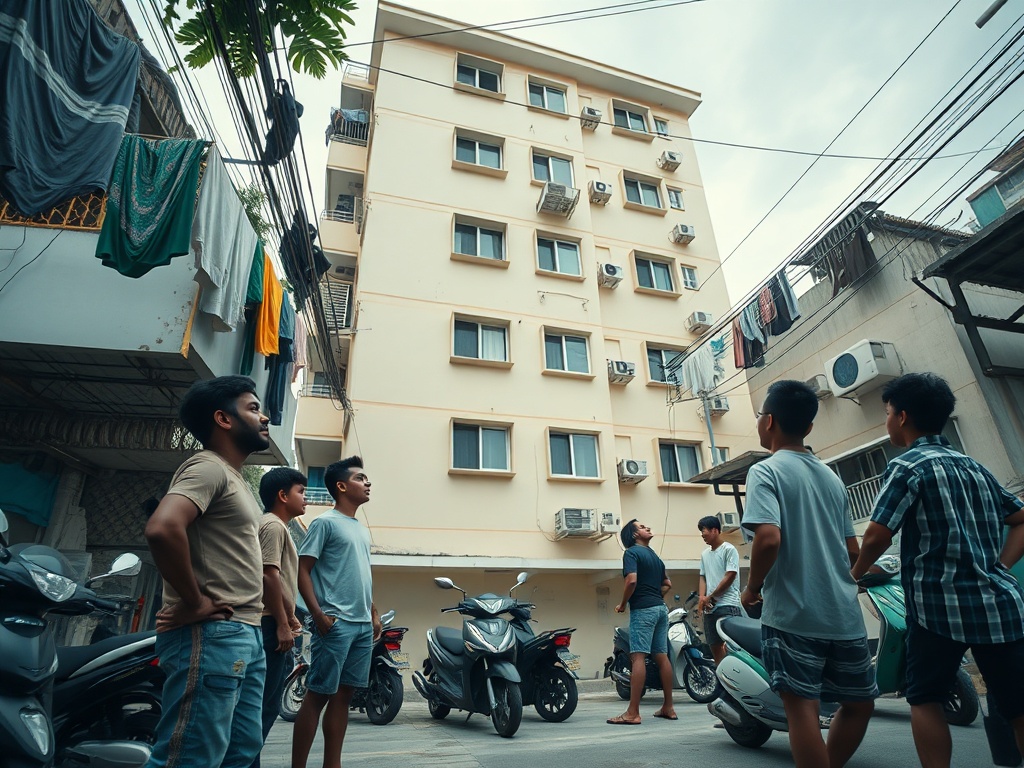
Government housing projects are politicized.
In the heart of Malé, the promise of a home feels more like a political bargaining chip than a basic right. The government’s housing initiatives, launched with grand announcements, have become mired in a system where allocation is less about need and more about allegiance. This isn't just bureaucratic inefficiency; it's a calculated mechanism of control, turning shelter into a reward for political loyalty.
Who truly benefits from these subsidized flats? Investigations and public outcry point to a disturbing trend: leaseholders, often with connections, secure these properties only to sublease them at market rates while living comfortably abroad. They profit from a system designed to alleviate suffering, paying little to no rent to the state. This creates a shadow economy where the intended beneficiaries—local families crammed into overcrowded rooms—are left watching from the sidelines.
The consequences ripple through our society. As the housing shortage worsens, social cohesion frays. Young couples delay marriages because they cannot find a place to live. The dream of starting a family becomes a logistical nightmare. Meanwhile, the capital's infrastructure groans under the weight of congestion, with every square foot of living space becoming a premium commodity.
Why does this politicization persist? It serves a clear purpose for those in power. By controlling who gets housing, the government can ensure a loyal voter base and suppress dissent. If your access to a home depends on your political silence, how many will dare to speak out against corruption or mismanagement? This is not an accident; it is a feature of a system designed to consolidate authority.
What can be done? Transparency in allocation is the first step. A public, verifiable registry of leaseholders and their actual residency status would expose the abuse. Strengthening tenancy laws to penalize fraudulent subleasing could reclaim these units for genuine residents. But any solution requires political will—a willingness to prioritize people over power.
The question we must ask ourselves is whether we are building a nation of equitable opportunity or a landscape of patronage. The housing crisis is a mirror reflecting our broader governance challenges. Until we address the root cause—the intertwining of public resource distribution with political maneuvering—the dream of a secure home will remain out of reach for too many Maldivians.