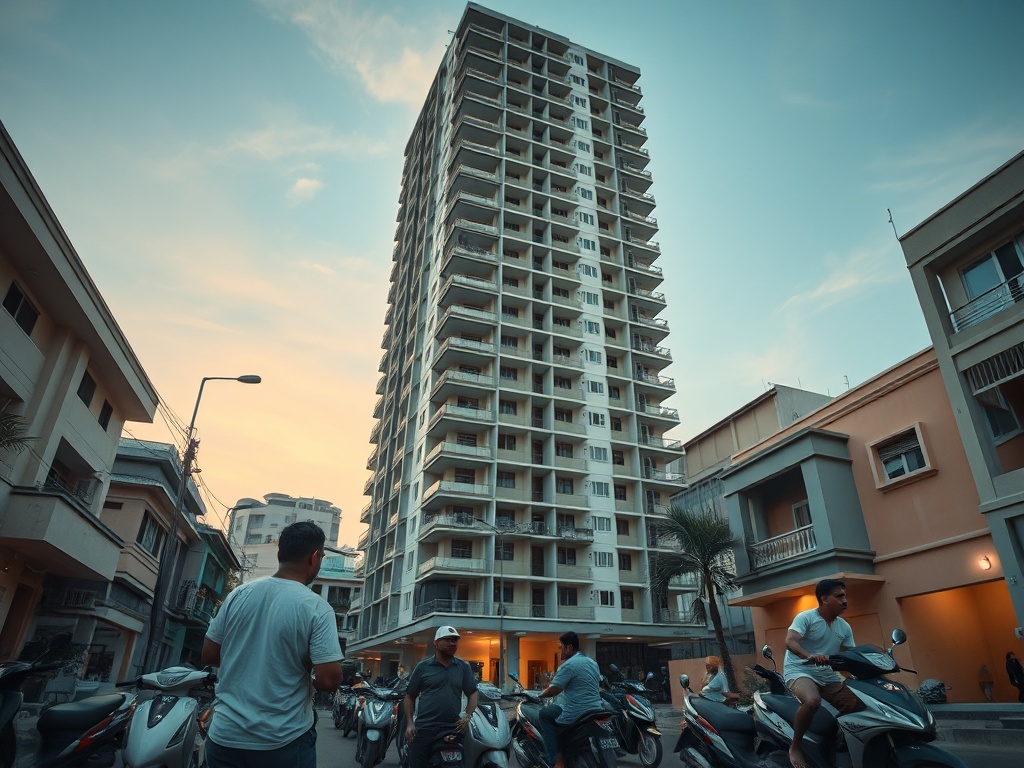
Government housing projects are politicized.
In the heart of Malé, where the sea presses against crowded streets, the promise of a home has become a political token. The government’s housing projects, launched with great fanfare, were supposed to be a solution for families squeezed into cramped apartments. Yet, who truly benefits? The allocation process is shrouded in whispers—names on lists that seem to align more with party loyalty than genuine need.
This isn’t just about bureaucracy; it’s about a system where subsidized flats, built with public funds, are handed to individuals who never intend to live in them. Instead, these leaseholders, often residing abroad or well-connected, sublease the units at market rates. They profit from a crisis, while the intended beneficiaries—teachers, nurses, young couples—remain on endless waiting lists. How does this cycle persist, and who turns a blind eye?
The answer lies in the electoral calculus. Housing has become a currency for political patronage. Before elections, allocations surge, creating a loyal voter base. After the polls, the same flats lie empty or are quietly monetized. This isn’t merely inefficiency; it’s a deliberate strategy to consolidate power. The very families who should be settling into these homes are instead paying inflated rents to shadow landlords who owe their advantage to political ties.
What does this mean for Maldivian society? The housing shortage in Malé exacerbates social stratification. Those with connections secure assets, while ordinary citizens face rising costs and diminishing hope. The dream of owning a home, once a unifying national aspiration, is now a divisive tool. When housing is politicized, it doesn’t just distort the market—it fractures community trust.
Is there a way out? Transparency in allocation, independent oversight, and penalties for abuse could restore fairness. But without political will, the cycle will continue. The question remains: will Maldivians demand a system where a home is a right, not a reward?