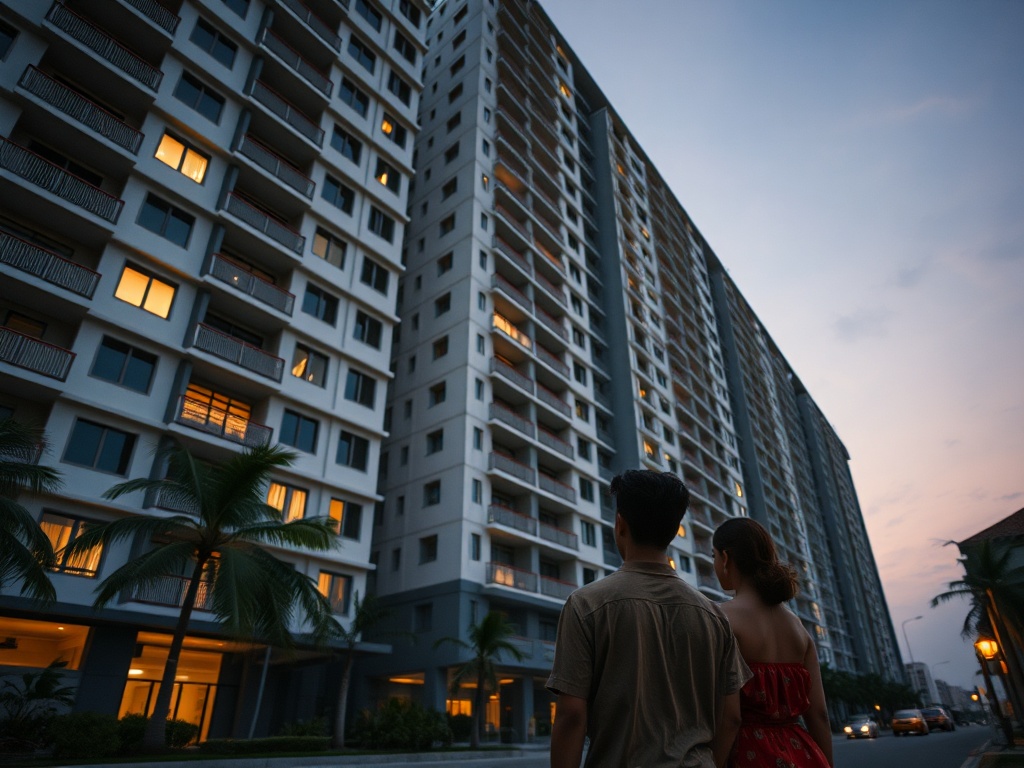
Government housing projects are politicized.
In the heart of Malé, where the sea breeze mingles with the scent of diesel and salt, a quiet crisis unfolds behind pastel-colored walls. The government’s promise of affordable housing was meant to be a lifeline for families squeezed into cramped apartments, for young couples dreaming of a place to call their own. Yet today, that promise feels hollow—not just delayed, but deliberately distorted. Why does a system designed to shelter the neediest instead enrich a connected few?
Walk through any of the newer housing complexes, and you’ll notice something peculiar: too many lights off after sunset, too many doors that never open. These are not homes; they are assets. Leaseholders—often politically well-connected or living comfortably overseas—secure subsidized flats, then quietly sublease them at market rates. The original intent—to ease the capital’s suffocating congestion—is lost. Instead, the housing shortage worsens, and ordinary Maldivians are left competing against shadow landlords who never even set foot on the islands.
What does this say about our governance? When public resources become political currency, everyone pays the price. The housing crisis isn’t just about bricks and mortar; it’s about trust. It’s about whether a citizen can believe that their government acts in their interest, or merely rewards loyalty. With every flat sublet for profit, the social contract frays a little more. Families who qualify for support watch helplessly as the system meant to protect them is gamed by those with influence.
And the consequences ripple outward. When housing is unattainable, young people delay marriage, postpone families, or leave altogether. The social fabric stretches thin. Neighborhoods that should be vibrant with community become transient, impersonal. The very idea of 'home'—a foundation of Maldivian life—is commodified. Is this the future we’re building? One where shelter, a basic human need, is just another chip in a political game?
There are solutions, of course. Transparent allocation, stricter residency requirements, and real consequences for abuse could restore integrity. But that requires political will—a willingness to prioritize people over patronage. Until then, the housing blocks stand as monuments not to progress, but to a system that has lost its way. They are empty promises made concrete, echoing the frustration of a generation waiting for a fair chance.