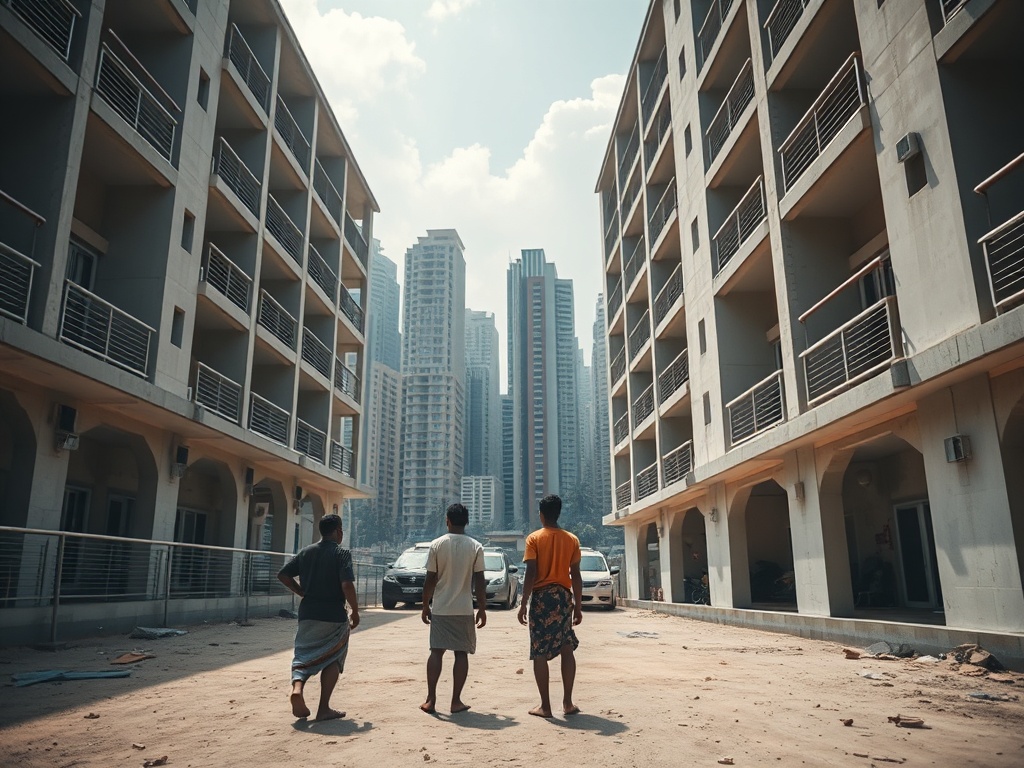
Government housing projects are politicized.
In the heart of Malé, where the sea presses in on all sides, the promise of a home has become a political tool. The government’s housing projects, launched with grand ceremony, were supposed to offer relief to families squeezed into overcrowded apartments. Yet, who actually gets these subsidized flats? The allocation process is shrouded in whispers of favoritism, where connections to the ruling party can mean the difference between a secure roof and endless waiting.
This isn’t just about inefficiency; it’s a deliberate system. Leases are awarded not always to the most needy, but to those with political leverage. The result? Many of these publicly funded apartments stand empty or are quietly subleased at market rates. The original leaseholders, often living comfortably abroad, profit from a system meant to support struggling Maldivians. Meanwhile, the actual residents of Malé—the young couples, the extended families—watch as their hopes for affordable housing are traded like currency.
Why does this continue unchecked? Because housing has become a key instrument of electoral bribery. Promises of flats are dangled during campaigns, creating a cycle of dependency and loyalty. The government retains a voter base by controlling access to a basic human need. But what happens when the very people who manage these projects are appointed through nepotism, with little accountability? The system feeds itself, leaving the public to bear the cost.
Consider the ripple effects. When housing is politicized, it fuels the broader cost-of-living crisis. Those who can’t access subsidized flats must compete in an inflated rental market, driving up expenses for everyone. It deepens social divides, pitting the connected against the common citizen. And it erodes trust in institutions already weakened by allegations of corruption and judicial interference.
Is there a way out? Transparency in allocation, independent oversight, and community-led housing boards could restore fairness. But that requires political will—a willingness to prioritize people over power. Until then, the dream of a home in Malé remains a bargaining chip, and the housing crisis a testament to governance gone astray.