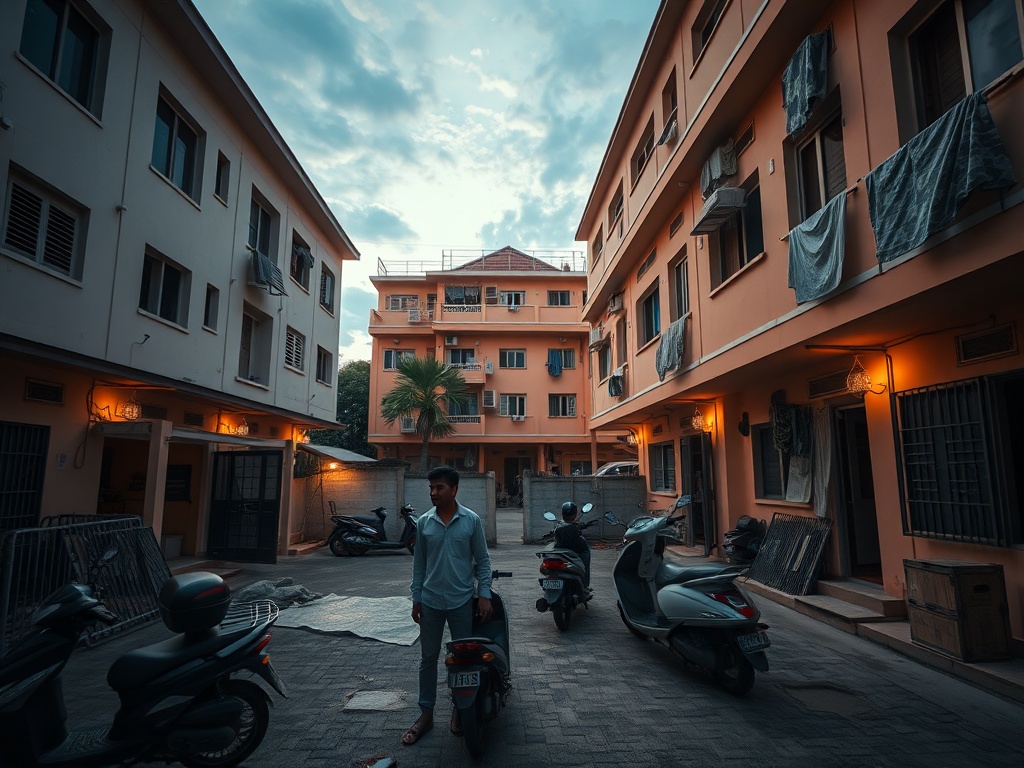
Government housing projects are politicized.
In the heart of Malé, where concrete towers climb skyward and the ocean breeze is choked by congestion, a promise of shelter has become a tool of political patronage. The government’s housing initiatives, launched with fanfare and framed as solutions for overcrowded families, are increasingly mired in allegations of favoritism and misuse. Who truly benefits when subsidized flats are allocated not by need, but by loyalty?
Reports and public whispers suggest that many leaseholders—often politically connected—do not even reside in these apartments. Instead, they sublease them at market rates, pocketing profits while the original intent of affordable housing evaporates. This isn’t just inefficiency; it’s a systemic diversion of public resources that deepens the divide between the connected and the common citizen. The very families these projects were meant to rescue remain trapped in cramped quarters, watching from the sidelines.
Why does this pattern persist across administrations? The answer may lie in the electoral calculus. Land and housing have long been used as sweeteners during campaigns, creating a cycle where political support is traded for access to state assets. Once in possession, beneficiaries treat these properties as personal investments rather than social goods. The result? A housing market that is artificially constrained and a public trust that is systematically eroded.
Consider the broader impact: when subsidized flats are subleased, they drive up rental costs for everyone, exacerbating the cost-of-living crisis. Local young couples and low-income earners find themselves competing not only with each other but with shadow landlords who operate with impunity. This isn’t merely a market failure—it’s a governance failure, where oversight is lax and enforcement selective.
What would it take to break this cycle? Transparency in allocation, independent audits of occupancy, and severe penalties for abuse could start to restore fairness. But in a system where political appointments flood the bureaucracy and loyalty often trumps merit, such reforms face steep resistance. The housing crisis, then, is not just about bricks and mortar—it’s a reflection of who wields power and who bears its cost.
As families in Malé navigate daily struggles for space and dignity, the question remains: when will a roof over one’s head cease to be a privilege for the connected and become a right for every Maldivian?