Government Identifies Greater Male' Sites for Strategic One-Year Fuel Reserve
The Maldives is assessing two potential locations within the Greater Male' region to establish a national fuel reserve designed to secure the country's energy supply for up to one year. The initiative aims to shield the archipelago from volatile global market fluctuations and supply chain disruptions, particularly those stemming from instability in the Middle East.
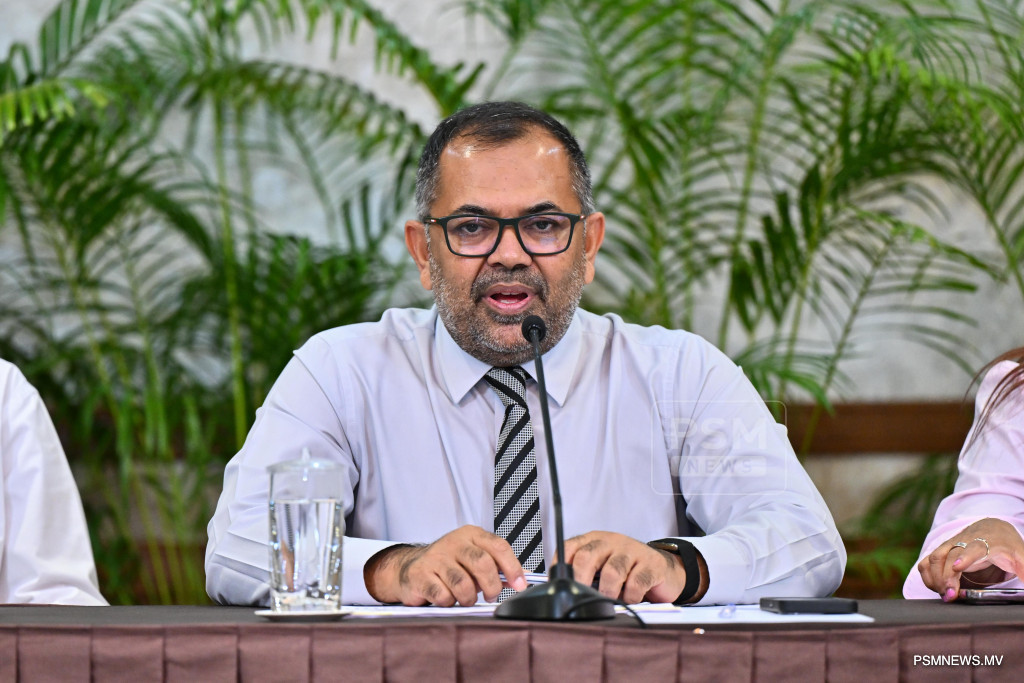
Minister of Finance and Public Enterprises, Moosa Zameer, announced the plan during a press briefing held by a specialized crisis committee. The project is a collaborative effort between the Ministry of Finance, the Ministry of Economic Development, Transport and Trade, and the State Trading Organisation (STO).
Minister Zameer explained that the project will be implemented in three phases over a five-year period, with the first phase slated for completion within two years. Surveys of the identified sites in the Male' area are expected to commence next week. Following these surveys, a comprehensive final plan encompassing design, financing options, and feasibility studies will be submitted to the President for approval.
“A fuel reserve is essential,” Minister Zameer stated, adding that the government will determine the specific volume of stock to be maintained as the final plan develops. He highlighted that a strategic reserve would not only ensure national security but could potentially generate revenue if excess capacity is leased to third parties, citing India's established storage systems as a successful model.
Currently, the Maldives relies on a storage terminal at Funadhoo near Male', which holds 291,000 tonnes of diesel and 59,000 tonnes of petrol. This facility serves as the primary hub for supplying public services, private enterprises, and the tourism sector. Additionally, STO manages the supply of jet fuel for Velana International Airport and other regional airports.
By expanding its storage capabilities, the government seeks to move away from a precarious reliance on immediate imports and create a buffer that ensures the continuous operation of critical infrastructure and the economy during international crises.