Government Launches Pesticide Support for Islands Battling Coconut Beetle and Whitefly Infestations
The Ministry of Fisheries, Agriculture and Ocean Resources has opened applications for pesticide assistance to support islands currently battling infestations of coconut hispine beetles and spiraling whiteflies. This initiative aims to protect the nation's coconut palms, which are vital for both local livelihoods and the environment.
The coconut hispine beetle has been a persistent threat since its first detection at Sun Island Resort in Ari Atoll in December 1999. The pest causes severe damage by devastating palm fronds and stunting the growth of coconut trees, leading to significant agricultural losses if left unchecked.
In a strategic move toward sustainable pest management, the government has partnered with a Chinese-supported research project to introduce biological controls. This collaboration led to the establishment of the Palm Pest Biological Control Parasitoid Rearing Center at the Hanimaadhoo Agriculture Center. Now fully operational, the facility utilizes eco-friendly breeding techniques to produce up to 100,000 parasitoids daily, which are then released into affected areas to naturally combat the pests.
Following directives from the President to expedite relief efforts, the Ministry has provided all local councils with detailed guidelines on the application process for chemical pesticides. To streamline distribution, islands within Haa Alifu, Haa Dhaalu, and Shaviyani atolls can collect supplies directly from the Hanimaadhoo center. Residents and councils in all other atolls will receive their supplies through the central Ministry of Agriculture.
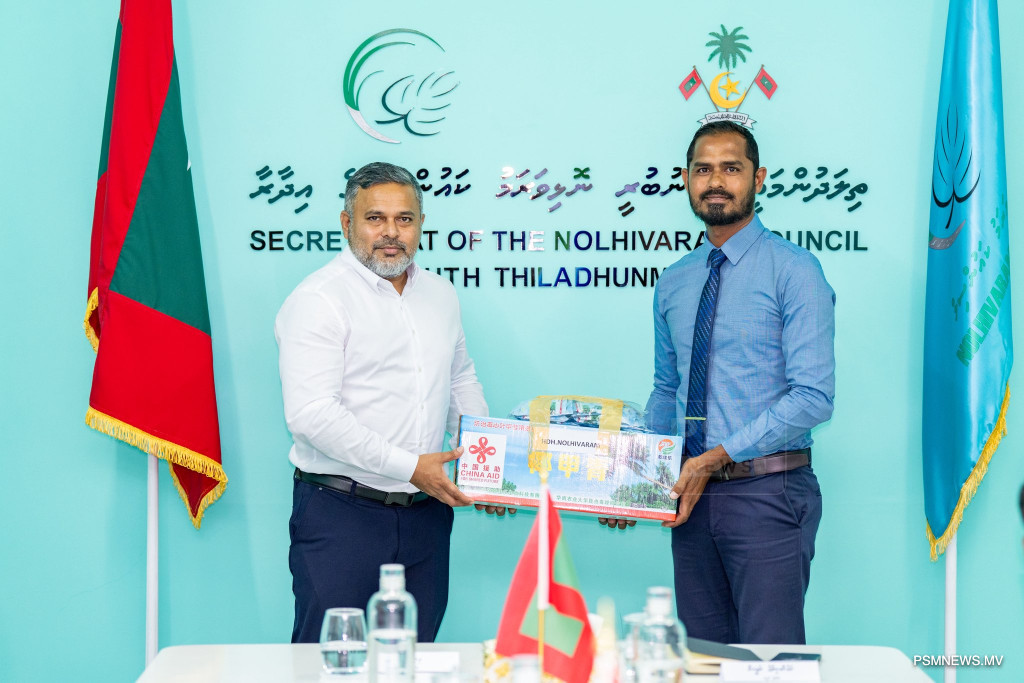
Minister of Fisheries, Agriculture and Ocean Resources Ahmed Shiyam recently conducted an official tour of Haa Alifu and Haa Dhaalu atolls to oversee the rollout. During the visit, Minister Shiyam personally handed over pesticide consignments to several local councils, inspected affected agricultural sites, and held discussions with local leaders regarding the broader development of the fisheries and agriculture sectors.